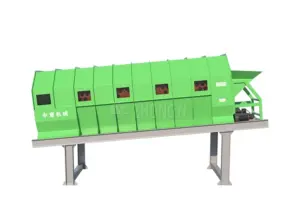
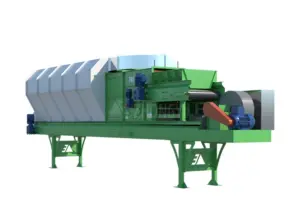

Introduction
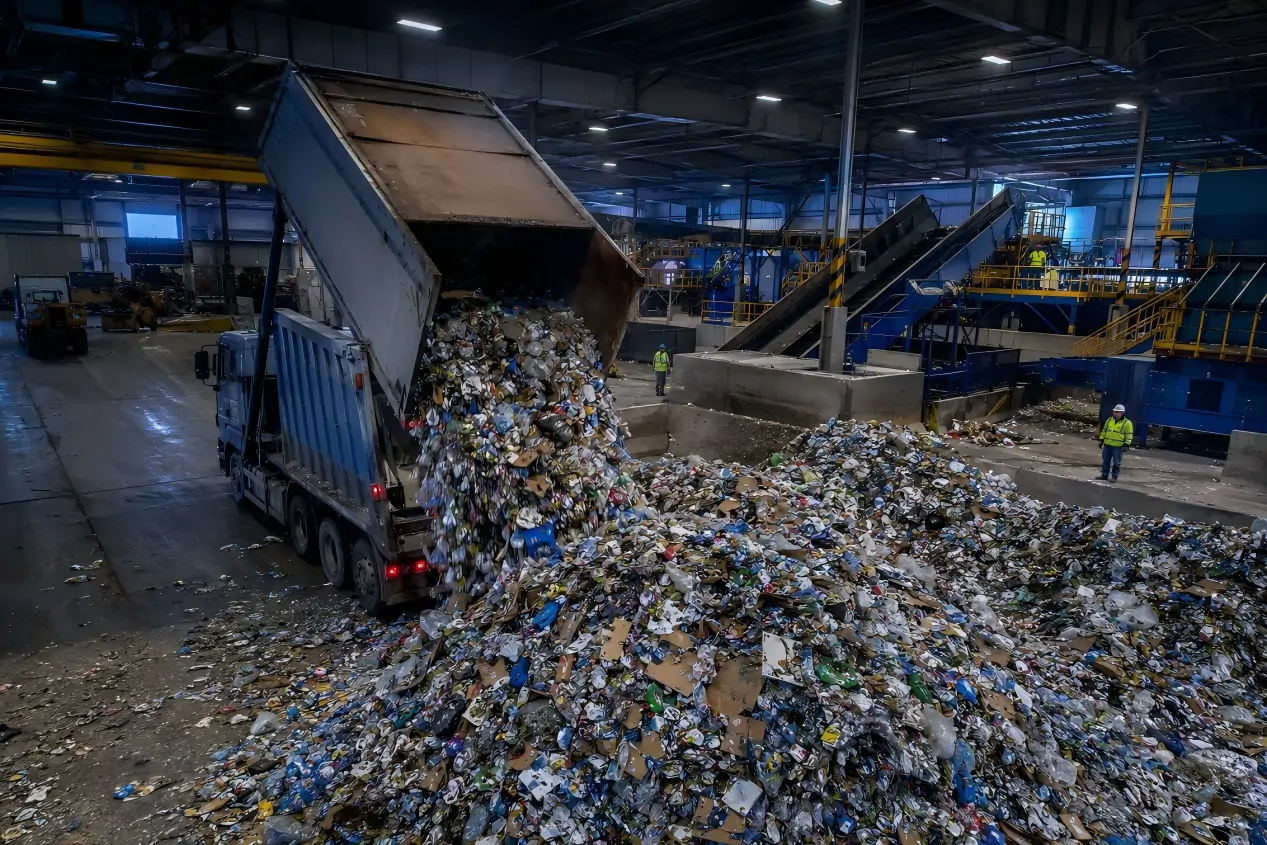
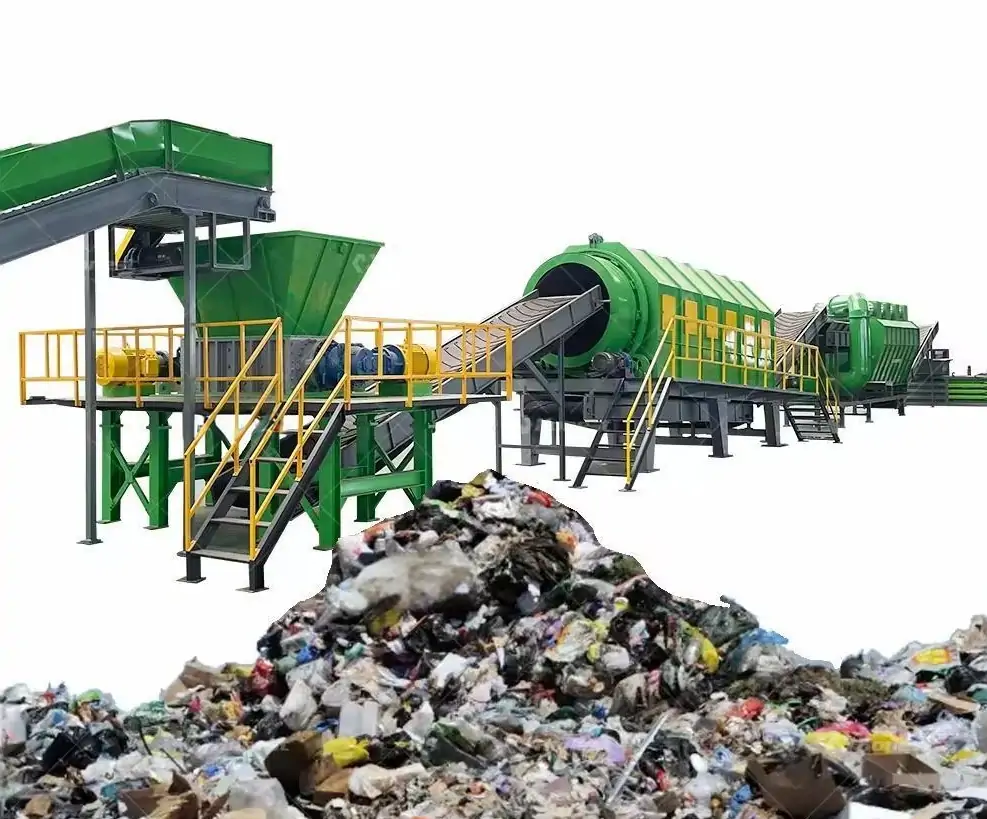
In solid waste management, materials usually contain a wide range of particle sizes and mixed components, requiring effective classification before further sorting and recycling. As a key piece of screening equipment, the Trommel Screen performs the initial separation of fine and oversized materials, helping improve the efficiency and stability of the entire waste sorting process.
Through the continuous rotation of the cylindrical drum, the trommel screen uses different screen openings to separate materials by size. Smaller particles pass through the screen surface, while larger materials move forward to the discharge end. This screening method is widely applied in Municipal Solid Waste (MSW) sorting, organic waste separation, compost screening, RDF production, and construction waste recycling.
Compared with traditional screening methods, rotary trommel screens are designed for continuous operation under high-volume and complex waste conditions, offering reliable classification performance with flexible configurations. This article explains the Trommel Screen Working Principle for Solid Waste Classification, including its structure, screening process, design features, applications, selection considerations, and maintenance requirements.If you want to learn more, click here: How to Choose the Right Waste Screening Machine for an MSW Plant?

What Is a Trommel Screen for Solid Waste Classification?
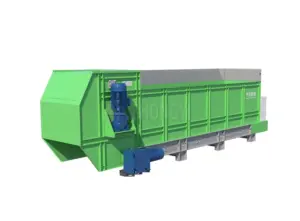
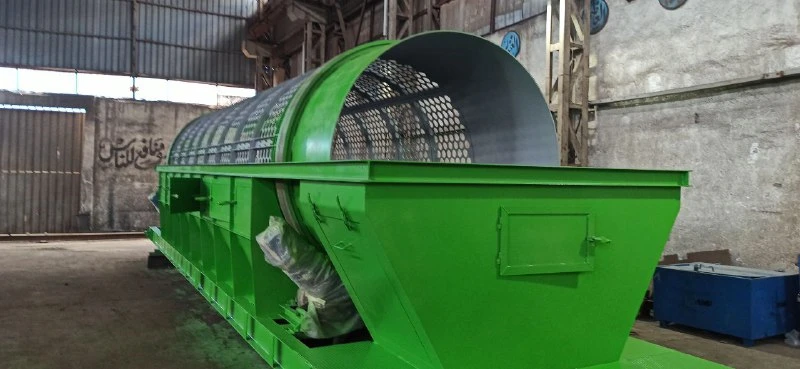
A Trommel Screen, also called a rotary trommel screen, is a mechanical screening machine designed to separate solid waste materials according to particle size. It consists of a cylindrical drum with perforated screening surfaces and is commonly used as a primary classification unit in waste sorting systems.
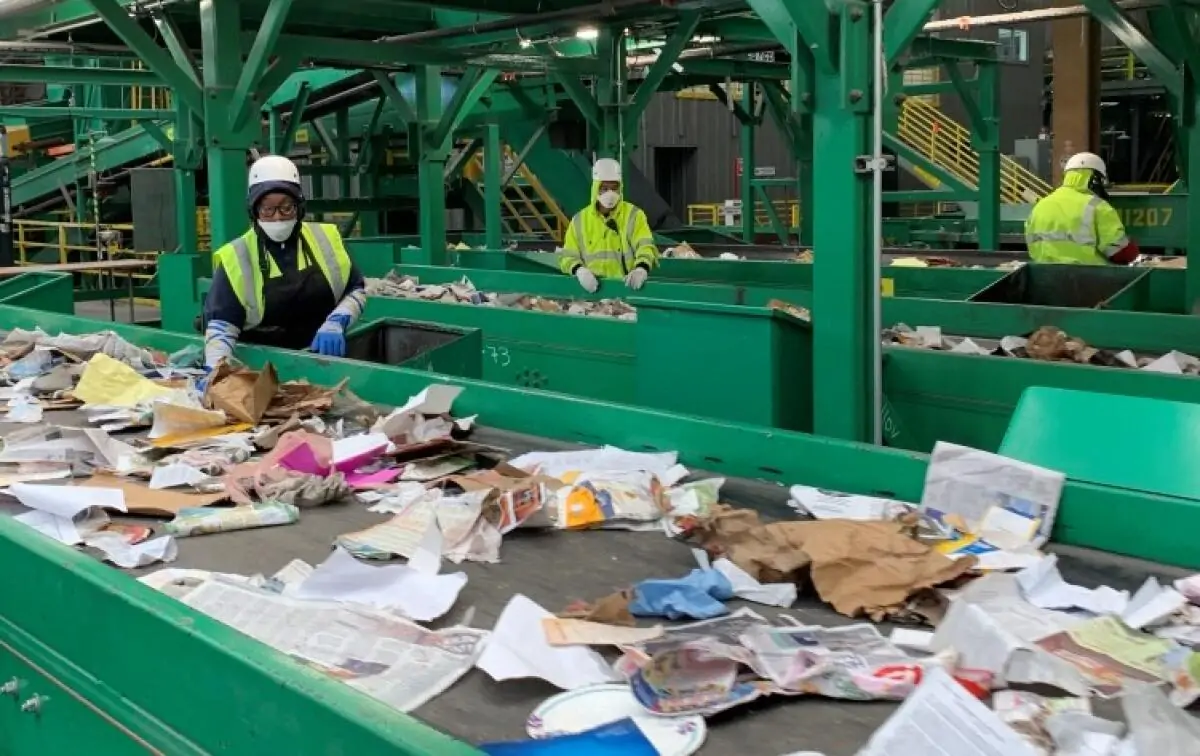
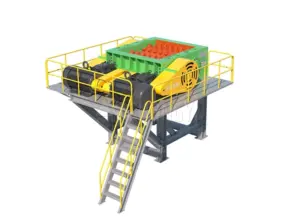
In solid waste classification, trommel screens help divide mixed waste into different size fractions before further processing. They are typically installed after bag opening, shredding, or other pretreatment stages to provide a more consistent material stream for downstream equipment such as magnetic separators, air classifiers, and optical sorting systems.
The screening performance of a trommel screen depends on key factors including screen aperture, drum size, rotation speed, and material characteristics. Compared with static screens, the rotary design provides better material handling capability, reduces blockage risks, and supports continuous operation in large-scale municipal solid waste and recycling applications.
Trommel Screen Working Principle: How Does a Rotary Screen Separate Waste?

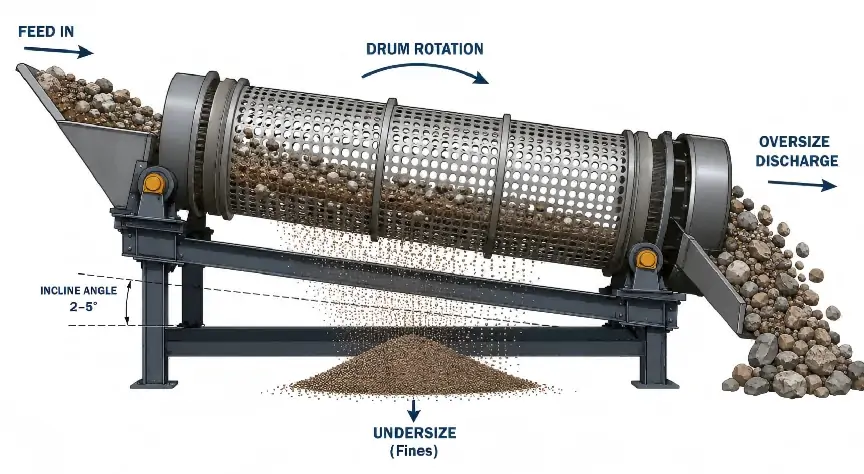
A Trommel Screen separates solid waste materials through the combined effects of drum rotation, material gravity, and customized screen openings. The cylindrical drum is installed at a slight inclination and driven by a motor through a reducer, allowing it to rotate continuously at a controlled speed. As materials enter the drum, they are lifted, dropped, and rolled forward along the screening surface, creating continuous contact between the waste and the screen mesh.
Material Feeding and Continuous Rotation
Waste materials enter the rotating drum through the feeding inlet and gradually move toward the discharge end under the combined action of drum rotation and inclination. Internal lifting plates or flights raise and release the materials during rotation, creating a tumbling movement that improves material dispersion and prevents excessive accumulation inside the drum.
This continuous movement helps maintain a more uniform material layer on the screening surface, allowing different particle sizes to effectively contact the mesh openings and improving overall screening stability.
Size-Based Screening Process
During the rotation process, materials are separated according to their particle size. Smaller particles pass through the screen openings under gravity and are collected as fine fractions, while larger materials remain inside the drum and continue moving forward until they are discharged.
Typical separation results include:
- Fine fraction: Organic materials, soil, compost particles, and small-size components
- Oversize fraction: Plastics, textiles, packaging materials, and larger waste pieces
The continuous rolling action also helps release materials that may become trapped in the screen openings, reducing blockage risks when processing mixed municipal solid waste and other complex waste streams.
Multi-Stage Screening for Better Classification
For applications requiring multiple size classifications, modern trommel screens can be designed with several screening sections using different mesh sizes. This allows one machine to achieve coarse, medium, and fine separation during a single processing stage.
By adjusting factors such as drum length, screen aperture, rotation speed, and inclination angle, trommel screens can be customized for different waste characteristics and processing requirements, providing properly classified material streams for downstream sorting equipment.
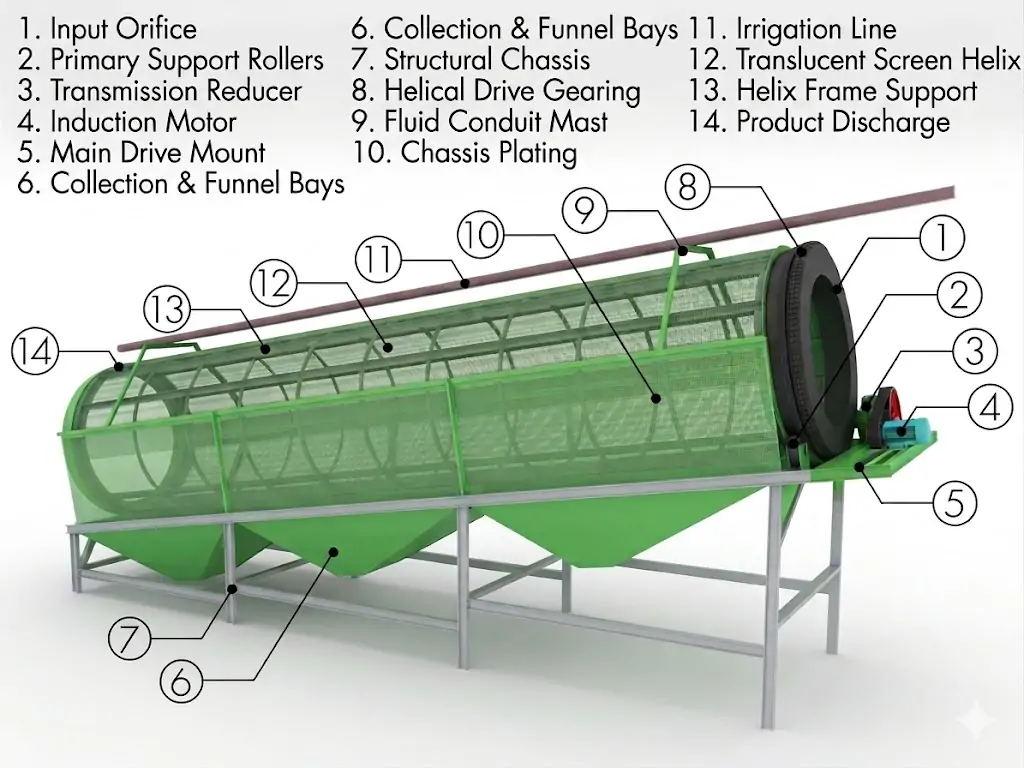
Main Components
A rotary trommel screen consists of several mechanical and structural components that work together to achieve continuous solid waste classification. Among them, the rotating drum, screening mesh, and drive system are the three most important components, as their design directly determines screening efficiency, processing capacity, and long-term operating stability.
Rotating Drum
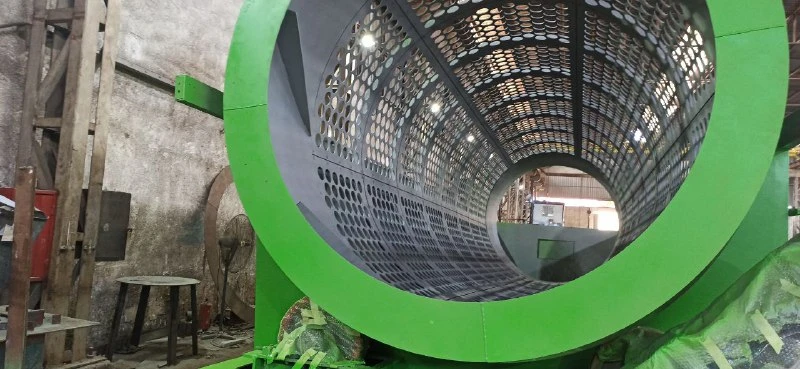
The rotating drum is the central screening component of the trommel screen. It is installed at an inclined angle and rotates continuously to move materials through the screening area. The drum length, diameter, and internal structure influence material retention time and overall screening performance.
Screen Mesh
The screen mesh controls the size separation process by allowing smaller particles to pass through while retaining larger materials. Different mesh openings and materials can be selected according to waste characteristics, required separation accuracy, and wear conditions.
Drive System
The drive system, including the motor and reducer, provides controlled rotational power for the drum. Stable speed control ensures consistent material movement and helps optimize screening efficiency under different operating conditions.
Main Components and Functions
| Component | Function |
| Rotating Drum | Provides continuous material movement and screening space |
| Screen Mesh | Determines separation size and classification accuracy |
| Drive System | Controls drum rotation speed and operating stability |
| Support Roller | Supports drum rotation and maintains smooth operation |
| Feeding Hopper | Ensures uniform material feeding into the screening area |
| Discharge System | Collects and transfers classified materials after screening |
| Cleaning Device | Helps reduce screen blockage and maintain screening efficiency |
How Component Design Affects Trommel Screen Performance
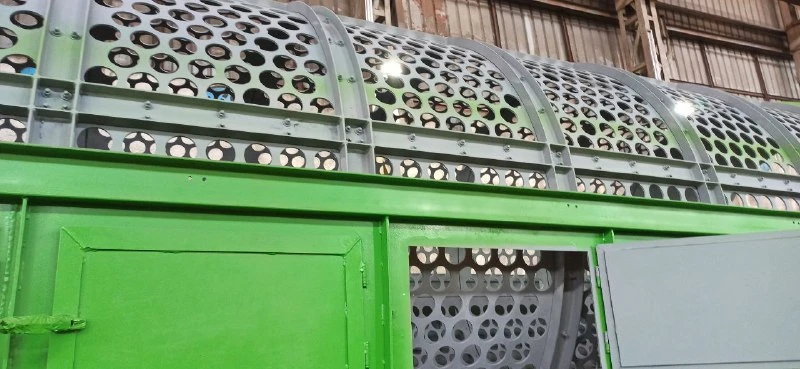
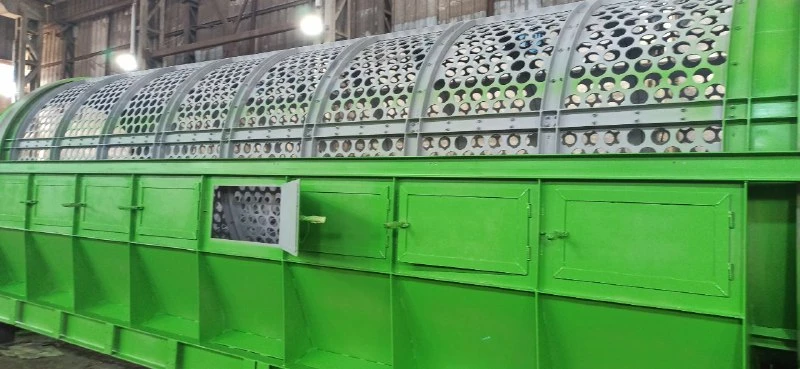
The design and configuration of each component directly influence the performance of a trommel screen. For example, drum dimensions affect material residence time, while screen opening size determines classification accuracy. Wear-resistant screen materials and optimized support structures can improve equipment durability when processing abrasive or mixed waste materials.
For solid waste applications, additional features such as dust covers, internal cleaning systems, and customized screening sections can be integrated to address challenges including dust generation, material wrapping, and screen blockage. This allows trommel screens to maintain stable operation in demanding environments such as MSW sorting plants, compost facilities, and recycling lines.
Trommel Screen Screening Process and Design Features
The screening performance of a Trommel Screen depends not only on drum rotation but also on material flow design, screen configuration, and operating parameters. A well-designed rotary screening system ensures efficient particle separation, stable throughput, and reliable operation under different solid waste conditions.
Material Flow Design
The trommel screening process starts when waste materials enter the inclined rotating drum through the feeding section. As the drum rotates, materials are continuously lifted, rolled, and moved forward along the screening surface. Proper drum design ensures smooth material movement from feeding to discharge while maintaining sufficient contact time between materials and the screen mesh.
The residence time inside the drum directly affects screening efficiency. If materials move too quickly, separation accuracy may decrease, while excessive retention can reduce processing capacity. Therefore, drum length, inclination angle, and rotation speed are optimized according to material characteristics and required output.
Screen Opening and Mesh Selection
The screen mesh is one of the most important factors affecting classification performance. The selection of mesh size, opening shape, and screen material should match the characteristics of the incoming waste, including particle size distribution, moisture content, and material composition.
For solid waste applications, especially wet MSW with high moisture and sticky components, anti-blocking screen designs are often preferred. These structures help maintain stable throughput by reducing material accumulation and improving long-term screening reliability.
Different screen sections can also be configured with various opening sizes, allowing the trommel screen to achieve multiple levels of size classification within one machine.
Adjustable Rotation Speed and Inclination Angle
Rotation speed and drum inclination angle are key operating parameters that influence material movement and screening results. A suitable rotation speed provides enough tumbling action for effective separation, while the inclination angle controls how quickly materials pass through the drum.
By adjusting these parameters, operators can optimize:
- Screening accuracy by improving material contact with the mesh
- Material retention time to achieve better separation efficiency
- Processing capacity according to different waste conditions
For complex waste streams, flexible adjustment of operating parameters allows the trommel screen to maintain stable performance across different applications, from municipal solid waste sorting to organic waste screening and recycling processes.
Advantages
A Trommel Screen plays an important role in solid waste classification by providing continuous size separation and stable material handling in complex waste treatment environments. Its rotary screening structure allows the equipment to process large volumes of mixed waste while maintaining reliable separation performance for downstream sorting processes.
High Processing Capacity for Large-Scale Waste Treatment
Trommel screens are designed for continuous operation and are widely used in large-scale municipal solid waste (MSW) sorting plants where consistent throughput is required. The rotating drum provides an effective screening surface, enabling large quantities of waste to be classified without frequent interruption.
By adjusting drum dimensions, screen configuration, and operating parameters, trommel screens can be customized for different plant capacities. This makes them suitable for large waste treatment facilities, composting plants, and recycling systems that require stable long-term operation.
Strong Adaptability to Complex Waste Materials
Solid waste streams often contain materials with different sizes, moisture levels, and physical characteristics. Trommel screens are designed to handle these variations through continuous material tumbling and controlled size separation, making them suitable for household waste, organic waste, compost materials, and construction waste recycling.
This adaptability allows trommel screens to maintain stable screening performance even when processing mixed and irregular materials. As a result, they are commonly used as a primary classification stage before further sorting and material recovery processes.
Reduced Screen Blocking During Operation
The continuous rotary movement of a trommel screen helps loosen and redistribute materials throughout the screening process, reducing the risk of material accumulation on the screen surface. This is particularly valuable for wet MSW, organic waste, and sticky materials that are more likely to cause blockage in conventional screening systems.
With optimized screen design and suitable operating conditions, trommel screens can maintain smooth material flow and reduce cleaning requirements. This helps improve equipment availability and supports more consistent waste separation efficiency.
Reliable Operation and Lower Maintenance Requirements
Trommel screens feature a simple and robust mechanical structure with fewer high-frequency moving components, allowing stable operation under demanding waste processing conditions. The rotary design reduces mechanical impact and vibration, which helps extend equipment service life and improve operational reliability.
Replaceable screening components, durable construction, and convenient maintenance access further reduce downtime and operating costs. These advantages make trommel screens a practical solution for waste sorting plants requiring dependable performance over long operating periods.
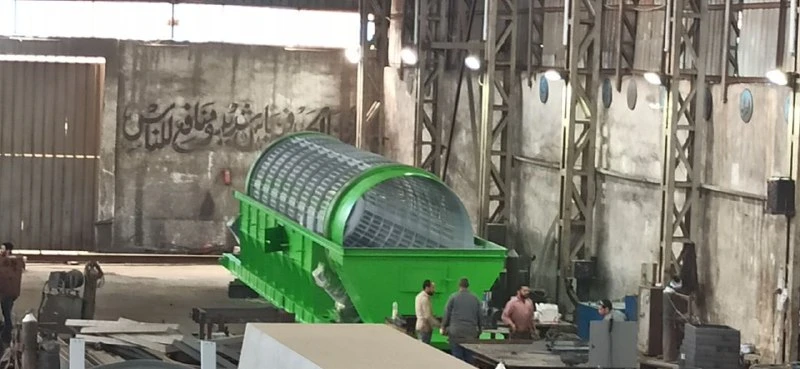
Applications of Trommel Screen in Solid Waste Management
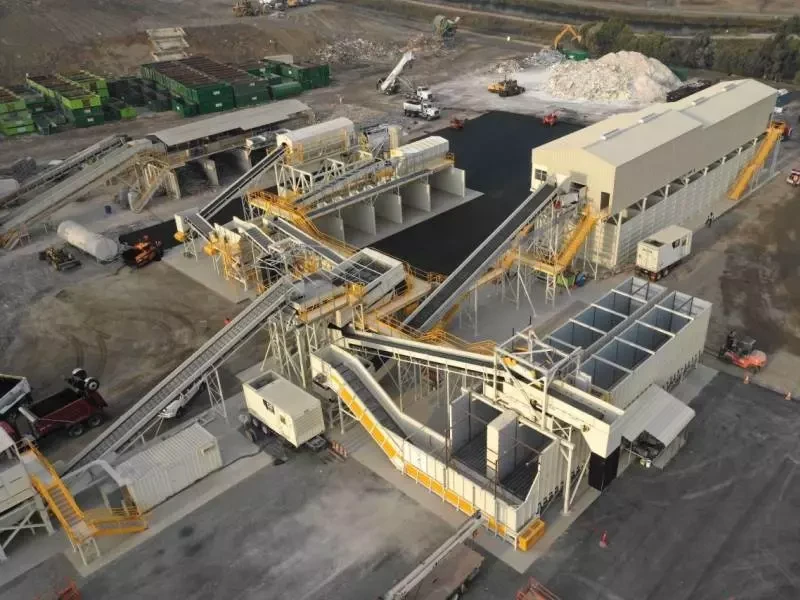
Trommel screens are widely used in solid waste management systems for primary classification and size separation before further sorting or recycling processes.
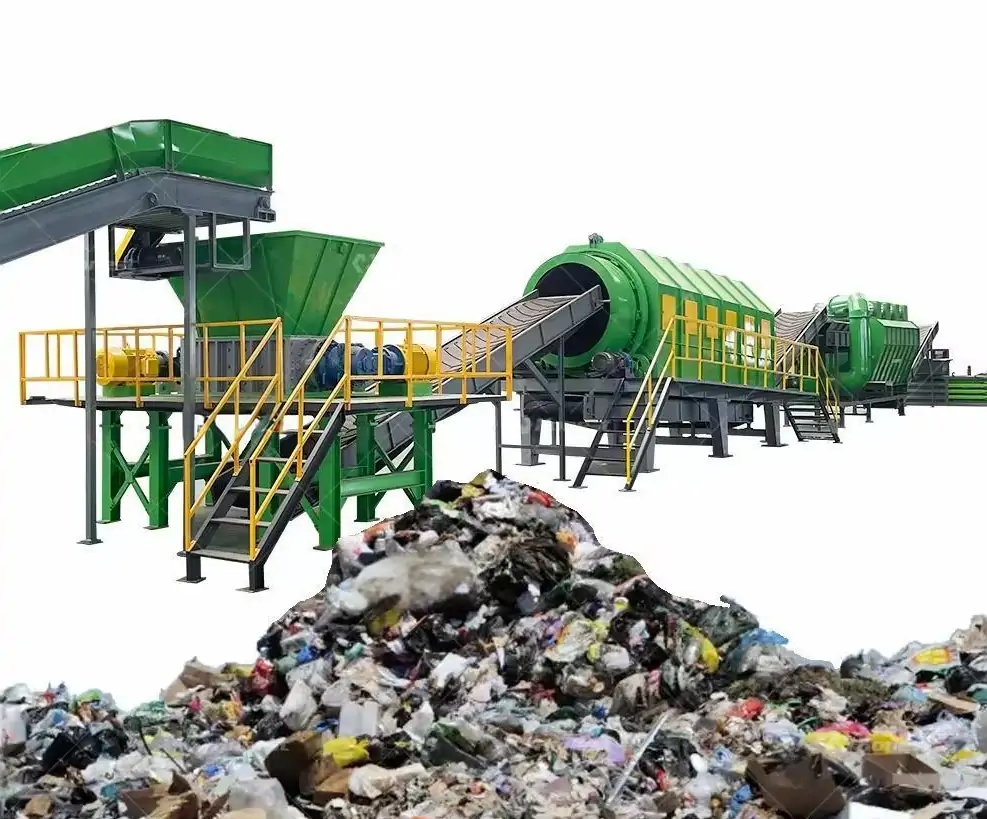

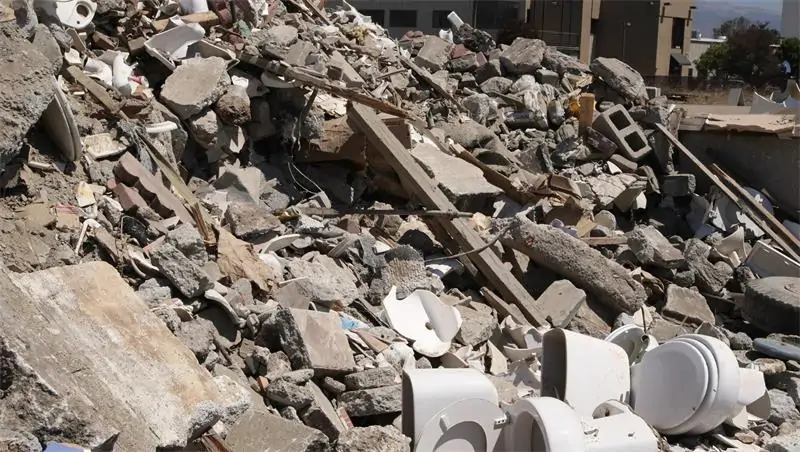
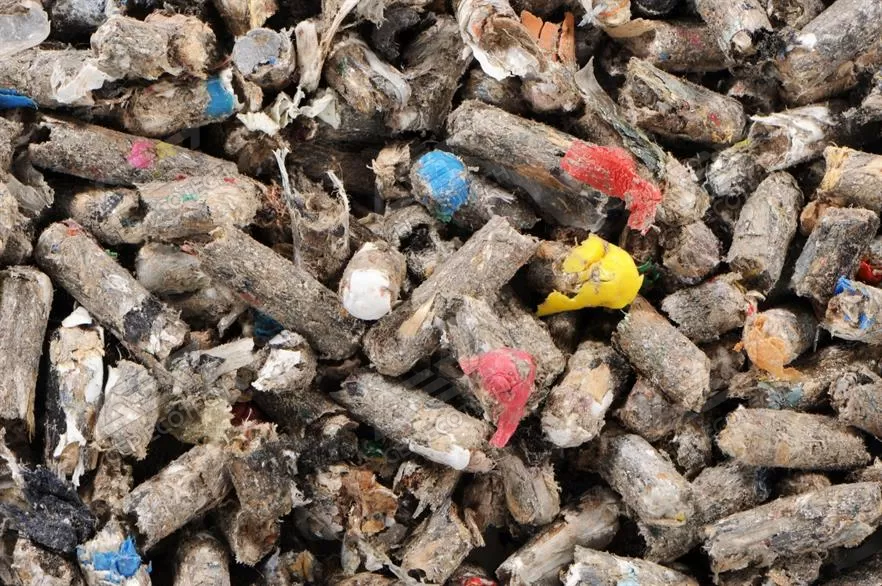
How to Select the Right Trommel Screen for Solid Waste Classification?
Selecting the right Trommel Screen requires considering waste characteristics, processing requirements, equipment configuration, and long-term operating conditions. A suitable trommel screen should not only meet current screening requirements but also provide stable performance under continuous waste treatment conditions.
Consider Material Characteristics
The properties of incoming waste directly affect trommel screen performance. Factors such as moisture content, material density, particle size distribution, and stickiness should be evaluated before selecting equipment. For example, wet and sticky municipal solid waste may require anti-blocking designs, while abrasive materials may need more durable screen materials.
Understanding the characteristics of the feed material helps determine the appropriate drum structure, screen opening, and cleaning configuration, ensuring more stable screening efficiency and reducing operational problems during long-term use.
Match Processing Capacity with Project Requirements
The processing capacity of a trommel screen should be selected according to the required throughput, plant scale, and operating schedule. For large-scale MSW sorting plants, equipment capacity should support continuous operation while maintaining sufficient screening efficiency.
When selecting capacity, it is important to consider future expansion requirements and avoid operating the equipment at maximum load for extended periods. Proper capacity matching helps improve reliability and reduce unnecessary downtime.
Choose the Right Screen Design and Configuration
Screen design has a direct impact on classification accuracy and maintenance requirements. Different applications may require single-stage or multi-stage screening sections, customized mesh sizes, or replaceable screen panels to achieve the desired separation results.
For complex waste streams, heavy-duty drum structures, wear-resistant materials, and easy-maintenance screen designs can improve equipment durability and reduce replacement costs. The configuration should be selected based on the downstream sorting process and final material requirements.
Evaluate Engineering Support and After-Sales Service
A reliable trommel screen supplier should provide more than equipment manufacturing. Professional engineering support, installation guidance, spare parts availability, and technical assistance are important factors for ensuring stable operation after commissioning.
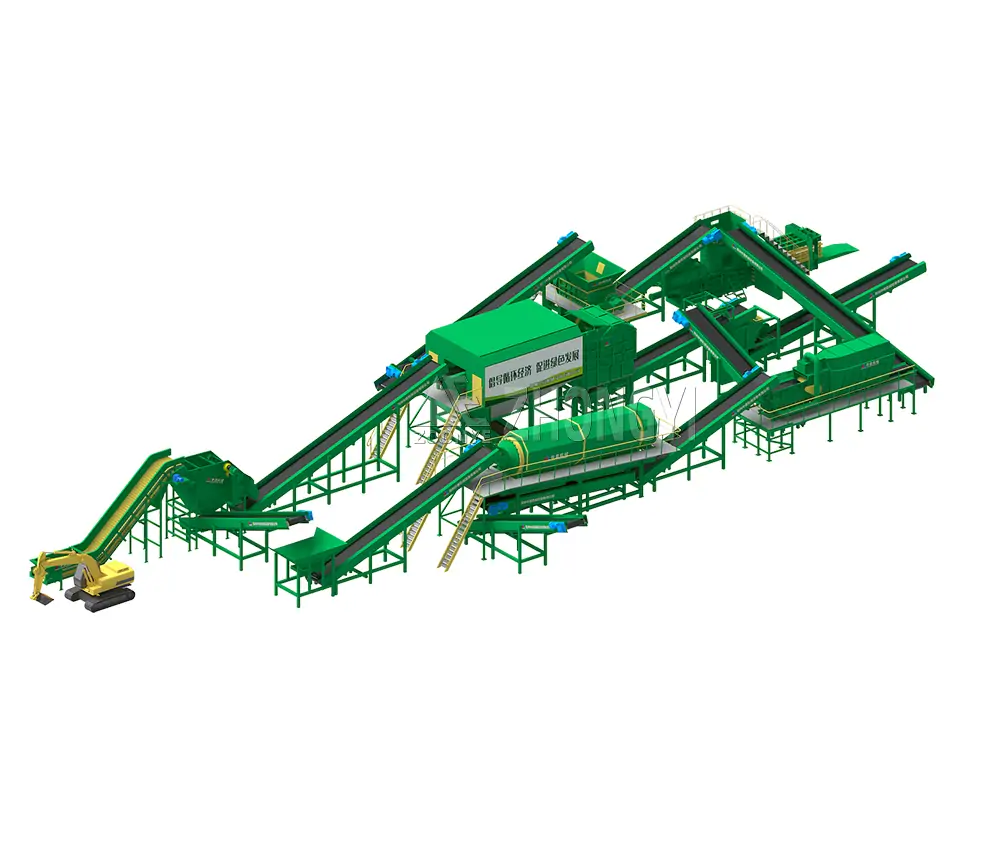
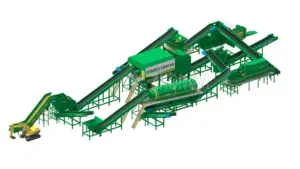
For large waste sorting projects, suppliers with experience in complete system integration can provide better solutions by considering the entire process, including feeding, screening, and downstream separation equipment.
Common Trommel Screen Problems and Practical Solutions
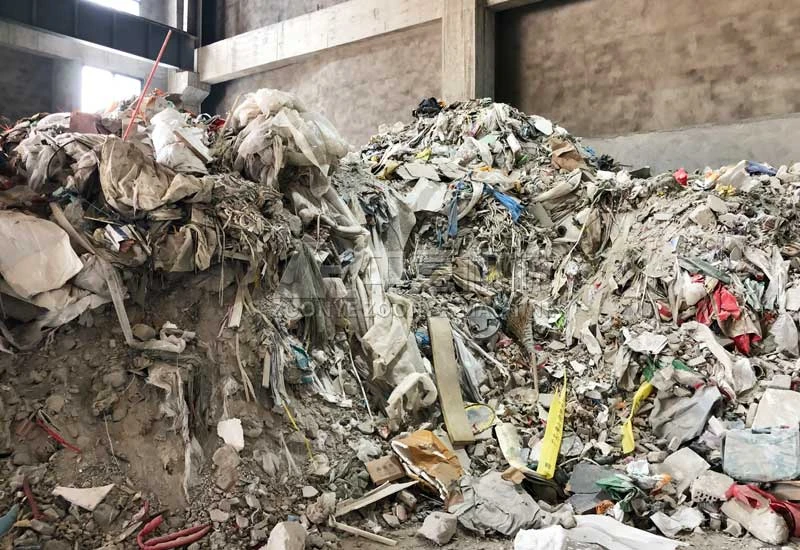
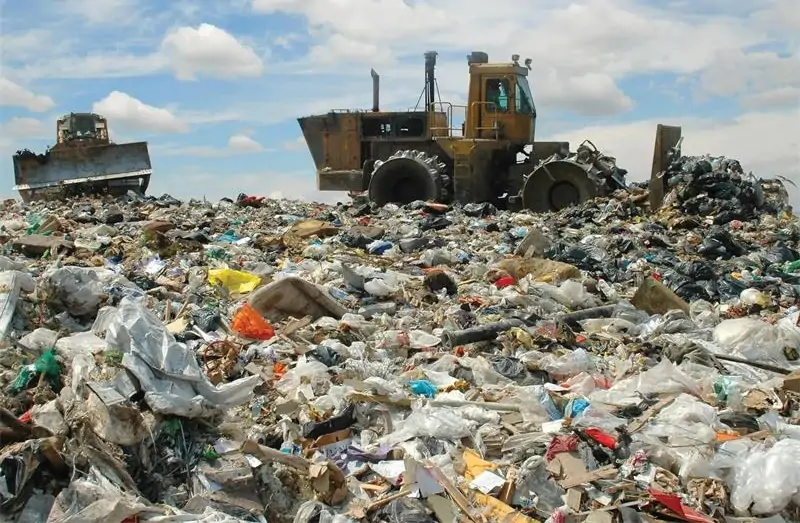
In solid waste screening applications, trommel screens may face challenges caused by complex material characteristics, including high moisture content, sticky components, irregular shapes, and abrasive materials. Selecting the right equipment design and operating parameters can effectively improve screening stability and reduce downtime.
| Challenge | Solution |
| Screen blockage caused by wet or sticky materials | Select suitable screen openings, anti-blocking designs, and cleaning systems to maintain stable material flow |
| Material wrapping around internal structures | Use optimized drum structures to reduce the risk of plastic films, textiles, and fibrous materials becoming trapped |
| Low screening efficiency | Adjust rotation speed, feeding rate, drum inclination, and screen configuration according to material conditions |
| Excessive wear during continuous operation | Apply wear-resistant materials and reinforced components for abrasive waste applications |
| Uneven material feeding | Install controlled feeding systems to ensure uniform distribution across the screening surface |
For complex solid waste streams, a properly configured trommel screen can significantly improve classification efficiency and operational reliability. Solutions such as customized drum designs, replaceable screen panels, and integrated cleaning systems help equipment adapt to different waste conditions while reducing maintenance requirements.


Trommel Screen vs Disc Screen for Solid Waste Classification
Efficient screening is an important step in modern solid waste sorting plants because it directly affects downstream processes such as magnetic separation, air separation, optical sorting, and RDF production.
Although both trommel screens and disc screens are used for material classification, their working methods and application advantages are different. Trommel screens are generally preferred for accurate size separation and organic fraction recovery, while disc screens are often selected for high-throughput pre-screening of bulky and plastic-rich waste streams.
Comparison of Trommel Screen and Disc Screen
| Feature | Trommel Screen | Disc Screen |
| Screening Method | Rotating drum with screen openings | Rotating discs with adjustable gaps |
| Best Application | Size classification and organic separation | High-volume pre-screening of bulky waste |
| MSW Application Stage | Primary and secondary screening | Mainly pre-screening |
| Fine Material Separation | Excellent | Moderate |
| Organic Fraction Recovery | Excellent | Moderate |
| Plastic Film Handling | Good | Excellent |
| Wet Waste Adaptability | Good | Good |
| Anti-Wrapping Performance | Good | Excellent |
| Particle Size Control | More precise | More flexible |
| Maintenance Requirement | Medium | Low to medium |
| Typical Downstream Process | Composting, RDF production, fine sorting | Air separation, magnetic separation, optical sorting |
Which One Is Better for MSW Sorting Plants?
The choice between trommel screens and disc screens depends on waste composition and project requirements. Trommel screens are usually more suitable when accurate size classification and organic fraction separation are required, while disc screens perform better in applications with high plastic content, bulky materials, and a greater risk of material wrapping.
For complex MSW streams, many large sorting plants combine different screening technologies to achieve better overall separation efficiency and improve downstream equipment performance.If you’d like to learn more about “Trommel Screen vs. Disc Screen for MSW Sorting Plants: Which Is Better?”, please click here.
Related Waste Sorting Equipment

Bag Opener
Designed to open waste bags before screening, improving material dispersion and increasing the efficiency of downstream sorting equipment.

Magnetic Separator
Removes ferrous metals from waste streams to improve resource recovery and material purity.

Eddy Current Separator
Separates non-ferrous metals such as aluminum from mixed waste materials for recycling applications.

AI Optical Sorting System
Uses intelligent recognition technology to identify and sort target materials with higher accuracy in advanced recycling plants.
Scientific Maintenance Methods to Extend Trommel Screen Service Life
Regular maintenance helps keep the trommel screen running efficiently and reduces unexpected downtime. Operators should check the drum, screen openings, and drive system during daily operation to ensure there is no excessive wear, material buildup, or abnormal operation. Early inspection of these key parts can prevent small problems from affecting the entire screening process.
For long-term operation, wear parts such as rollers, gears, and screen panels should be inspected and replaced according to actual working conditions. The rotation speed and feeding rate should also be adjusted based on material characteristics to avoid overloading the equipment and maintain stable screening performance.
Zhongyi ECO Trommel Screen: A Modern Solution for Efficient Waste Sorting
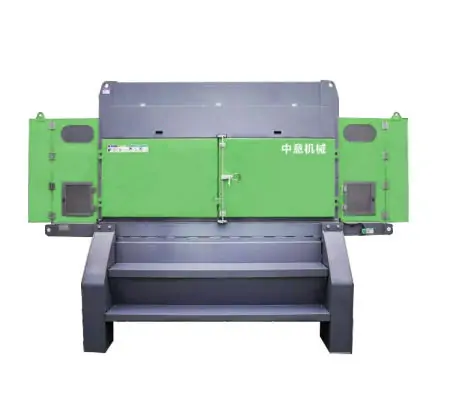
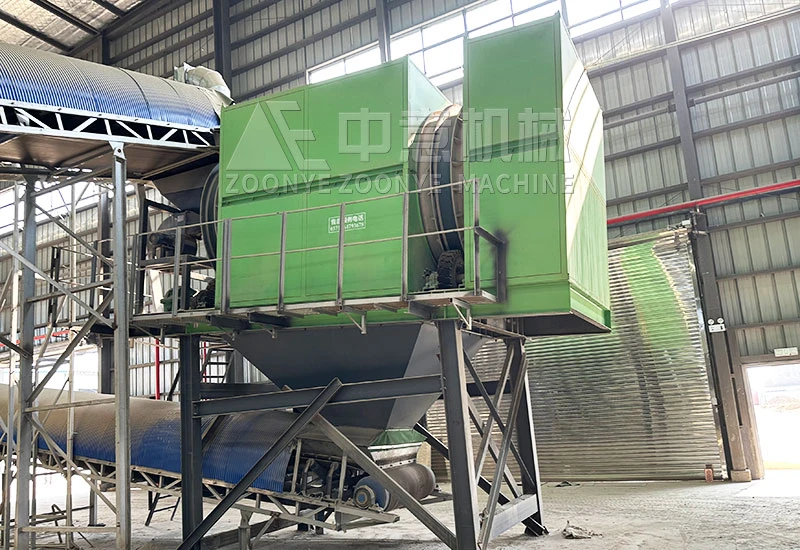
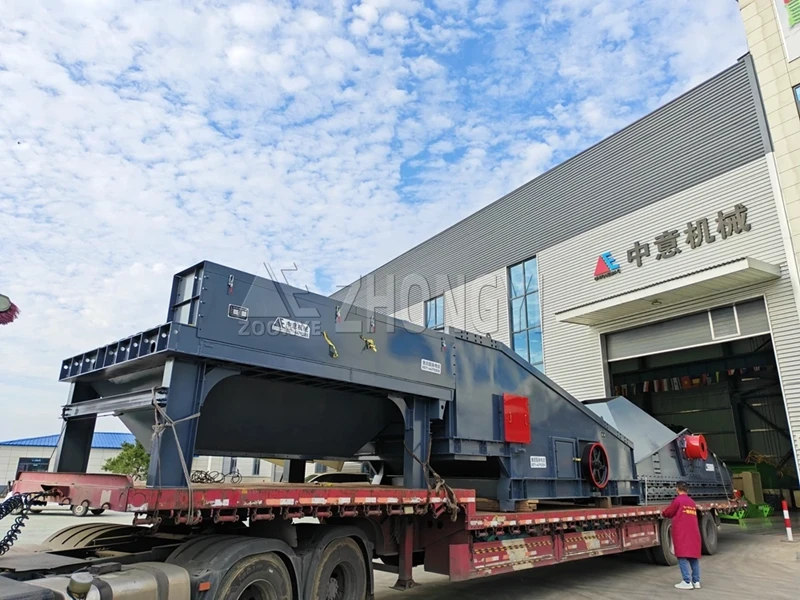
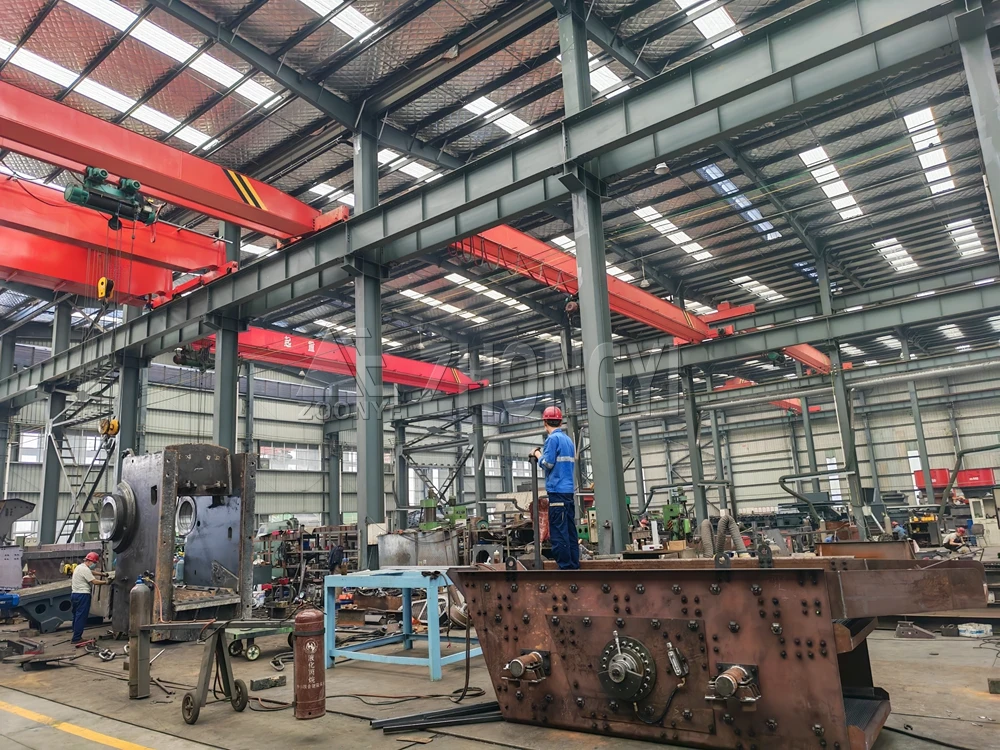
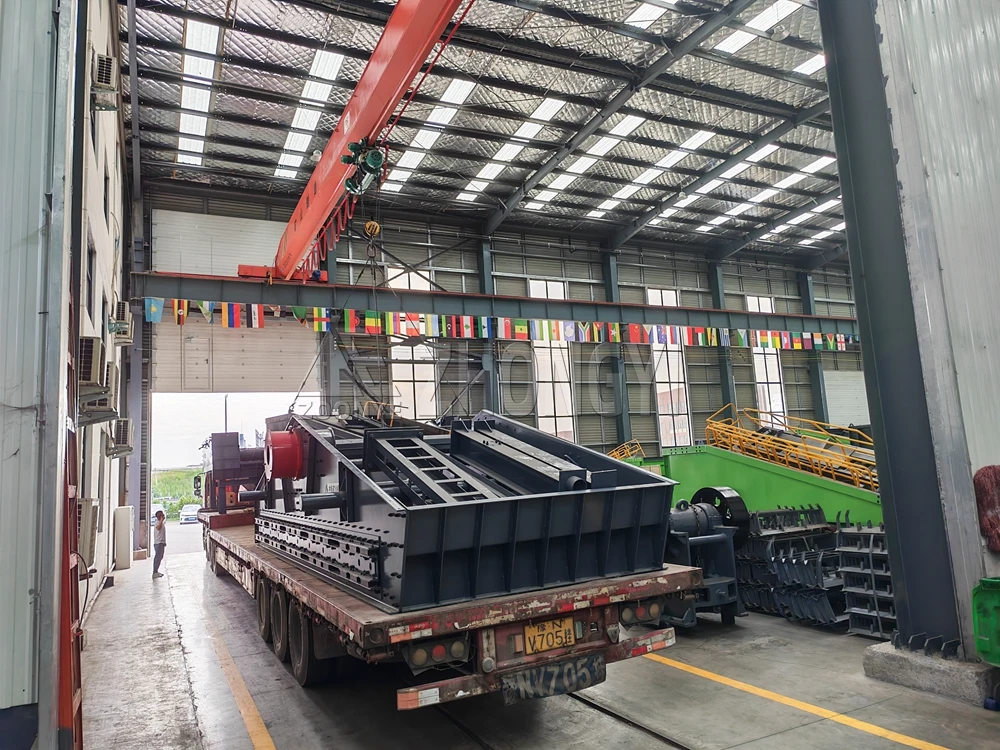
Zhongyi ECO provides rotary trommel screen solutions designed for modern solid waste sorting plants, focusing on stable screening performance, reliable operation, and flexible configurations for different waste characteristics. Based on factors such as waste composition, processing capacity, and sorting requirements, the equipment can be customized to meet different project needs.
Built for demanding waste treatment environments, Zhongyi ECO trommel screens feature heavy-duty drum structures, wear-resistant components, and reliable transmission systems to support continuous operation. The equipment can also be integrated with complete sorting systems, including bag openers, magnetic separators, eddy current separators, air separators, and AI sorting equipment, helping improve overall waste classification efficiency.
With professional experience in solid waste processing, Zhongyi ECO supports customers through process design, equipment selection, and installation guidance, providing practical solutions from individual screening equipment to complete waste sorting systems.
Conclusion
Trommel screens play an important role in solid waste classification by providing continuous size separation, stable processing capacity, and reliable performance for complex waste streams. Through optimized drum design, suitable screen configuration, and proper operating parameters, trommel screens can effectively separate different material fractions and improve the efficiency of downstream sorting processes.
Choosing the right trommel screen requires considering waste characteristics, processing capacity, screening requirements, and long-term operating conditions. Zhongyi ECO provides customized trommel screen solutions based on different waste sorting applications, helping customers achieve more efficient and reliable waste treatment operations. Contact Zhongyi ECO professional engineers to discuss your solid waste classification requirements and find the right screening solution for your project.


Andy Yu
Technical Engineer | Zhongyi ECO
16+
Years Exp.
300+
Solutions
50+
Countries
16 years’ experience in environmental and solid waste management, specializing in C&D recycling and waste sorting solutions. At Zhongyi Mining Machinery, focused on improving global clients’ efficiency through technical expertise and tailored configurations.
FAQ
A trommel screen separates solid waste according to particle size through a rotating cylindrical drum and customized screen openings. Waste materials enter the drum, where they are continuously lifted, rolled, and moved forward. Smaller particles pass through the screen mesh, while larger materials remain inside the drum and discharge from the end, creating continuous size-based classification.
Trommel screens are widely used for municipal solid waste, organic waste, compost screening, construction waste recycling, and RDF production lines. They are suitable for mixed waste streams containing different particle sizes, moisture levels, and material compositions, helping separate fine fractions from larger materials before further sorting, recovery, or recycling processes.
Trommel screens are suitable for wet and sticky waste because the continuous rotary movement helps loosen materials and reduce accumulation on the screen surface. When equipped with proper screen designs and cleaning systems, they can handle high-moisture MSW, organic waste, and compost materials while maintaining stable throughput and reducing frequent manual cleaning requirements.
Trommel screens and disc screens use different screening methods and are suitable for different waste conditions. Trommel screens provide more precise particle size classification and are commonly used for organic fraction separation, while disc screens are better for high-volume pre-screening of bulky and plastic-rich waste with strong anti-wrapping performance.
Choosing the right trommel screen depends on waste characteristics, processing capacity, required separation size, and downstream sorting requirements. Important factors include moisture content, material composition, drum size, screen opening, cleaning system, and equipment durability. A suitable configuration helps improve screening efficiency and reduce maintenance problems during long-term operation.
The required screen size depends on the target separation process and final material requirements. Different applications may use different screen openings for separating organic fractions, recyclables, RDF materials, or construction waste components. Trommel screens can be customized with single-stage or multi-stage screening sections to achieve different particle size classifications.
Yes. Trommel screens are commonly installed as a key classification unit in complete MSW sorting plants. They can work together with bag openers, magnetic separators, eddy current separators, air separators, and optical sorting systems to prepare different material streams and improve the efficiency of downstream recycling and recovery processes.
Zhongyi ECO provides customized trommel screen solutions based on waste characteristics, plant capacity, and sorting requirements. The equipment is designed for stable operation in demanding waste environments and can be integrated into complete sorting systems. With engineering support from process design to installation guidance, Zhongyi ECO helps customers develop reliable waste classification solutions.