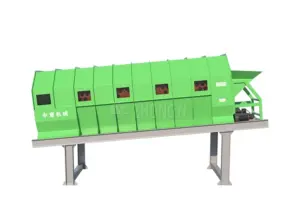
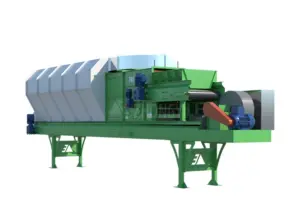


What is a Magnetic Separators for Recycling?
A magnetic separator for recycling is a material separation system designed to automatically recover ferrous metals from mixed waste streams during recycling. It uses permanent magnets or electromagnetic fields to extract iron and steel from municipal solid waste (MSW), construction and demolition (C&D) waste, industrial waste, biomass, RDF, and other recyclable materials. By removing magnetic metals before or after screening and crushing, the system improves material purity, protects downstream equipment from metal damage, and increases the value of recovered resources.
In modern waste recycling plants, magnetic separators are typically integrated with Bulk Material Conveyors, shredders, trommel screens, windshifters, and optical sorting systems to achieve continuous and automated metal recovery. Depending on the process layout and material characteristics, different separator types, such as overband magnetic separators, magnetic drum separators, and pulley magnetic separators, can be selected to maximize recovery efficiency while minimizing maintenance and operating costs. Xinzhongyi ECO provides customized magnetic separation solutions tailored to plant capacity, waste composition, and process requirements.If you’d like to learn more about eddy current separators versus magnetic separators, please click on this article.


Applicable Materials
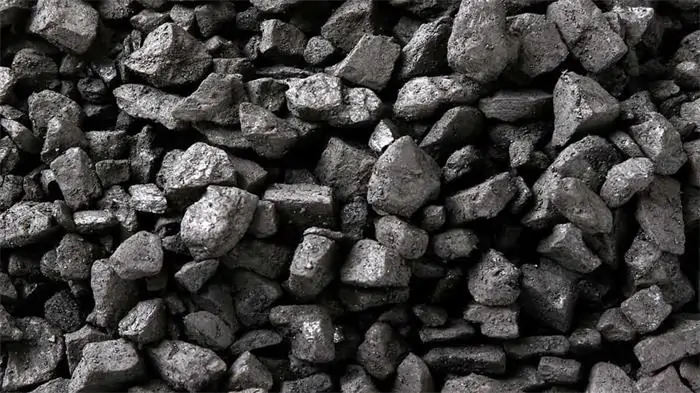
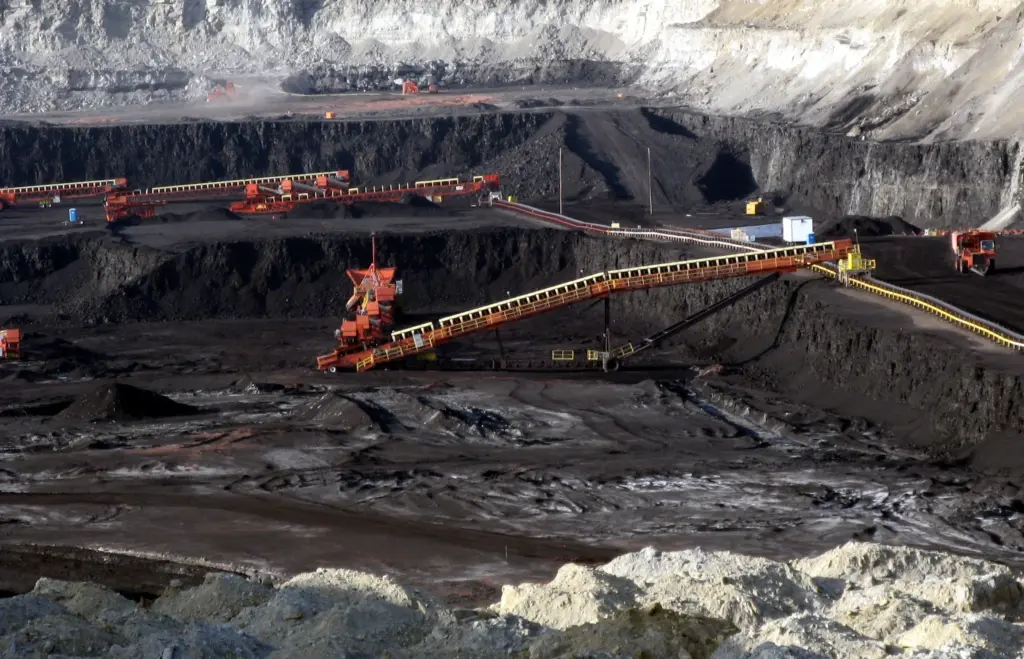
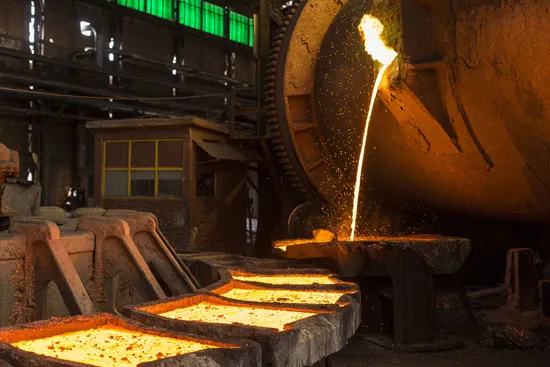
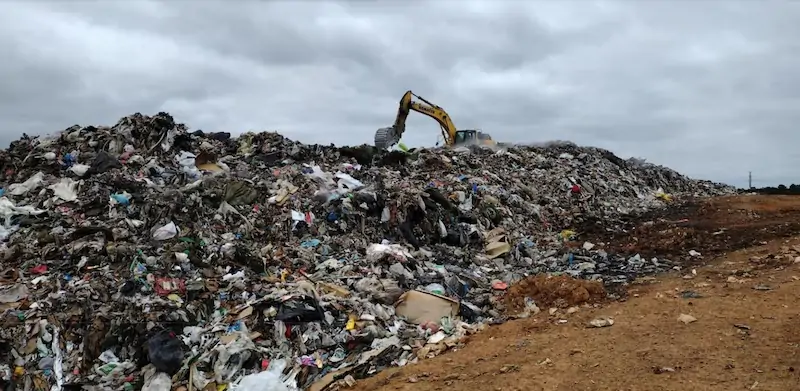
The magnetic separator is widely used in waste sorting systems to remove ferrous metals from mixed waste streams before further processing. It is suitable for handling various solid waste materials containing iron contaminants, helping improve sorting purity, protect downstream equipment, and increase the recovery value of recyclable resources. Common applications include municipal solid waste, construction debris, industrial slag, and mining-related waste materials such as those listed below.


Working principle
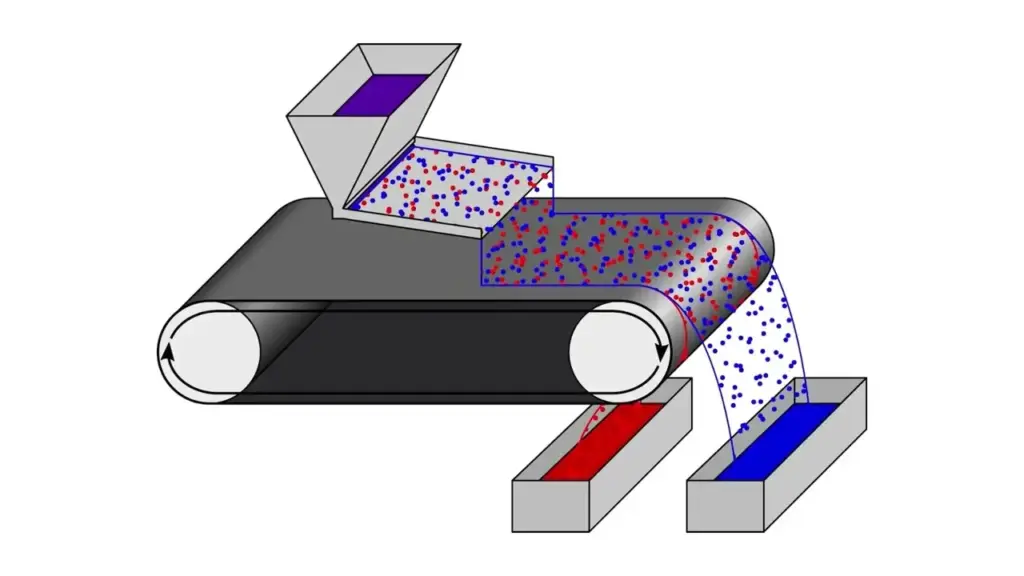
The magnetic separator is installed above the conveyor belt and operates continuously with the production line. As waste materials pass through the magnetic field, ferrous metals are attracted to the magnetic system and automatically discharged by the self-cleaning belt mechanism, eliminating manual iron removal and ensuring uninterrupted operation.
The system consists of a magnetic separator body and an automatic discharge device. Its optimized magnetic circuit generates strong magnetic intensity with deep magnetic penetration, enabling efficient iron removal from mixed waste streams. This makes it suitable for municipal solid waste, construction waste, industrial slag, and other waste sorting applications requiring continuous ferrous metal separation.If you want to know “How Does a Magnetic Separator Work? Working Principle and Industrial Applications,” please click on the article.
Components of the Magnetic Separator
The magnetic separator is mainly composed of a magnetic system, driving device, self-cleaning discharge belt, frame structure, and control system. Each component is designed to ensure stable magnetic separation, continuous iron discharge, and reliable operation under demanding waste sorting conditions.
Magnetic System
High-strength permanent magnets provide stable magnetic field intensity and strong ferrous metal attraction.
Self-Cleaning Discharge Belt
Automatically removes captured iron materials to ensure continuous operation without manual cleaning.
Driving Device
Provides stable power transmission for smooth belt movement and efficient automatic discharge.
Support Frame
Heavy-duty steel structure with high load-bearing capacity for stable installation and long-term operation.
Control System
Supports automatic operation and coordinated control with the waste sorting production line.
Specification
Below is a standard technical parameter range of the magnetic separator for reference. Actual specifications can be adjusted according to material type, processing capacity, installation space, and production line requirements. We provide full customization to ensure the equipment matches your waste sorting system and operating conditions.
| Model | Apply bandwidth (mm) | Rated hanging height (h=mm) | Magnetic field strength (≥mT) | Material thickness (≤mm) | Drive (kw) | Adaptation belt speed (≤m/s) | Working hours | Weight (kg) |
| RCYD-5 | 500 | 150 | 60 | 80 | 1.5 | 750 | ||
| RCYD-6 | 600 | 175 | 60 | 120 | 1.5 | 920 | ||
| RCYD-6.5 | 650 | 200 | 70 | 150 | 1.5 | 1200 | ||
| RCYD-8 | 800 | 250 | 70 | 200 | 2.2 | 1400 | ||
| RCYD-10 | 1000 | 300 | 70 | 250 | 3 | 2120 | ||
| RCYD-12 | 1200 | 350 | 70 | 300 | 4 | 2.5 | continuous | 3350 |
| RCYD-14 | 1400 | 400 | 70 | 350 | 4 | 4450 | ||
| RCYD-16 | 1600 | 450 | 70 | 400 | 5.5 | 6200 | ||
| RCYD-18 | 1800 | 500 | 72 | 450 | 5.5 | 8100 | ||
| RCYD-20 | 2000 | 550 | 72 | 500 | 7.5 | 9700 |
Advantages
Applications of Magnetic Separator
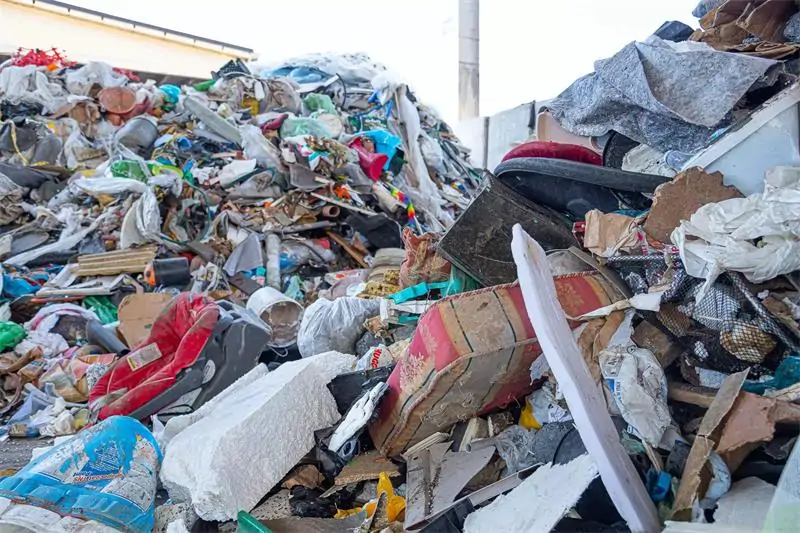
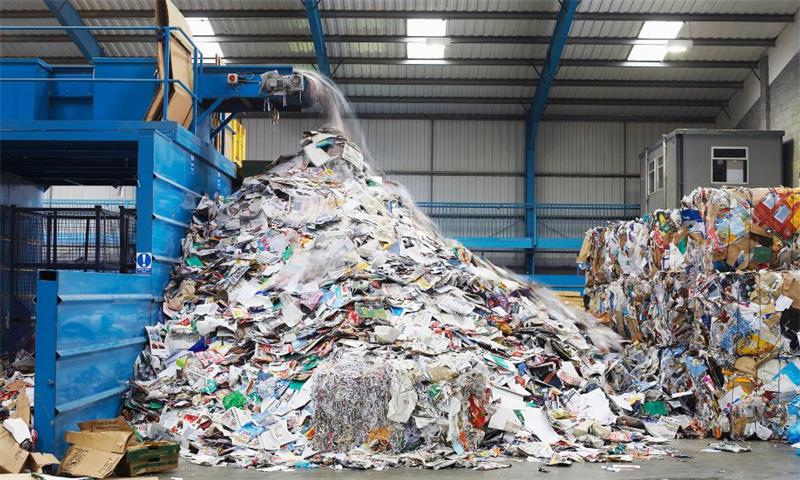
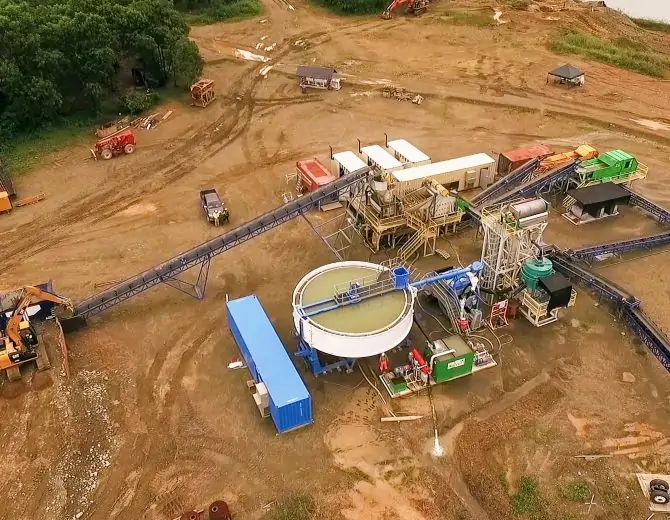
Magnetic separators are widely used in waste sorting and resource recovery systems for efficient ferrous metal removal. They help improve sorting purity, protect downstream equipment, and increase the recycling value of processed materials. Suitable for continuous operation, they can be integrated into various waste treatment and material recovery production lines.

Magnetic Separator Manufacturer & Supplier
As a magnetic separator manufacturer and supplier with over 16 years of experience, Xinzhongyi ECO focuses on equipment design, production, and complete waste sorting solutions for mining, recycling, and solid waste processing industries. We manage the full manufacturing process in-house to ensure stable quality and consistent performance in different working conditions.
With years of project practice in mining waste, municipal waste, construction debris, and industrial recycling lines, we provide customized system solutions based on material type, capacity, and site layout. In addition to equipment supply, we support installation, commissioning, and long-term service to keep the system running reliably.
For project consultation or technical selection support, contact us with your material and capacity requirements.
FAQ
Selection depends on ore type and magnetic properties. Magnetite typically uses LIMS (0.1–0.2 T), while hematite or weakly magnetic minerals require HIMS (1–2 T). Lab testing is recommended to confirm the optimal configuration.
Capacity varies by model and size, usually ranging from 50 to 300 TPH for wet drum separators. For example, a 1200 mm drum commonly handles 80–120 TPH, depending on feed density and particle size distribution.
Wet magnetic separators are suitable for 0–3 mm (optimal <1 mm), while dry separators handle 1–50 mm. Proper grinding and classification are essential to ensure stable separation efficiency and avoid performance loss.
For magnetite, recovery can reach 95–99% with LIMS. For weakly magnetic minerals, HIMS typically achieves 70–90% recovery, depending on ore characteristics and process design.
Higher magnetic intensity improves recovery of weakly magnetic minerals but may reduce concentrate grade and increase energy consumption. Proper selection balances recovery, grade, and operating cost based on project requirements.
Magnetic separators require routine inspection of wear parts, bearings, and magnetic systems. With proper maintenance, key components typically last 3–5 years, and downtime is minimal due to simple mechanical structure.
Yes, most manufacturers offer customization based on ore type, capacity (TPH), plant layout, and process flow. This ensures better integration into existing systems and improves overall separation performance.
Total cost includes equipment price, customization, installation, and freight. Shipping for heavy equipment can account for 10–30% of total cost, especially for overseas projects in Africa or South America.