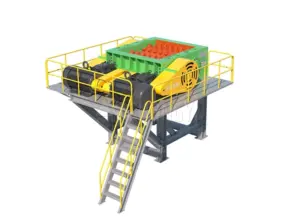
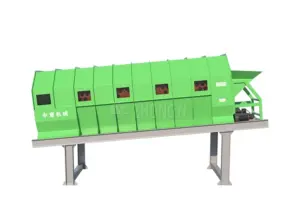
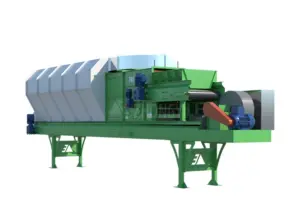


What is a Rotary Trommel Screen?
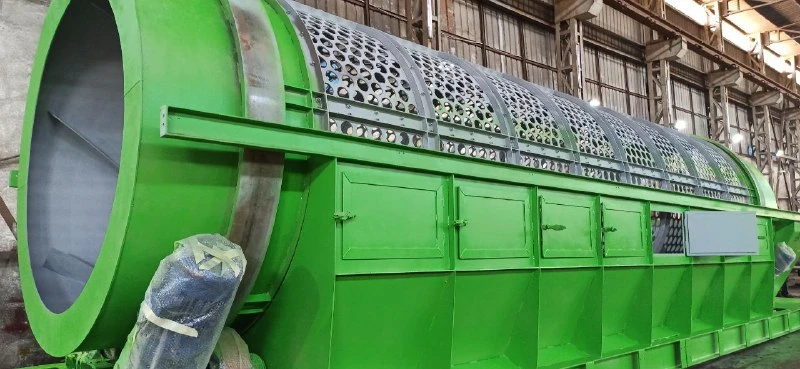
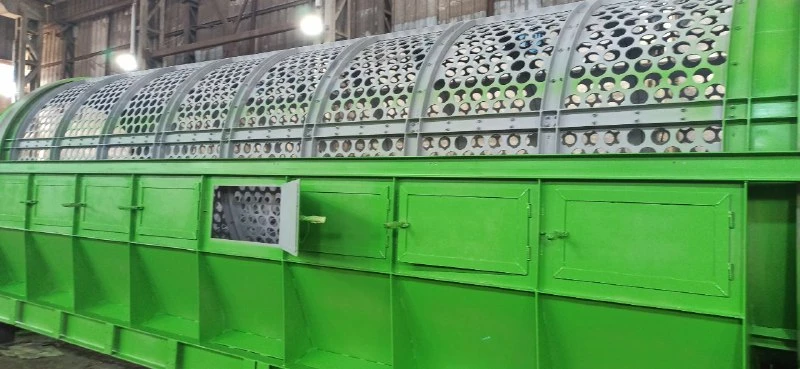
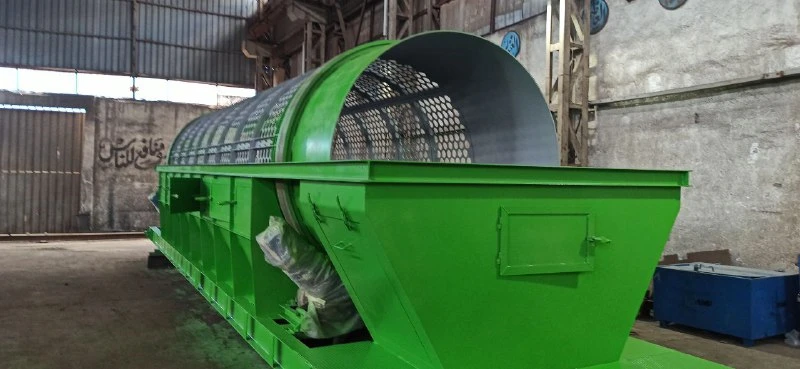
The rotary trommel screen also called a rotary drum screen, is a continuous screening machine designed to separate materials by particle size through a rotating cylindrical drum. During operation, the drum lifts and tumbles the material, allowing smaller particles to pass through the screen openings while larger fractions move toward the discharge end. This screening method ensures stable throughput and efficient material classification.
Xinzhongyi ECO rotary trommel screens are widely used in construction waste recycling, municipal solid waste treatment, compost processing, and aggregate production. Designed with wear-resistant drum structures and optional self-cleaning systems, they provide reliable performance when handling sticky, wet, or mixed materials, while screen size and drum configuration can be customized to match different processing requirements.
Screening Size Range
Rotary trommel screens are designed to process materials within a wide particle size range, typically handling feed sizes from 50–150 mm. Depending on screen aperture configuration, fine fractions can be separated down to less than 3 mm, while larger screened products are efficiently discharged for secondary sorting or further processing.
Processing Capacity
Output capacity depends on drum dimensions and screen opening size. Smaller apertures are suitable for fine material recovery with moderate throughput, while larger screen sizes significantly increase processing volume. With optimized drum design, trommel screens can achieve capacities of up to 280 t/h, making them suitable for both medium and large-scale waste sorting lines.
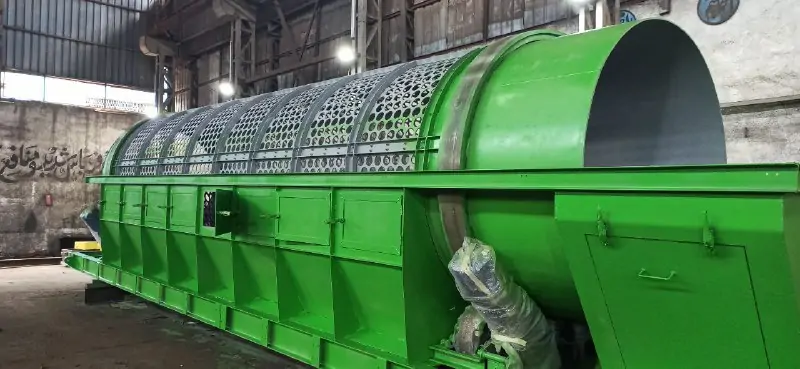
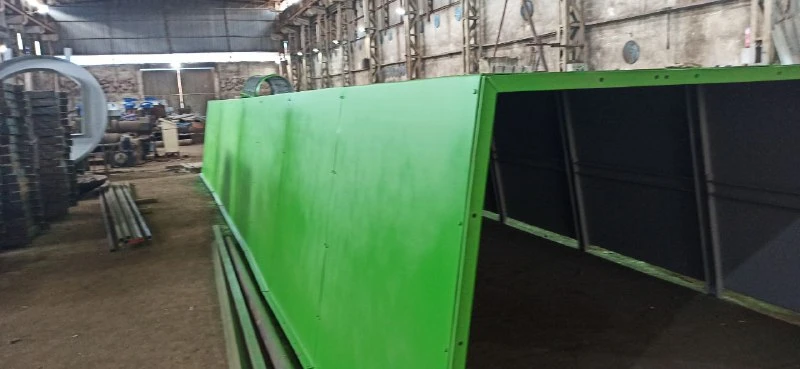
Products Show
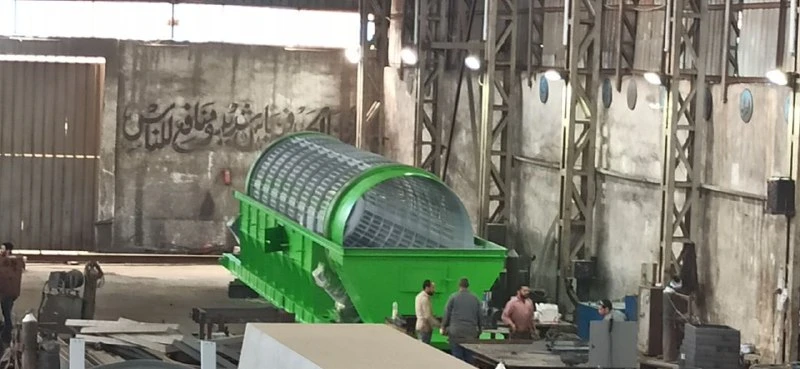
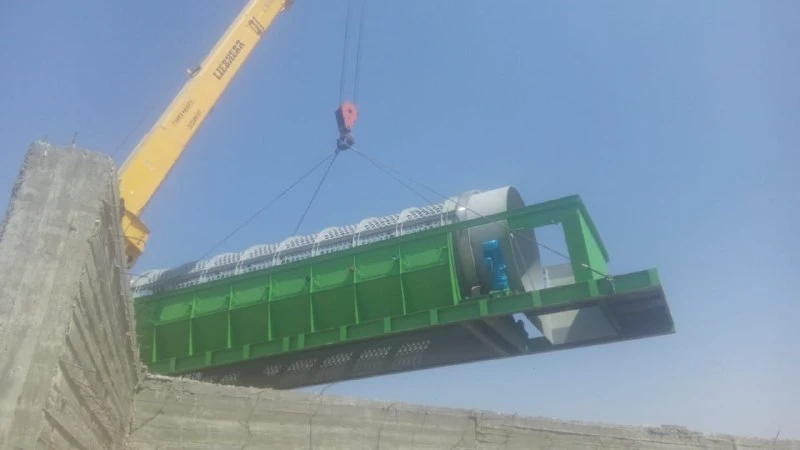
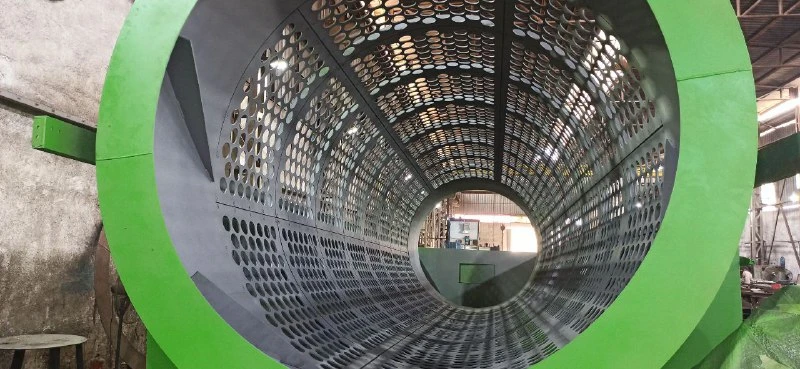
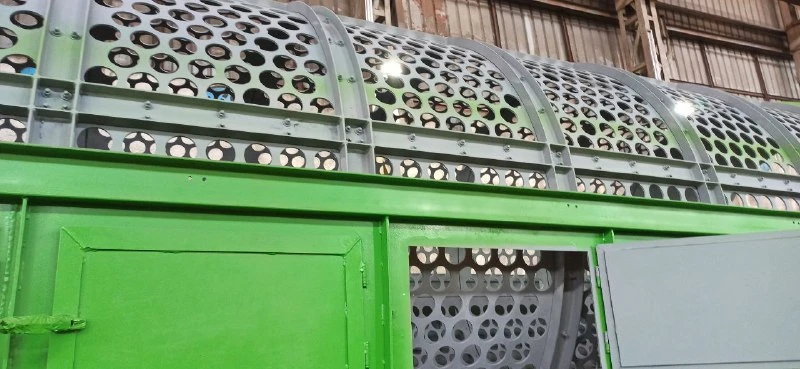
Videos Show
Applications
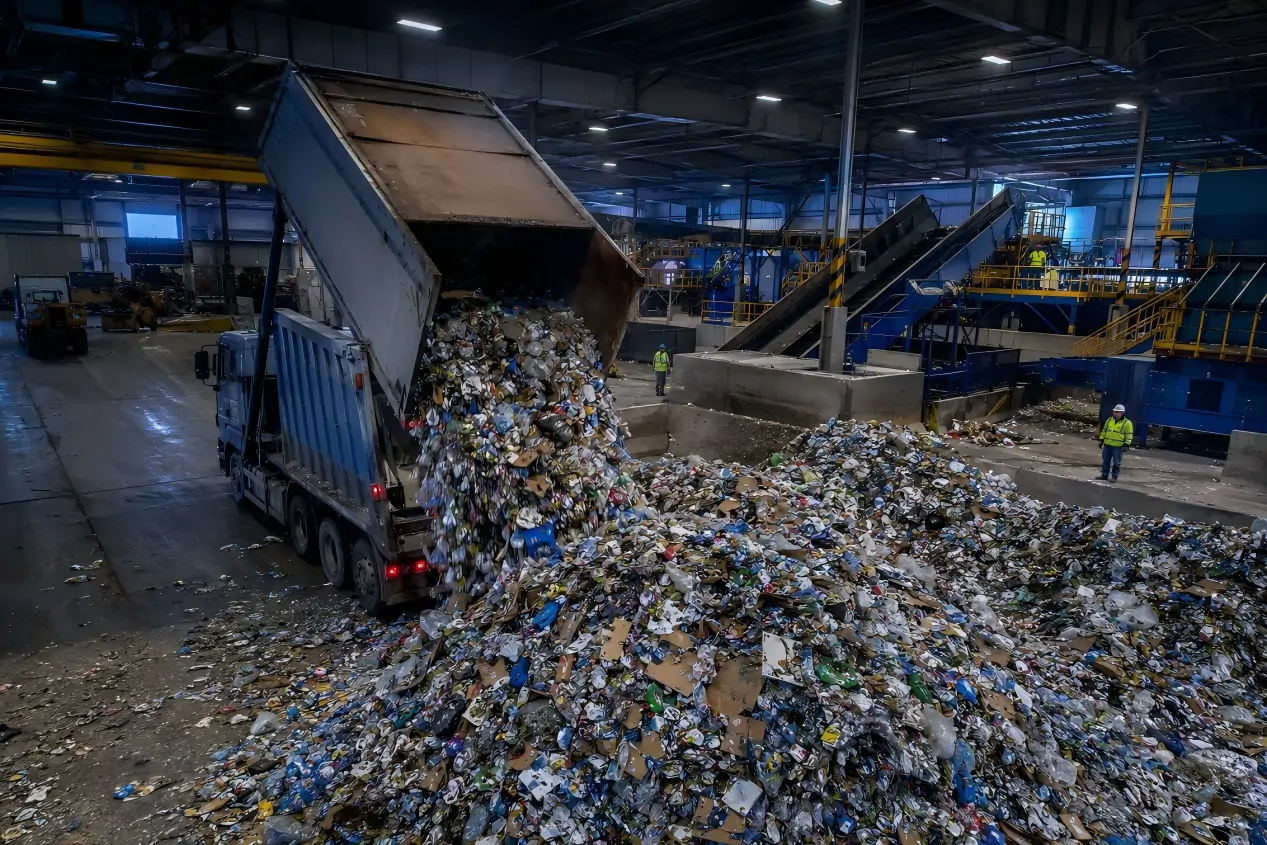
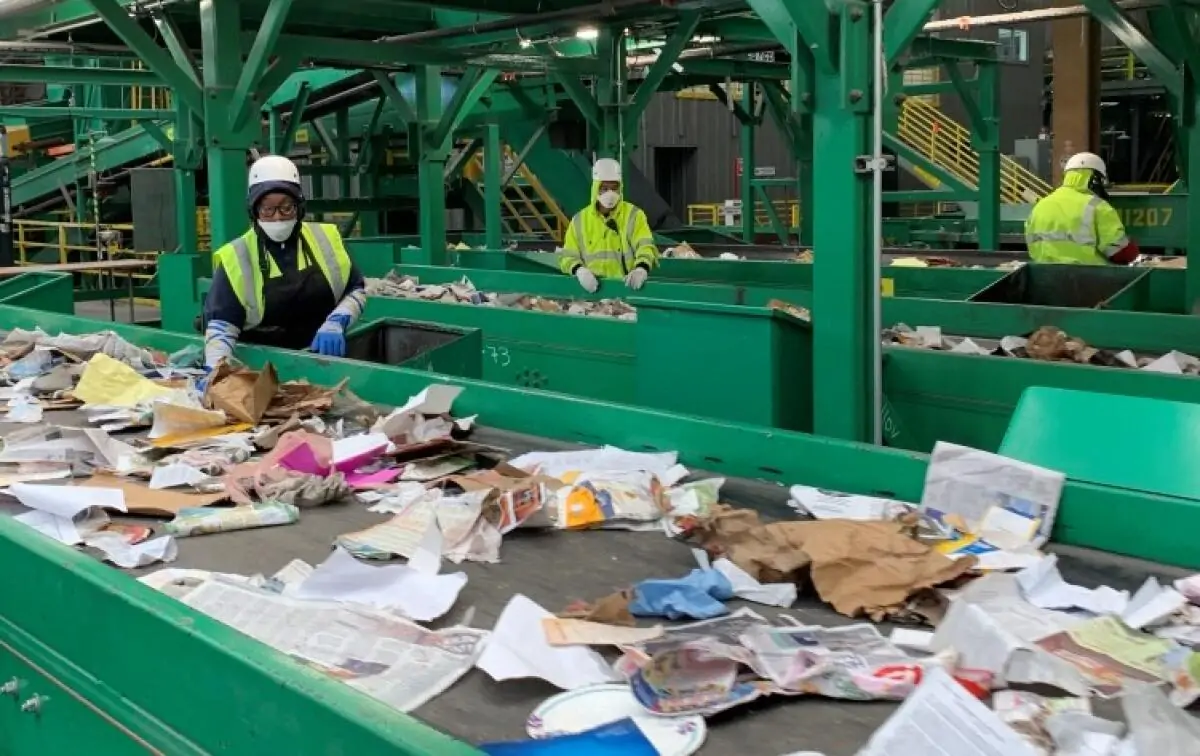
Rotary trommel screens are widely used for primary material separation in waste recycling and bulk material processing. They are especially effective for bag opening and screening applications, separating fine organic fractions from oversized non-organic materials to improve downstream sorting efficiency and resource recovery.
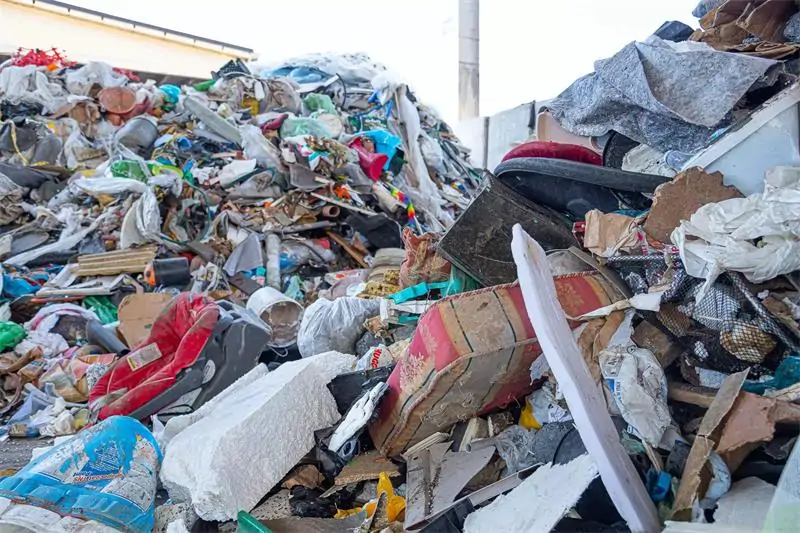
- Municipal Solid Waste (MSW): food waste, soil residue, plastics, rubber, glass bottles, cans, textiles
- Construction & Demolition Waste: concrete fines, bricks, stones, wood chips, mixed debris
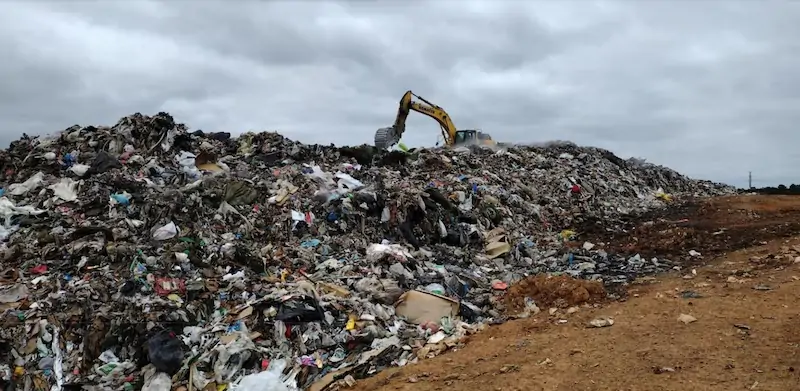
- Landfill Waste Treatment: decomposed waste, soil-like fractions, plastics, metals, inert materials
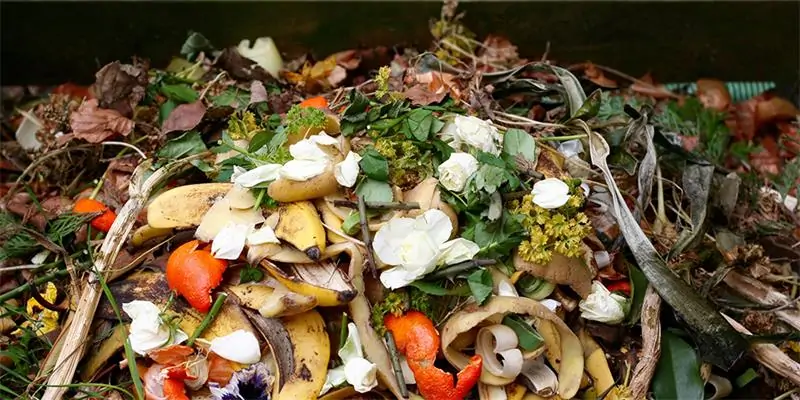
- Compost & Organic Waste Processing: organic compost, biomass residue, green waste, fermented materials
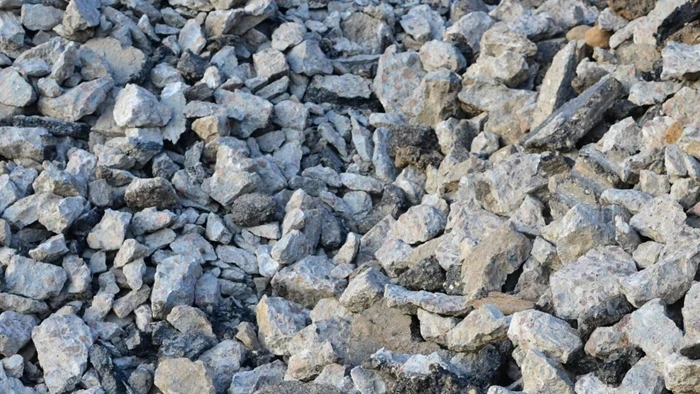
- Recycling & Aggregate Processing: gravel, sand, crushed stone, recycled aggregates and similar bulk materials

Working principle
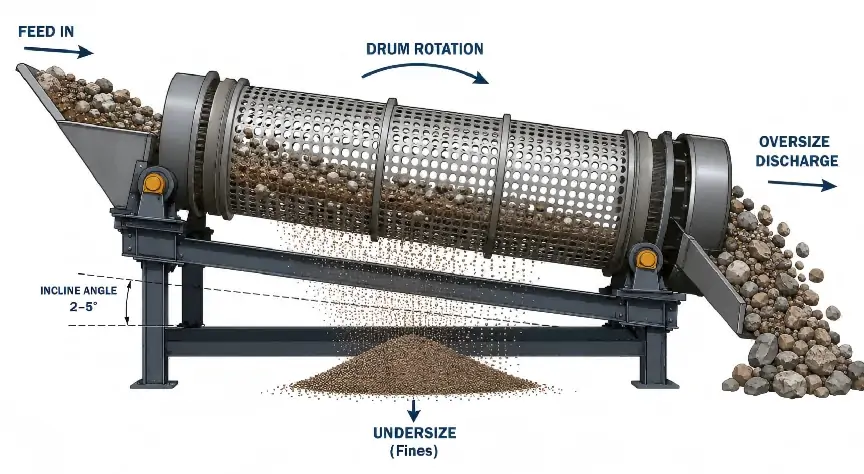
A trommel screen works by rotating a slightly inclined cylindrical drum, lifting and tumbling material so smaller particles fall through the perforated panels while oversized material travels to the discharge end. Unlike vibrating screens that rely on high-frequency shaking, the trommel uses gravity and low-speed rotation (12–22 RPM), making it naturally better for wet, sticky, or fibrous materials.
The process: feed enters via hopper → drum rotation lifts and cascades material → undersize falls through screen openings → oversize moves along the 3°–7° slope and exits at the tail end.
Three factors directly affect performance: drum speed (too fast reduces residence time; too slow causes bed stacking), feed moisture (above 25% typically requires a motorized brush or chain flail), and screen open area (35–50% gives higher throughput but coarser undersize).
Parts of Rotary Trommel Screen
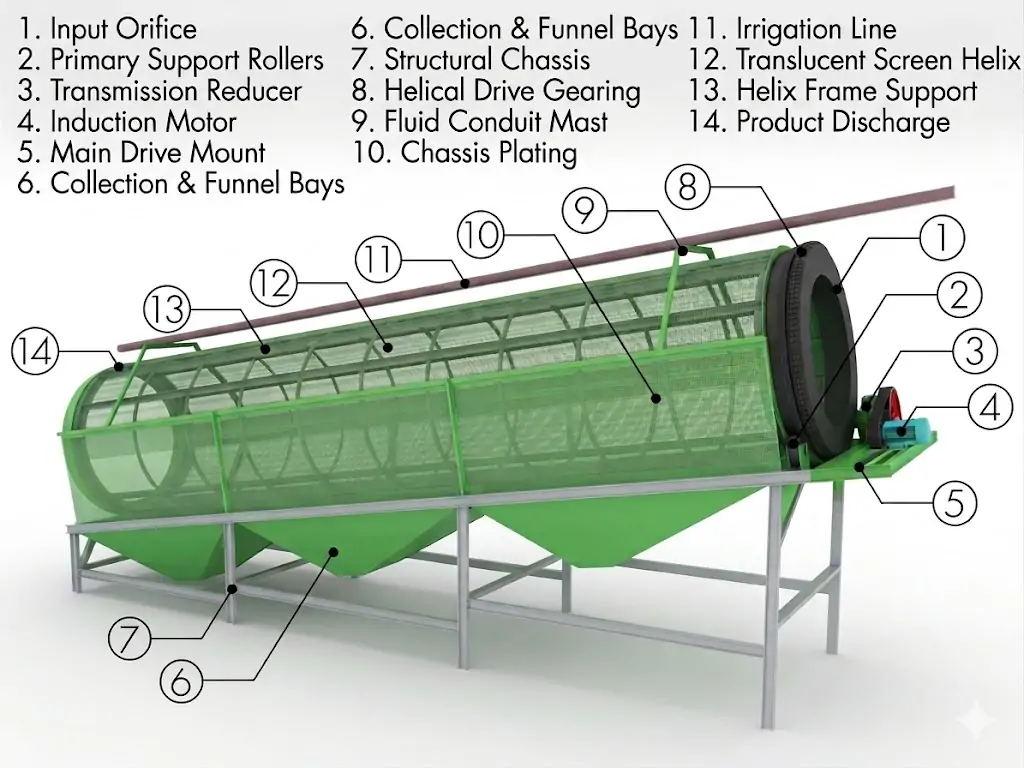
A rotary trommel screen is built with several integrated core systems that ensure stable feeding, continuous rotation, and efficient material separation. The equipment structure is designed to support high-load operation while maintaining screening accuracy and reducing clogging in demanding recycling environments. The following are core parts of rotary trommel screen:
- Feeding Hopper
Ensures uniform material input and reduces impact load on the drum, improving stable operation. - Rotating Drum (Screen Cylinder)
The main screening body; equipped with perforated plates or mesh to separate materials by particle size. - Drive Unit (Motor & Gear Reducer)
Provides controlled rotation with stable torque output, suitable for continuous heavy-duty working conditions. - Support Roller System
Supports drum rotation, reduces friction, and ensures smooth, low-vibration running. - Discharge Section (Oversize & Undersize Outlet)
Separates screened materials efficiently for different downstream processing lines. - Cleaning System (Anti-clogging Device)
Prevents screen blockage, especially when handling wet, sticky, or mixed waste materials. - Frame Structure
Heavy-duty welded frame that maintains alignment and ensures long service life under high loads.
Specifications
The following specifications show standard rotary trommel screen models for different processing capacities and material requirements. Xinzhongyi ECO can customize drum diameter, screen aperture, drum length, drive configuration, and overall machine layout according to your material characteristics, throughput targets, and project conditions.
| Model | Power (kW) | Capacity (m³/h) | Voltage (V) |
| GTS-1548 | 15 | 30-200 | 380 |
| GTS-1830 | 15 | 30-250 | 380 |
| GTS-1850 | 30 | 30-250 | 380 |
| GTS-2030 | 15 | 30-250 | 380 |
| GTS-2050 | 30 | 30-250 | 380 |
| GTS-2080 | 30 | 30-250 | 380 |
| GTS-20100 | 37 | 30-300 | 380 |
| GTS-20120 | 37 | 30-300 | 380 |
| GTS-2230 | 22 | 30-300 | 380 |
| GTS-2270 | 45 | 30-300 | 380 |
| GTS-25100 | 55 | 30-300 | 380 |
| GTS-25120 | 75 | 30-300 | 380 |
Advantages
The rotary trommel screen is designed for continuous material screening with stable performance, low maintenance, and high screening efficiency. Its structural design improves operational reliability while reducing wear, energy consumption, and downtime in waste sorting and aggregate processing lines.
Custom Rotary Trommel Screen
Xinzhongyi ECO provides customized rotary trommel screens and complete screening line solutions based on your material type, capacity requirements, and plant layout. We can integrate trommel screens into complete processing systems for different industries to improve screening efficiency and downstream sorting performance. Tell us your material characteristics, feed size, and target capacity, and we will configure the right trommel screen solution for your project.
Customizable Parameters
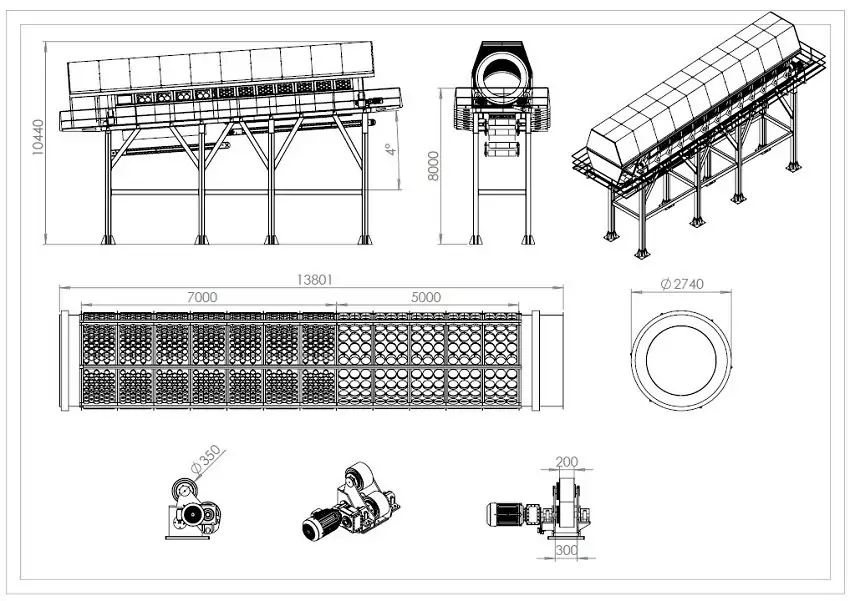
- Processing Capacity: 20–300 t/h
- Drum Diameter: 800–3000 mm
- Drum Length: 3–12 m
- Screen Aperture Size: 2–100 mm
- Drum Structure: Circular / Hexagonal
- Screen Material: Carbon Steel / Stainless Steel / Wear-Resistant Steel
- Drive Power: 5.5–45 kW
- Installation Angle: 3°–8°
- Feeding System: Hopper, Conveyor, Bag Breaker Integration
- Dust Control Option: Fully Enclosed / Negative Pressure Collection System
Rotary Trommel Screen Manufacturer & Supplier
As a professional manufacturer of rotary trommel screen for mining, recycling, and environmental sectors, Xinzhongyi delivers trommel screens that consistently achieve 85–95% screening efficiency across moisture ranges from 8% to 30%.
We have 16 years of project experience in gold ore, MSW, compost, topsoil, and construction waste, Xinzhongyi has supplied over 380 trommel screens to plants in Southeast Asia, Africa, South America, and the Middle East. We operate under ISO9001:2015 and CE-certified production standards, offering process design, equipment fabrication, installation supervision, and operator training.
FAQ
A rotary trommel screen separates materials by particle size using a rotating drum — used for compost, topsoil, MSW, aggregates, and mined ores before further processing.
Yes. With an optional external brush or chain flail, trommels handle moisture up to 30%, outperforming vibrating screens on sticky feeds.
Choose a trommel for wet, sticky, or fibrous materials (MSW, compost, clay). Choose a vibrating screen for dry, free-flowing aggregates below 100 mm.
Feed size up to 300 mm; capacity ranges from 10 t/h (ZY-12-30) to 200 t/h (ZY-28-90) depending on material conditions.
Drum size, motor power, screen panel material (steel vs polyurethane), self-cleaning system, stationary vs mobile, and auxiliary conveyors.