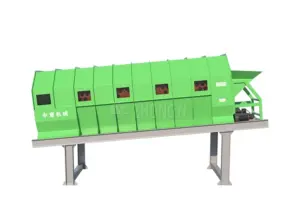
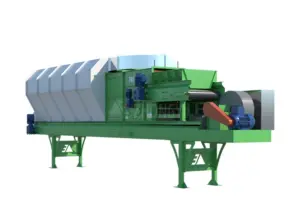


What is a Heavy Duty Apron Feeder?
A Heavy Duty Apron Feeder, also known as a heavy plate feeder or chain plate feeder, is a material handling machine used to convey and regulate the flow of large-sized bulk materials. It is commonly installed beneath hoppers or stockpiles to deliver material consistently to jaw crushers, bulk material belt conveyors, and processing systems.
Featuring steel pans, heavy-duty chains, and reinforced drive components, the feeder is designed to withstand high loads, impact forces, and abrasive materials. It is widely used in mining, quarrying, metallurgy, cement, coal, and other heavy industries where reliable feeding of coarse and dense materials is required.
For details, please read this article: What Is an Apron Feeder?
Working Principle
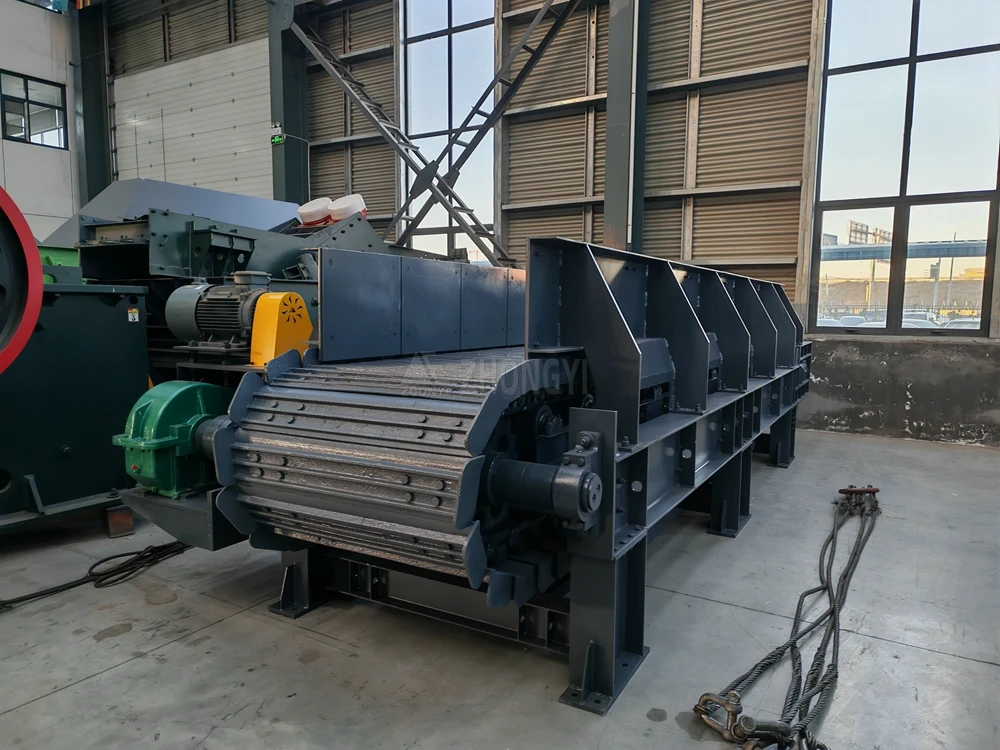
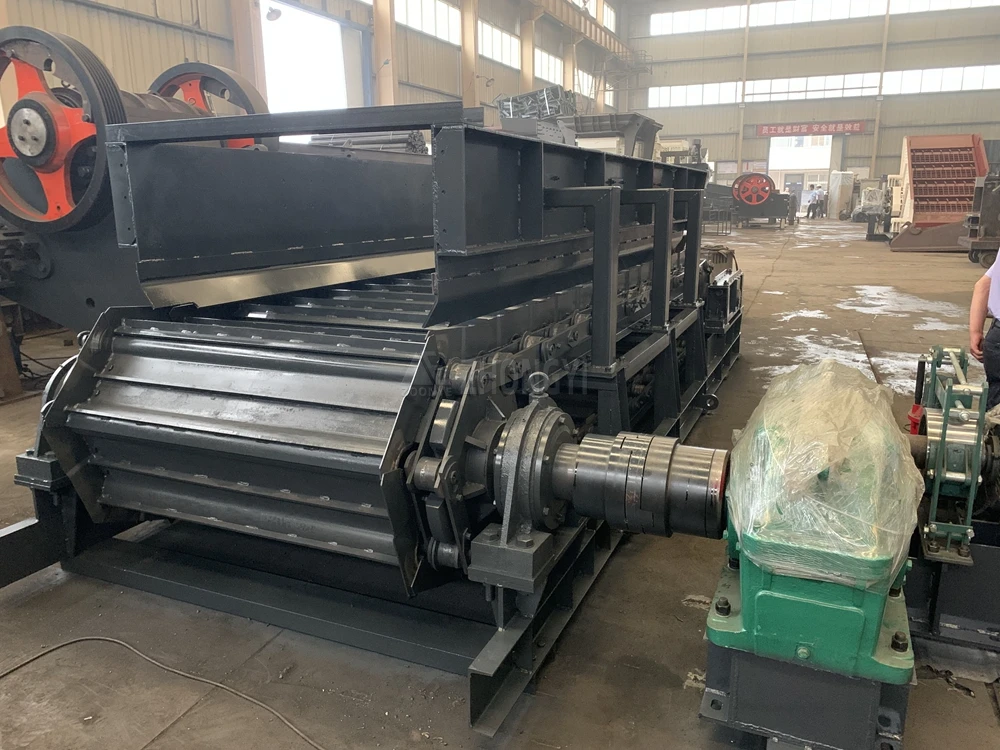
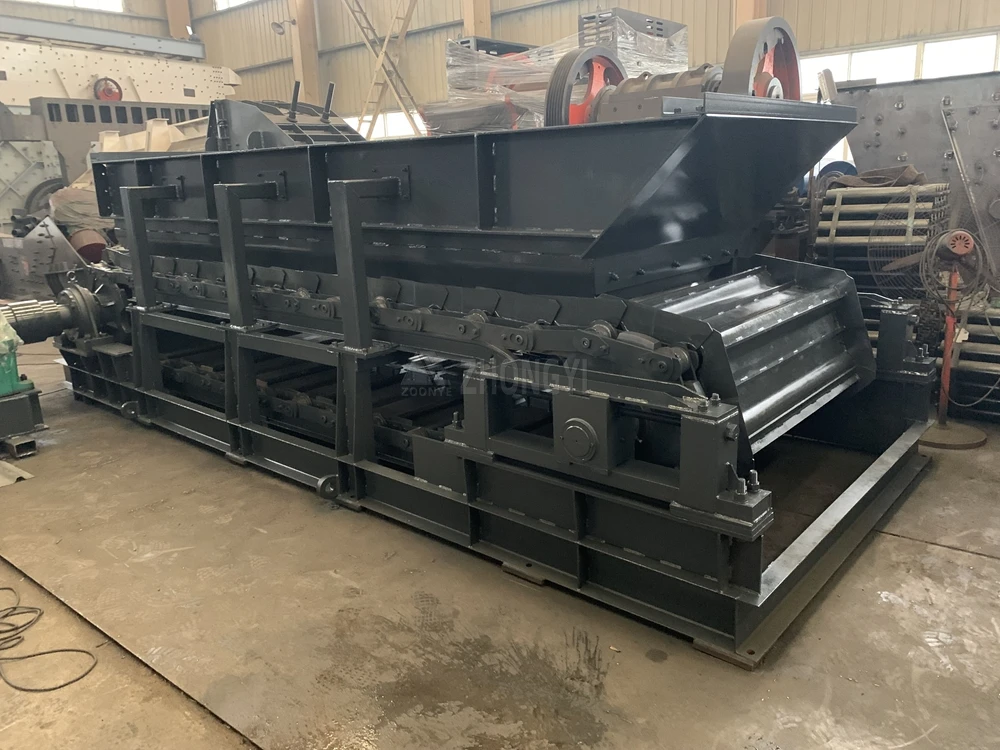
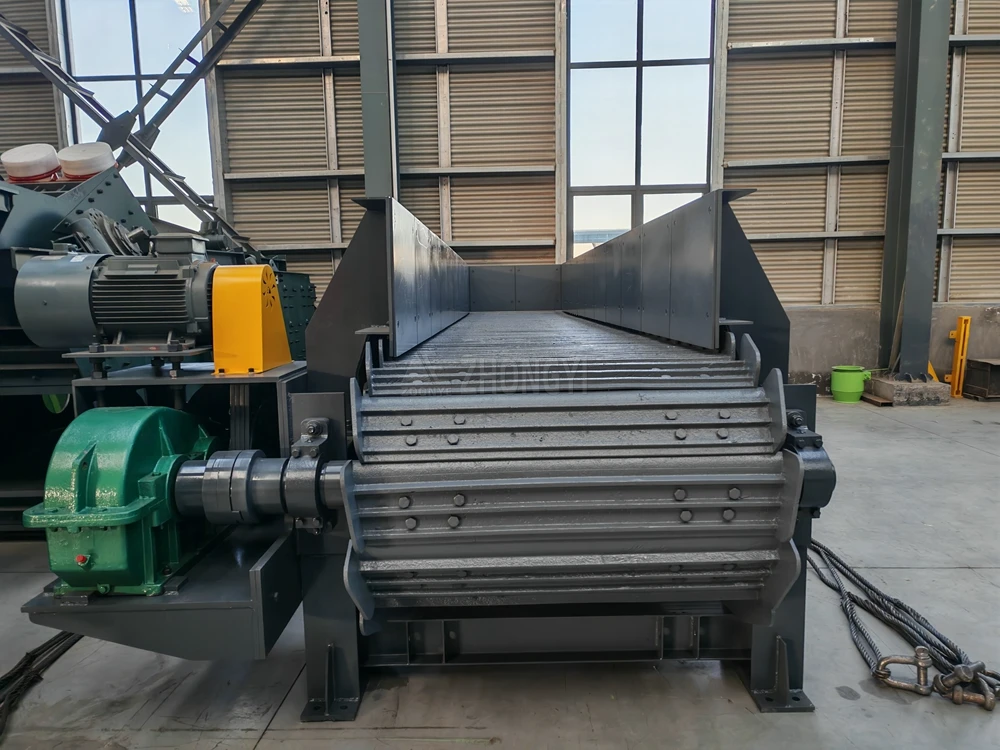
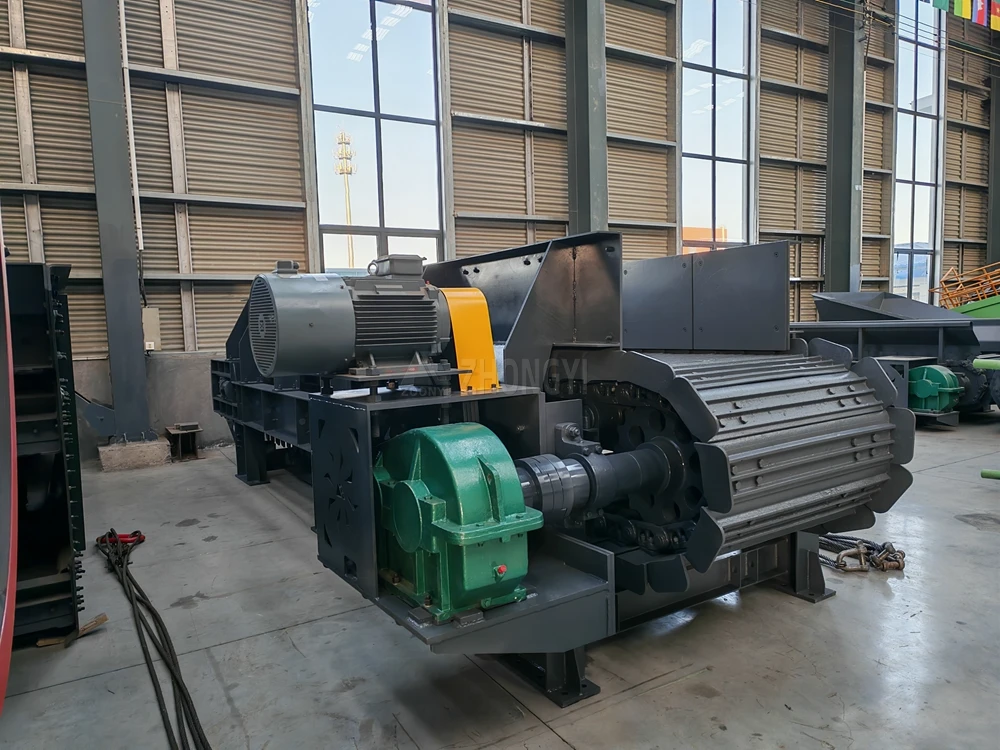
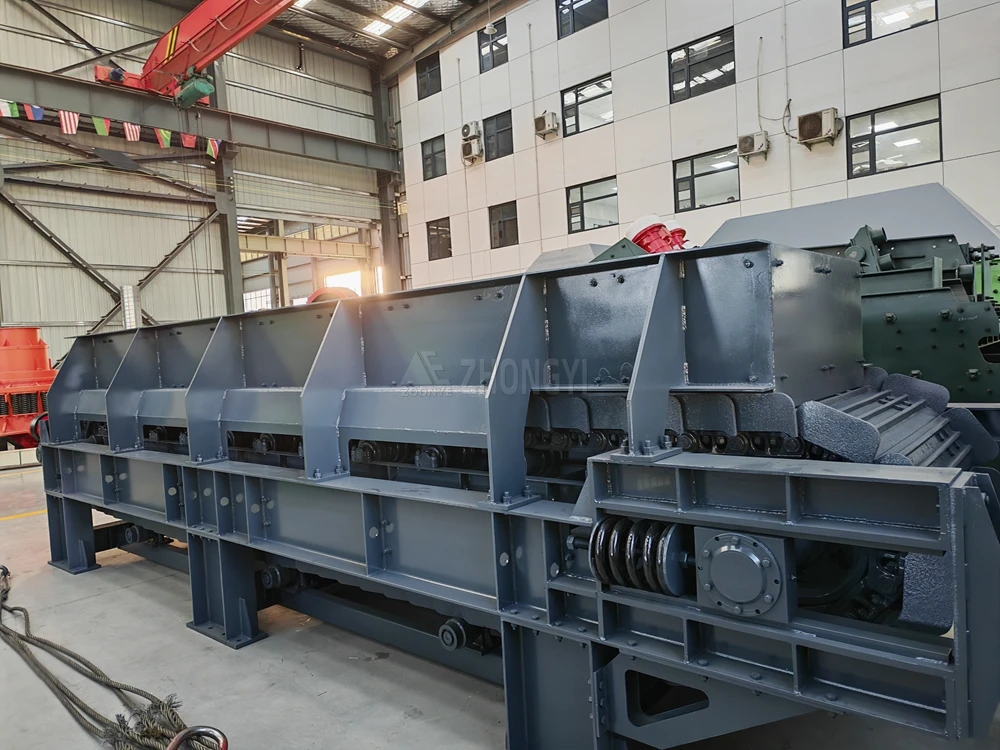
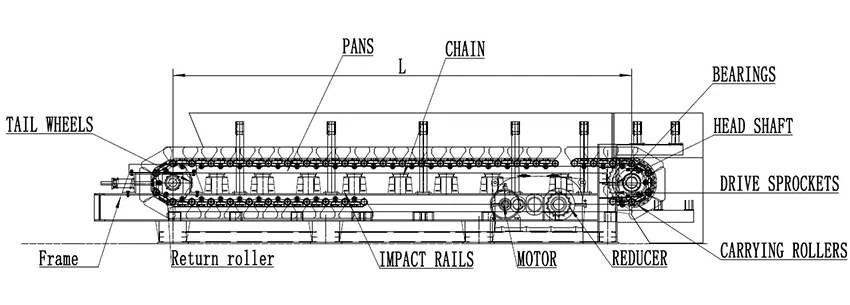
A Heavy Duty Apron Feeder transfers bulk materials by using heavy-duty steel pans mounted on dual chains. The drive system powers the chains and pans to move at a controlled speed, carrying material from the hopper discharge point to crushers, screens, conveyors, or other downstream equipment. It has a robust structure allows reliable handling of large, heavy, abrasive, and high-temperature materials under continuous operating conditions. The following is key components work together:
Tensioning Device: A spiral screw tensioning mechanism, paired with composite springs, consistently maintains the chain’s pre-tension, ensuring proper engagement between the sprocket and the chain. Simultaneously, it absorbs vibrations caused by the impact of large-sized materials, preventing chain slack and protecting critical components.
Support Rollers / Carrier Rollers: These provide support for the apron plates, bearing the combined weight of the plates and the conveyed material. They reduce operational resistance and prevent excessive deflection of the apron plates—caused by their own weight—from disrupting smooth operation.
Apron Plate Assembly: Features a modular, overlapping-arc structure constructed from low-alloy steel plates, offering high strength and excellent wear resistance. The tightly overlapping design ensures zero material leakage. The traction chain typically utilizes heavy-duty bulldozer-style track chains, characterized by minimal pitch error, smooth motion, and high tensile strength, thereby requiring infrequent lubrication.
Video
Advantages
Specifications
The specifications listed below represent our standard models. We provide tailored engineering designs and customized configurations to perfectly match your specific material characteristics and site requirements.
| Model | Power (kW) | Feed Capacity (m3/h) |
| WBL1040 | 11 – 22 | 50 – 250 |
| WBL1240 | 11 – 22 | 50 – 350 |
| WBL1260 | 15 – 30 | 50 – 350 |
| WBL1440 | 15 – 30 | 50 – 450 |
| WBL1460 | 15 – 30 | 50 – 450 |
| WBL1660 | 15 – 30 | 100 – 800 |
| WBL2060 | 15 – 45 | 120 – 1000 |
| ZBL1040 | 11 – 22 | 50 – 250 |
| ZBL1240 | 11 – 22 | 50 – 350 |
| ZBL1260 | 15 – 30 | 50 – 350 |
| ZBL1440 | 15 – 30 | 50 – 450 |
| ZBL1460 | 15 – 30 | 50 – 450 |
| ZBL1660 | 15 – 30 | 100 – 800 |
| ZBL2060 | 15 – 45 | 120 – 1000 |
Applications
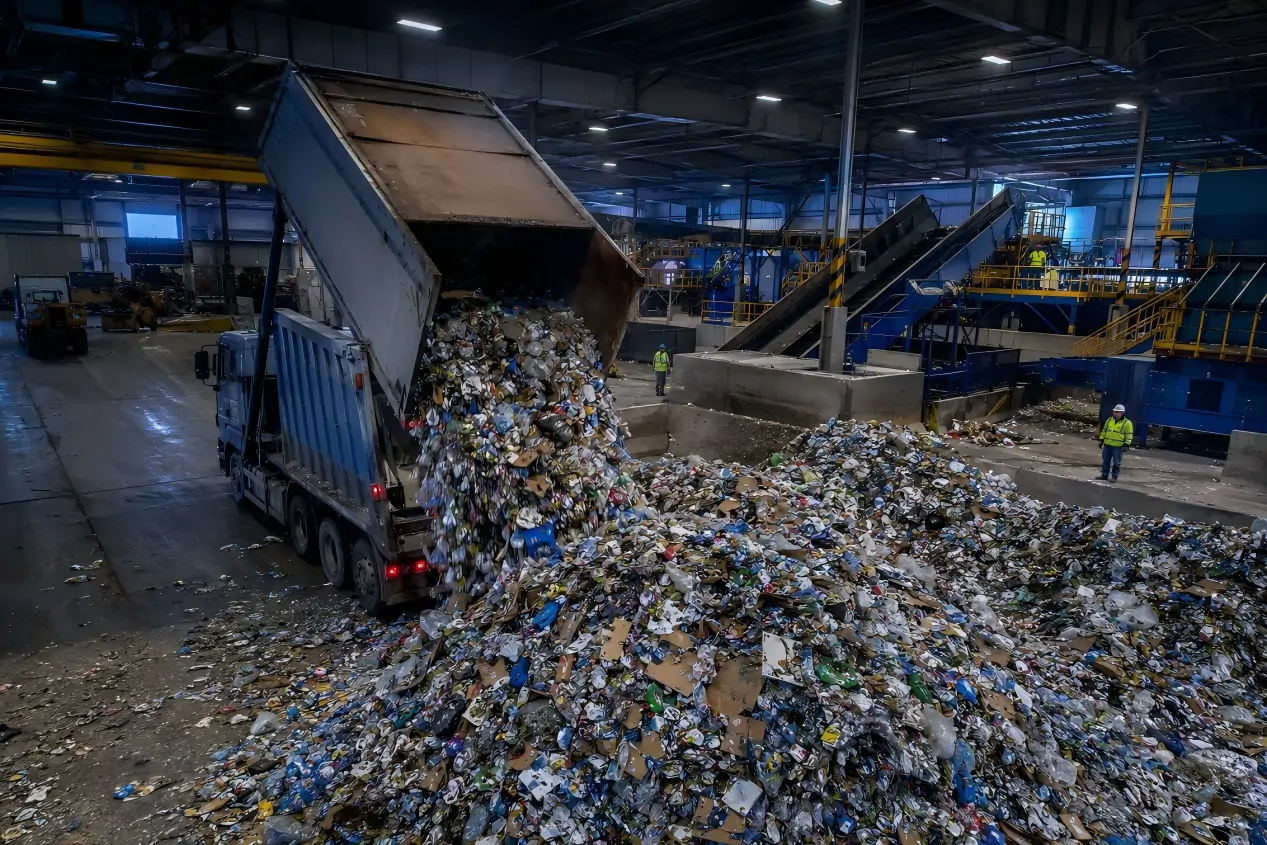
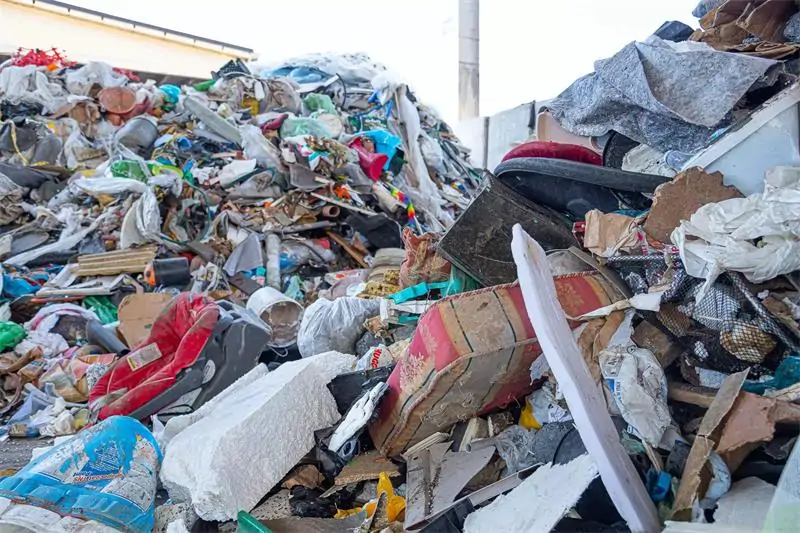
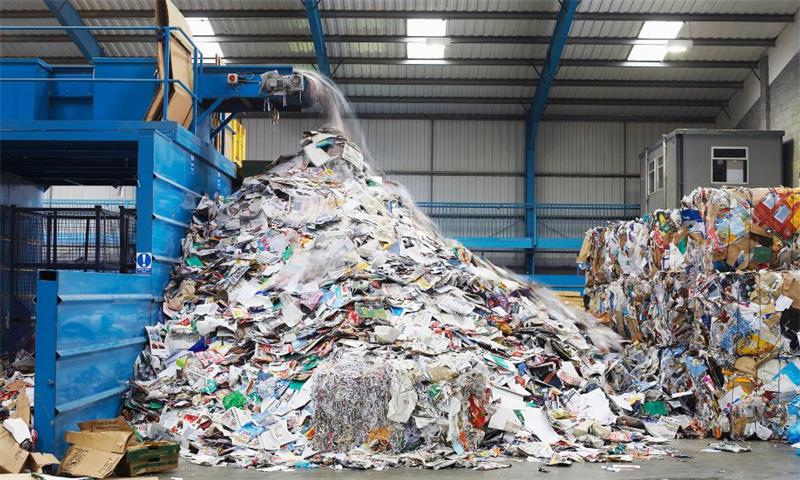
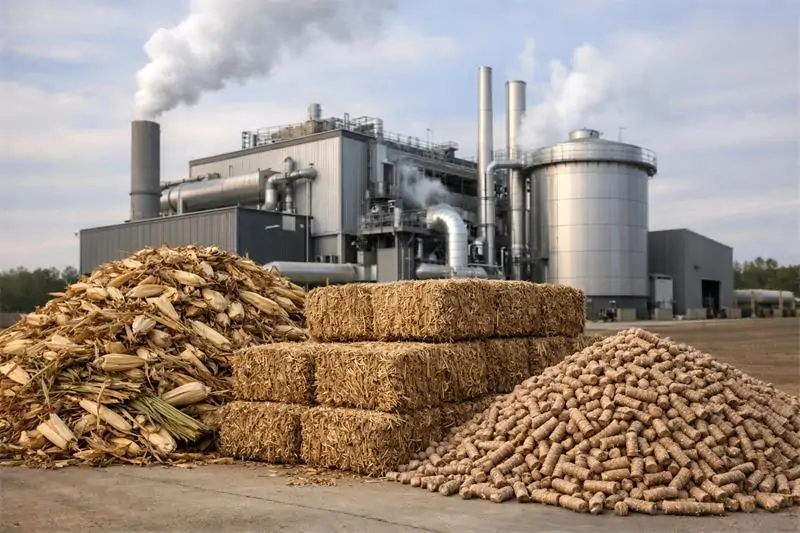
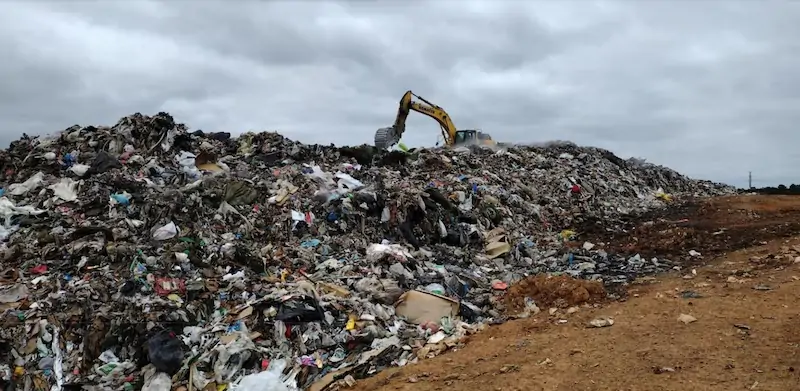
Heavy Duty Apron Feeders are widely used in waste treatment and recycling systems. They are mainly applied for stable feeding of bulky, mixed, and high-impact waste materials, especially in harsh and continuous operation environments such as sorting plants, recycling lines, and solid waste pre-treatment systems.


Custom Heavy Duty Apron Feeder Solutions
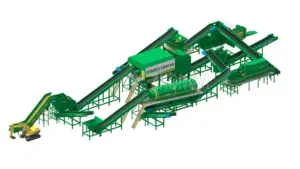
We provide customized heavy-duty plate feeder solutions based on material type, processing capacity, and on-site layout conditions. Our engineering designs can be tailored to specific operational requirements, ranging from standalone feeding units to integrated systems within complete waste processing and crushing production lines. To ensure a precise match, please provide key parameters such as material composition and bulk density, maximum feed size, processing capacity (tons/hour), operating conditions, site layout, and downstream equipment requirements. Feel free to contact us at any time for customized selection and technical support.
The following are customization options:
- Processing Capacity (up to 1,000 tons/hour)
- Material Type (Municipal Solid Waste, Construction Waste, Industrial Waste, Bulky Solid Waste, etc.)
- Feed Size (Capable of processing bulky materials up to 1,500 mm)
- Feed Speed Control System (Constant Speed Operation or Variable Frequency/PLC Automatic Control)
- Installation Layout (Horizontal, 0°–35° Inclined, or Integrated Hopper Design)
- Dust Control and Sealing System Options
Heavy Duty Apron Feeder Manufacturer & Supplier
As a professional Heavy Duty Apron Feeder manufacturer and supplier, Xinzhongyi ECO provide durable and customized feeding solutions for mining, quarrying, aggregate, cement, metallurgy, and bulk material handling industries. With advanced manufacturing facilities, experienced engineering teams, and strict quality control processes, we are capable of producing apron feeders tailored to different material characteristics, capacities, installation conditions, and operating environments.
Our heavy duty apron feeders are widely integrated into limestone crushing plants, granite aggregate production lines, iron ore processing plants, coal handling systems, cement production lines, and construction waste recycling projects. From equipment selection and engineering design to manufacturing, installation guidance, and after-sales support, we offer complete project solutions to help you improve material handling efficiency and reduce maintenance costs.
Contact us today to discuss your project requirements and receive a customized solution and quotation.
FAQ
A Heavy Duty Apron Feeder is used to extract, convey, and regulate the flow of large, heavy, or abrasive materials from hoppers, stockpiles, or bins to crushers, conveyors, and processing equipment. It is widely used in mining, quarrying, cement, aggregate, and bulk material handling applications.
Heavy duty apron feeders can handle a wide range of materials, including iron ore, copper ore, limestone, granite, coal, clinker, gypsum, construction waste, and other bulk materials. They are particularly suitable for large lump sizes, high-impact loads, and abrasive materials that may damage conventional feeders.
The correct apron feeder size depends on material characteristics, lump size, bulk density, feed rate, hopper dimensions, and installation conditions. Engineers typically evaluate these factors to determine the required feeder width, length, chain specification, and drive power for reliable operation.
An apron feeder uses overlapping steel pans mounted on heavy-duty chains, making it suitable for handling large, sharp, and abrasive materials. A belt feeder uses a rubber belt and is generally designed for lighter-duty applications with smaller particle sizes and lower impact loads.
The capacity of a heavy duty apron feeder varies according to feeder width, speed, and material properties. Standard units can handle capacities from tens to several thousand tons per hour, making them suitable for both medium-scale operations and high-capacity mining projects.
With proper maintenance and operating conditions, a heavy duty apron feeder can provide reliable service for many years. Its wear-resistant steel pans, heavy-duty chains, and robust drive components are designed to withstand continuous operation in harsh industrial and mining environments.
Routine maintenance typically includes chain tension inspection, lubrication of moving components, wear monitoring of pans and rollers, and checking drive system performance. Regular maintenance helps reduce unexpected downtime, extend equipment life, and maintain consistent feeding efficiency.
Yes. Heavy duty apron feeders can be customized according to material type, capacity requirements, feed opening size, installation layout, inclination angle, and operating conditions. Custom engineering ensures optimal performance, improved reliability, and seamless integration into existing production lines.