
Introduction
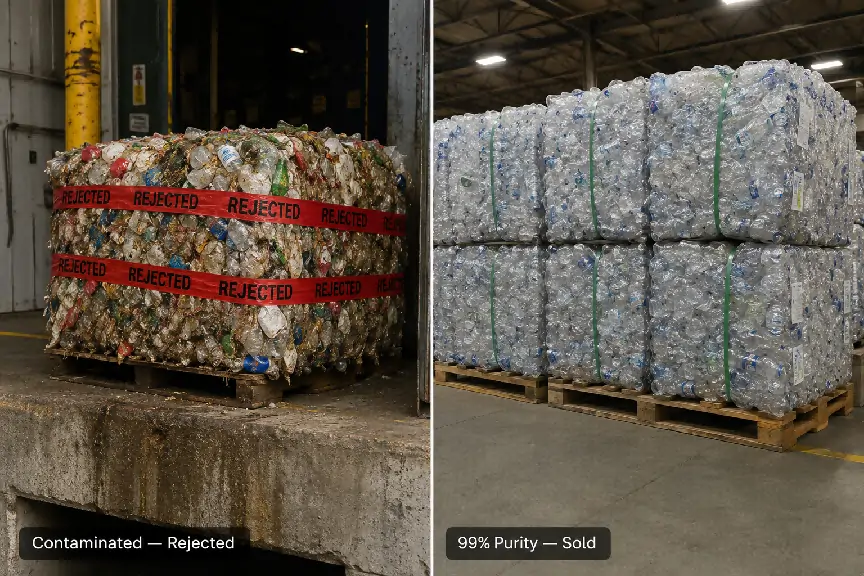
Every year, over 14 million tons of plastic enter the ocean. But the real loss happens much earlier — in recycling facilities where mixed, contaminated plastic bales get rejected by buyers, wasting up to 30% of potential feedstock. If you manage a recycling plant, you’ve probably seen this: a container of PET bales turned away because one stray PVC bottle slipped through, or a load of HDPE sitting unsold because contamination crossed 1%.
In this guide, we’ll walk through the complete industrial workflow for sorting plastic — from resin code basics to NIR optical sorting and density separation. You’ll learn which equipment makes sense at each scale, the five most common mistakes facilities make, and how to push purity high enough to earn premium pricing.
Why Plastic Sorting Determines Your Bottom Line
Sorting plastic for recycling means separating mixed waste by polymer type (PET, HDPE, PP, etc.), color, and sometimes density — before it reaches the washing and reprocessing stages. It sits between collection and pelletizing, and it determines almost everything downstream.
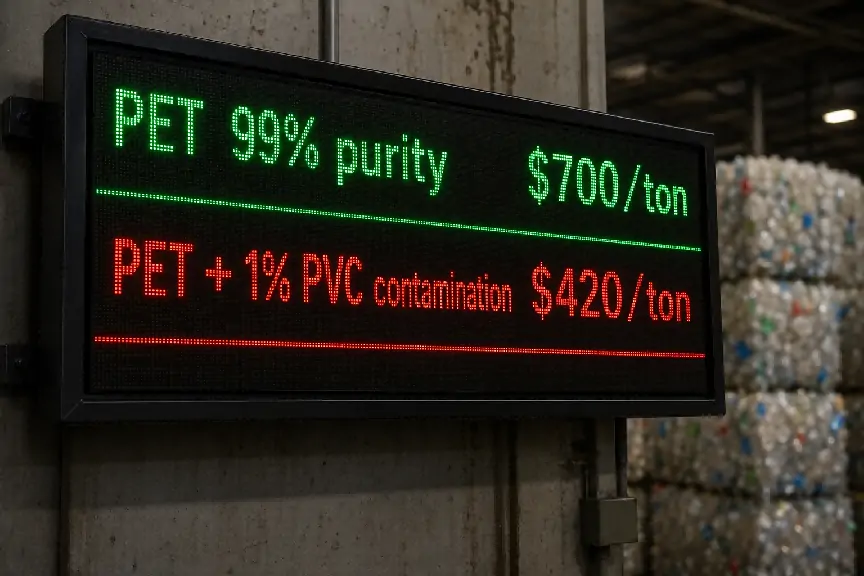
Here’s what the numbers look like. A well-sorted PET stream hitting 99% purity sells for $600–$800 per ton. Let just 1% PVC sneak through, and that batch becomes unusable for food-grade applications — value drops 40% overnight. For your facility, poor sorting results in buyer rejections, extra labor to reprocess, and higher landfill fees for contaminated residue. On the flip side, an efficient line using NIR optical sorters and density separation keeps contamination under 0.5%, lifts throughput, and protects your margins. Sorting isn’t just one step in the process — it’s the step that pays for everything else.
How to Sort Plastic for Recycling — The Five Steps
You don’t need a million-dollar system to sort well, but you do need the right sequence. Here’s how we recommend structuring your line.
Step 1 — Break Bales and Remove Oversized Contaminants
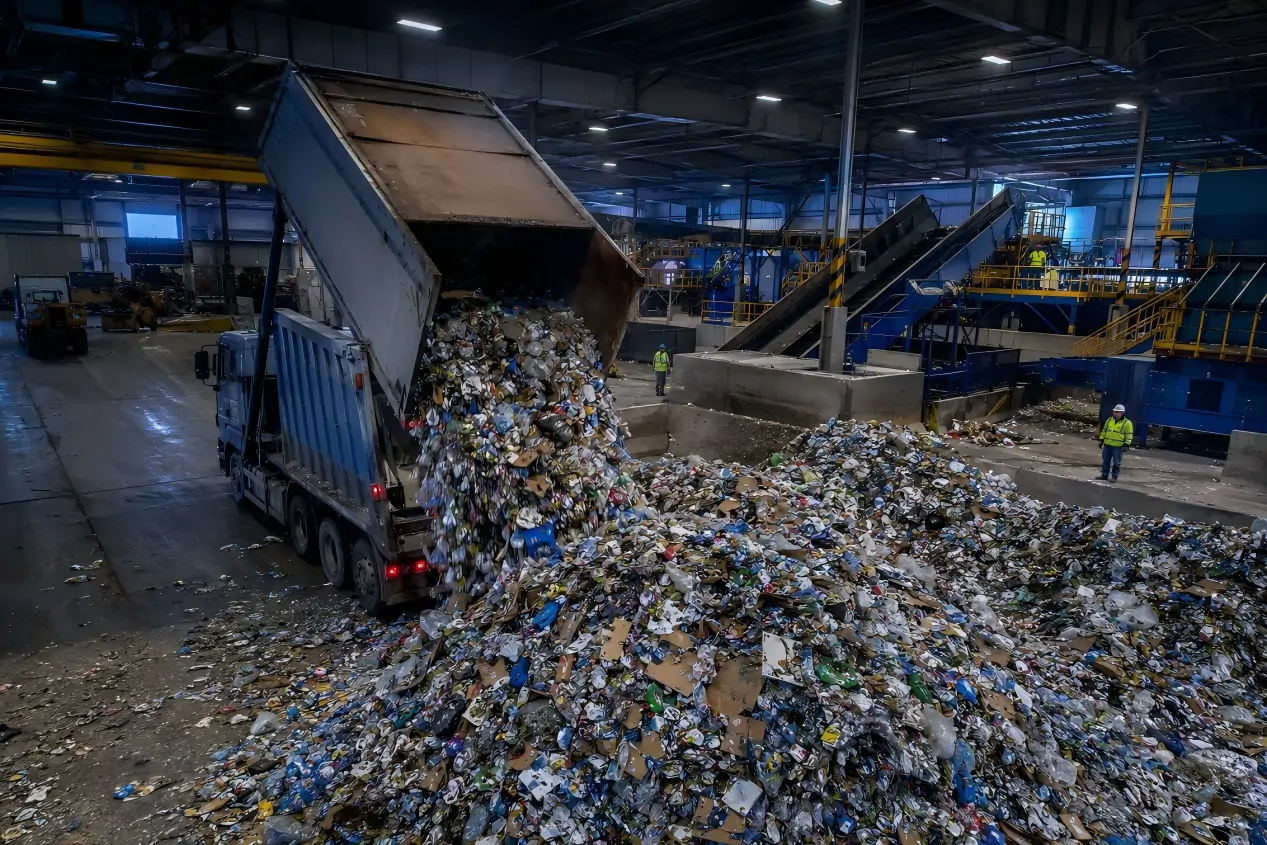
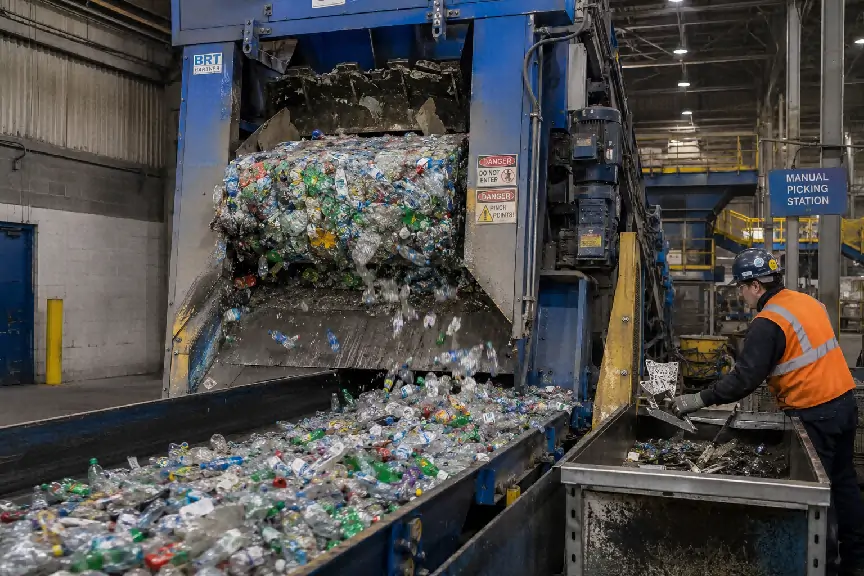
Sorting starts the moment a bale hits the floor. Run it through a bag breaker, then pass the loose material over a rough screen or manual picking station. Pull out anything that doesn’t belong — rocks, metal pipes, large fabric pieces. One piece of scrap metal can tear a conveyor belt or crack an optical sorter’s window. Catch it early and you save thousands in repairs.
Step 2 — Screen by Size: Separate 2D from 3D
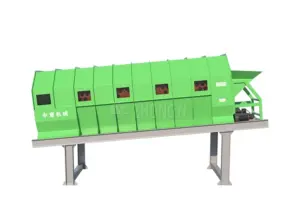
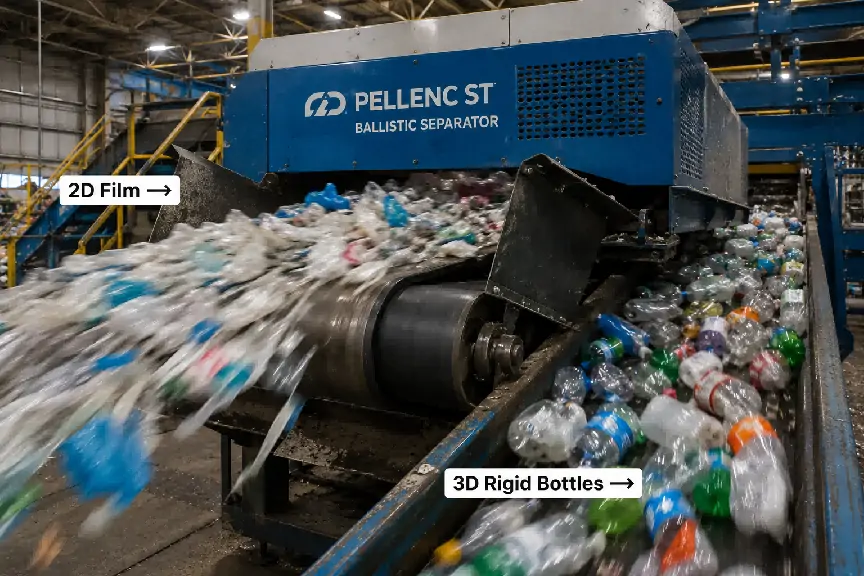
Send material across a ballistic separator or trommel screen. This splits flat, flexible items (film, bags, wrappers) — the 2D fraction — from rigid containers and bottles — the 3D fraction. Film wraps around shafts, blinds screens, and confuses optical sorters. Keeping these two streams on separate paths effectively doubles your system’s throughput.
Step 3 — Apply NIR Optical Sorting for Polymer Identification
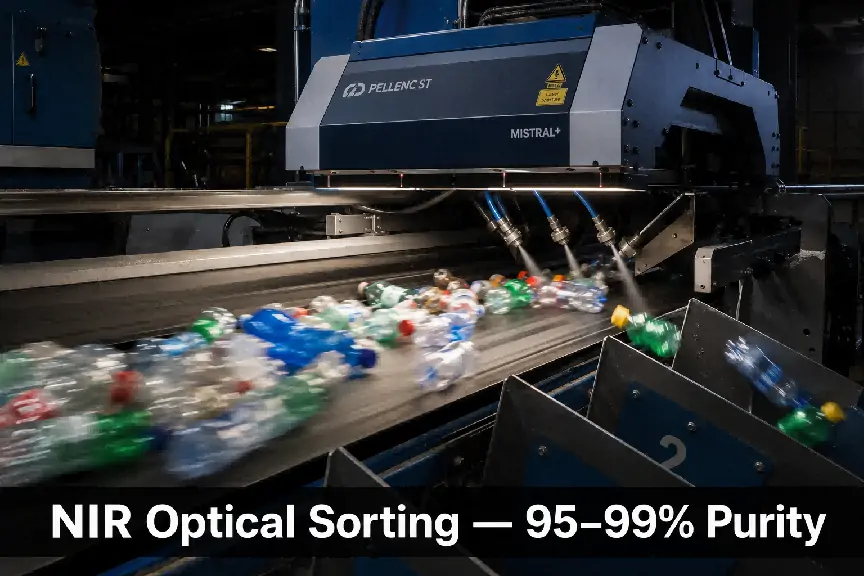
Run your 3D stream under a near-infrared (NIR) optical sorter. The sensor reads each piece’s molecular signature and blasts it with an air jet into the correct bin — PET, HDPE, PP, or mixed residue. NIR sorters consistently achieve 95–99% purity on clean, dry, single-layer material. One catch: wet surfaces and black plastics (carbon black) absorb the infrared signal. Keep feedstock dry, and consider a CCD color sorter downstream for additional color separation.
Step 4 — Density Separation for PET and Polyolefins
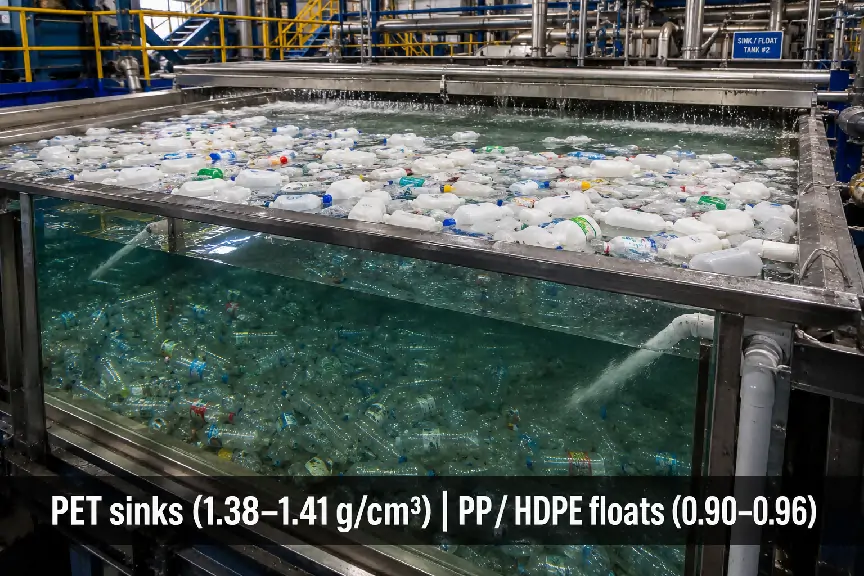
Take the output from optical sorting and run it through a sink-float tank. With water at a density cut point around 1.0 g/cm³, PET (1.38–1.41) sinks while PP and HDPE (0.90–0.96) float. This method also removes metal rings, glass fragments, and other heavy contaminants. It’s cheap, reliable, and handles high volumes — just keep the bath clean, because dirty water shifts the effective density and loses separation sharpness.
Step 5 — Remove Metals, Dry, and Bale
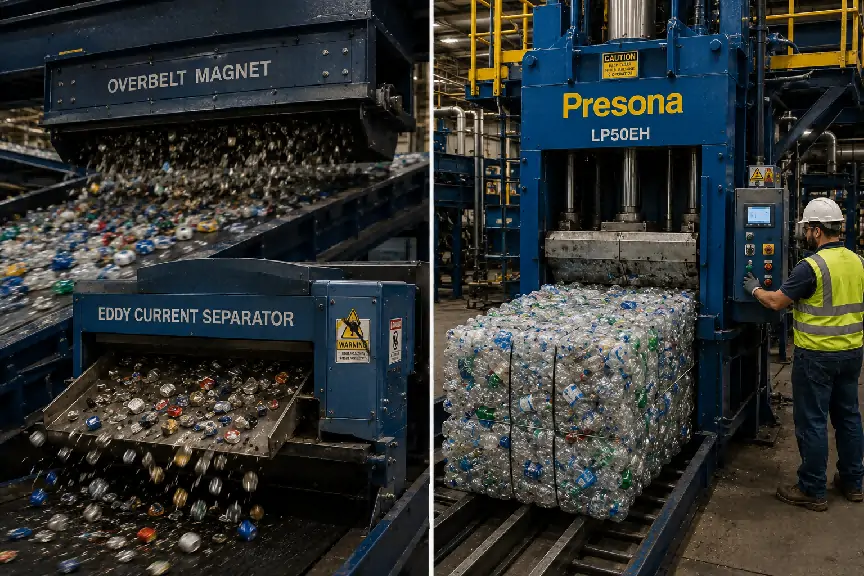
Before your sorted plastic leaves the line, run it through an overbelt magnet for ferrous metals and an eddy current separator for non-ferrous (aluminum caps, cans). Then dewater and dry — especially material from the sink-float stage — to prevent mold and meet buyer moisture specs (target under 5%). Finally, bail each polymer type separately. A single metal shard in a PET bale triggers a full container rejection, and buyers pay for dry material, not water weight.
Common Mistakes We See at Recycling Facilities
Even well-designed lines bleed value from small, repeated errors. Here are five we encounter regularly — and how to fix each one.
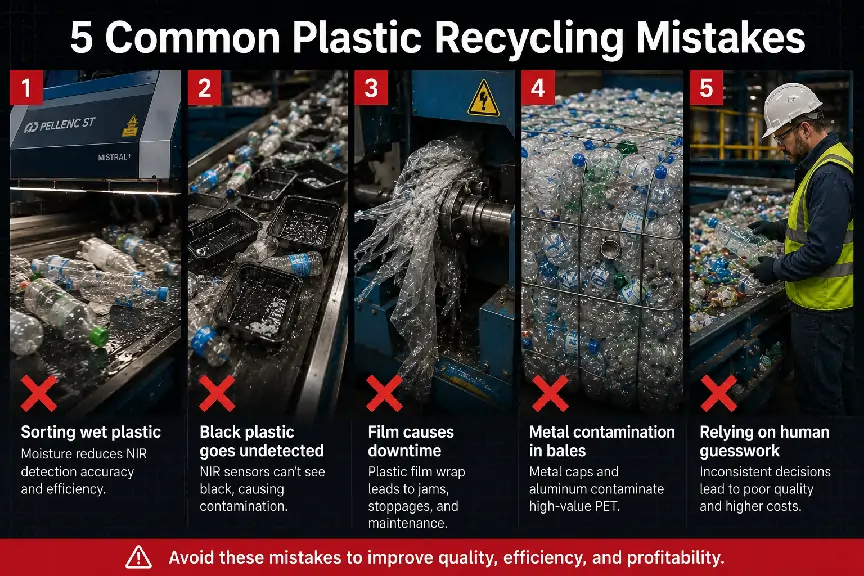
Mistake 1: Wet material hitting the optical sorter. Moisture scatters NIR signals. A dry stream hits 95–99% purity; a wet one can drop below 80%. Fix: install a drain section or forced-air dryer before the NIR unit.
Mistake 2: Ignoring black plastic. Carbon-black pigments absorb NIR light — your sorter sees nothing, so black PP trays and PET clamshells end up in residue. Fix: add a manual pick station for black items or upgrade to a mid-infrared (MIR) sorter if volumes justify it.
Mistake 3: Running film and rigid plastics together. Stretchy film wraps shafts and tricks air jets. Fix: Use a ballistic separator early to split 2D from 3D, then process film on a dedicated line.
Mistake 4: Metal removal is too late in the process. One aluminum cap in a PET bale triggers rejection and back-charges of $500–$1,000. Fix: place eddy current and magnet units before the baler, and before the optical sorter to protect its window.
Mistake 5: Guessing contamination instead of measuring it. “Looks clean enough” doesn’t sell. Take a grab sample from each bale weekly, hand-sort it, and calculate the percentage. Share the data with your operators — we’ve seen contamination drop by half within two weeks once people see the numbers.
Scaling Up: From Manual Sorting to Full Automation
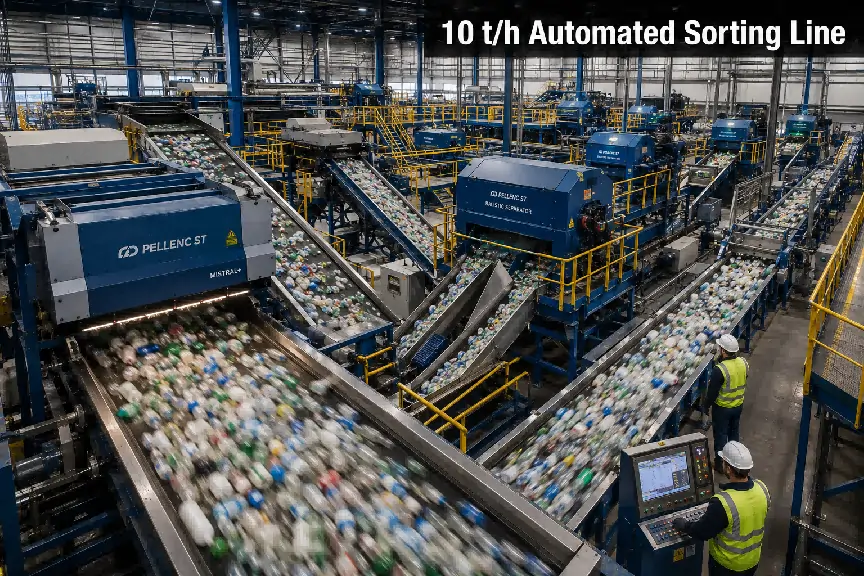
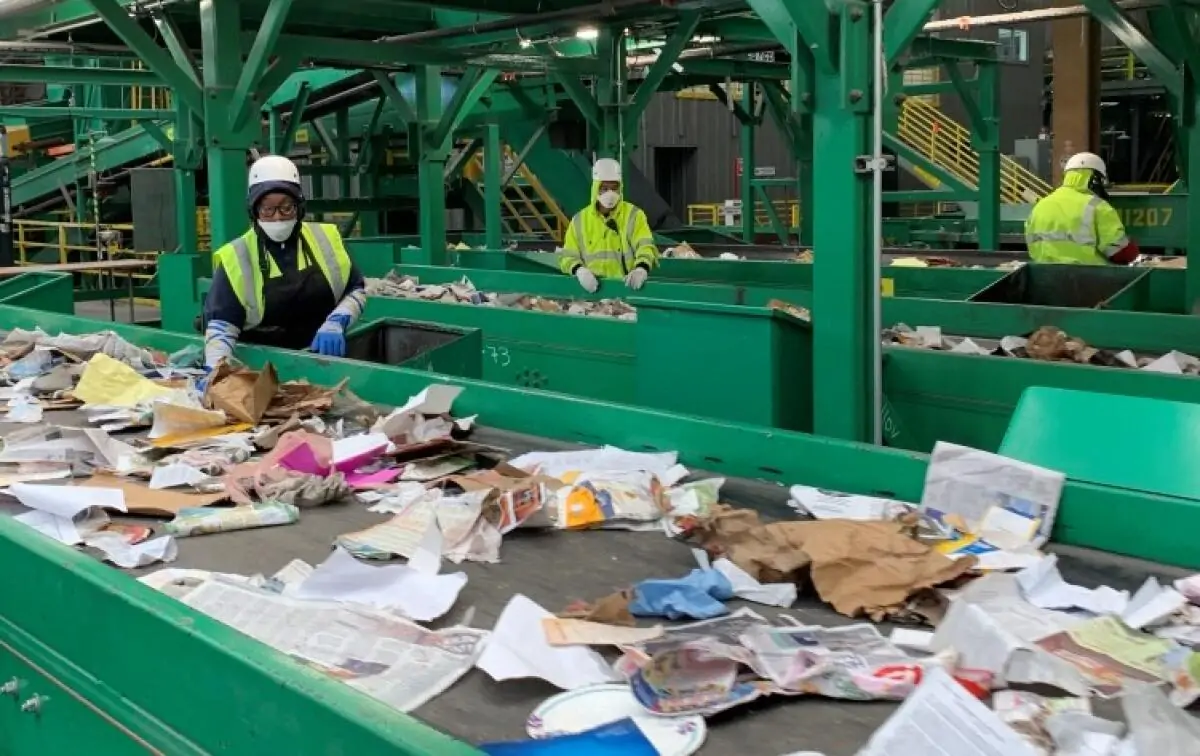
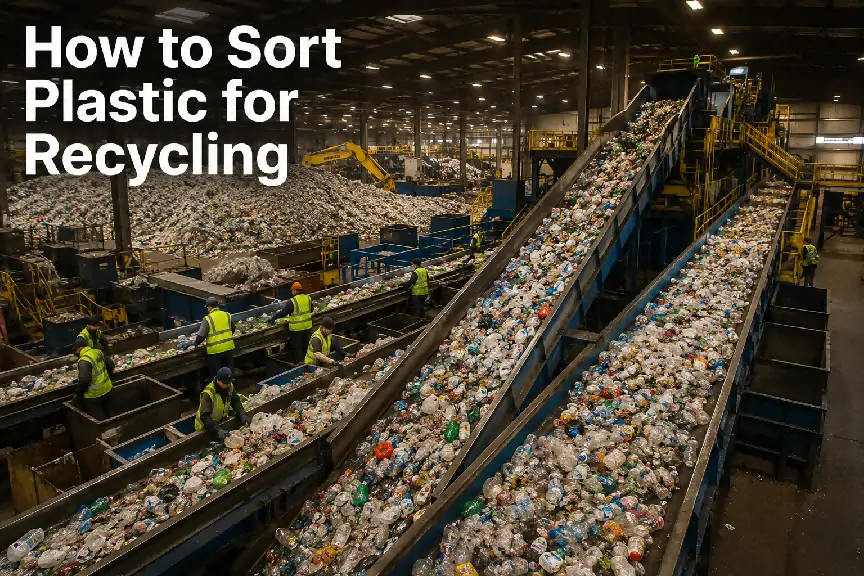
A small startup might process 500 kg per day using manual sorting tables and a basic sink-float tank. But at 10 tons per hour — the volume where margins actually work — manual sorting breaks down: a single person would need to separate 80 pieces per second. That’s why industrial lines trade hands for sensors.
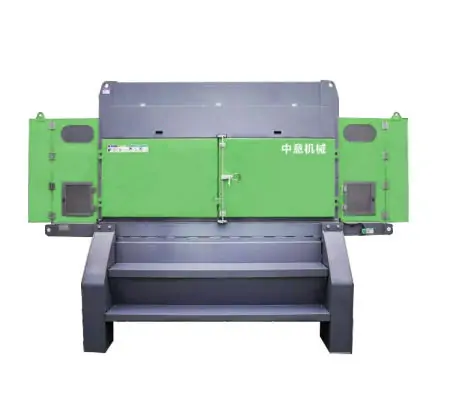
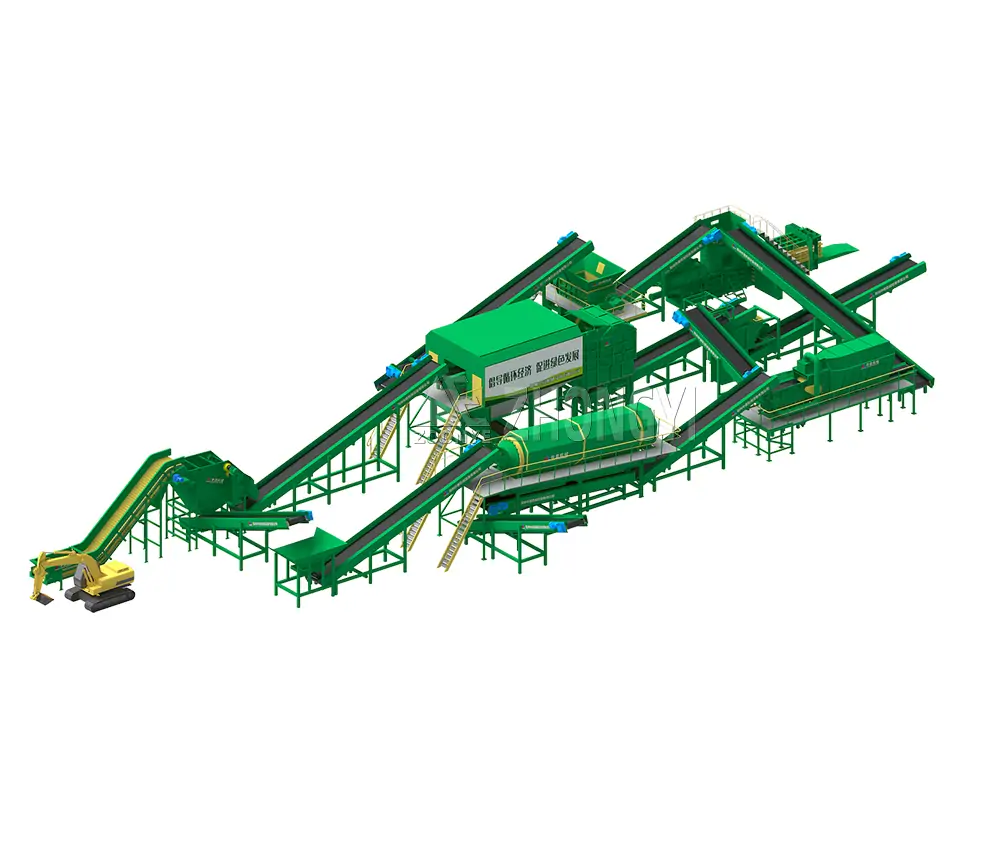
At scale, the workflow shifts entirely. You install banks of NIR sorters running at 3–5 meters per second belt speed, each unit firing 200+ air jets per second. Ballistic separators split film from rigid materials automatically. Multi-density sink-float tanks with circulation pumps handle 15 tons per hour continuously. Zhongyi designs and supplies this equipment — from individual optical sorters to complete separation lines — for facilities ready to move past pilot scale.
The core principle doesn’t change whether you’re processing 1 ton or 50 tons per day: separate by polymer type first, then by color and cleanliness. The difference is in which tools you use.
Equipment That Makes Up a Modern Sorting Line
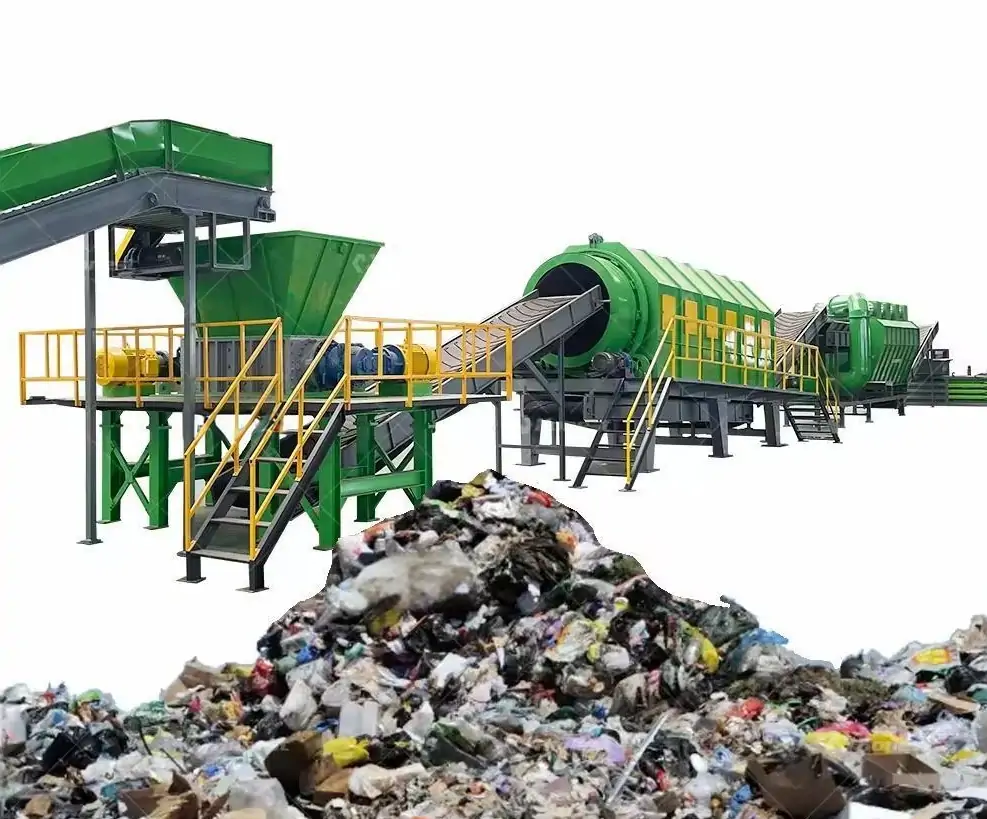
Manual sorting works for small batches and quality checks, but beyond one ton per hour, machines take over — they don’t tire, don’t miss pieces at 3 a.m., and maintain consistent 99% accuracy. Here are the core components of a modern plastic sorting line:
Bale breaker/bag opener — Loosens compacted bales and spreads material evenly onto the feed conveyor.
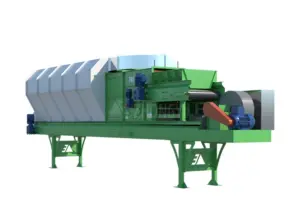
Ballistic separator — Splits 2D (film, bags) from 3D (bottles, rigid containers), protecting downstream sorters.
NIR optical sorter — The workhorse. Identifies polymer types via near-infrared sensors and separates them with air jets.
Sink-float tank/density separator — Separates PET (sinks) from polyolefins (floats) and removes heavy contaminants.
Eddy current separator + overbelt magnet — Pulls ferrous and non-ferrous metals before baling.
Zhongyi supplies each of these components — from standalone units to fully integrated lines — sized to your throughput and material composition.
Conclusion
Sorting plastic for recycling comes down to building a logical sequence that removes one type of contaminant at a time — from bag breaking through to baling. When each step does its part, your final bales consistently hit purity targets, and your material earns premium pricing. The difference between a line that performs and one that struggles usually boils down to two things: keeping feedstock dry and separating film from rigid plastics early.


Andy Yu
Technical Engineer | Zhongyi ECO
16+
Years Exp.
300+
Solutions
50+
Countries
16 years’ experience in environmental and solid waste management, specializing in C&D recycling and waste sorting solutions. At Zhongyi Mining Machinery, focused on improving global clients’ efficiency through technical expertise and tailored configurations.
FAQ
No. Different polymer types (PET, HDPE, PVC, PP) have incompatible melting points and chemical properties. Mixing them ruins recyclate quality. Always sort by resin code first.
Most use NIR (near-infrared) optical sorters. The sensor reads each piece’s molecular signature and fires air jets to separate PET, HDPE, PP, and other polymers at 95–99% accuracy.
Labels and caps are different plastics (often shrink film and PP). Industrial lines remove them through ballistic separation and sink-float tanks. No need to hand-remove.
Black plastic. Carbon black pigment absorbs NIR light, so standard optical sorters can’t detect it. Facilities with high black plastic volumes use manual picking or upgrade to MIR sorters. Zhongyi offers solutions for black plastic detection.
Dry and free of heavy food residue. Optical sorters work best on clean, dry surfaces. Wet plastic scatters NIR signals and drops purity by 15–20%. Rinsing helps, but drying matters more.
Depends on volume. Under 1 ton per hour, manual sorting or density tanks may suffice. Above 3 tons per hour, an optical sorter typically pays for itself within 12–18 months through higher purity and fewer rejects. Zhongyi can help size the right system for your throughput.