
Introduction
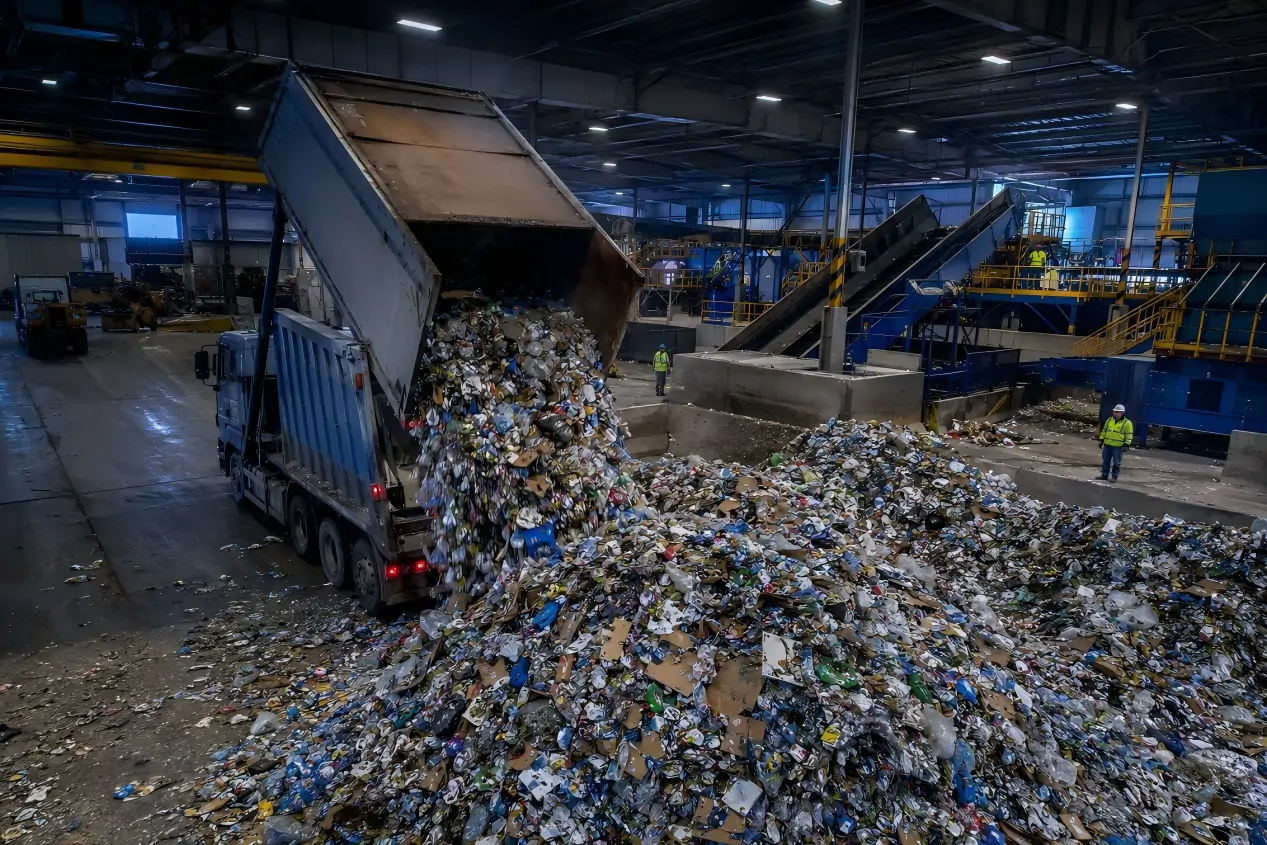
In a waste recycling plant, the material entering the line is rarely uniform. Large plastic pieces, wood, bags, tires, metal scraps, and mixed municipal waste may arrive together, with different sizes, moisture levels, and resistance to cutting. For many plants, the first step is therefore not fine crushing, but reducing this difficult feed to a size that can be handled by the next stage.
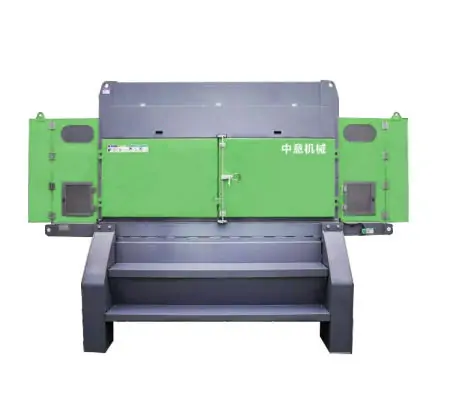
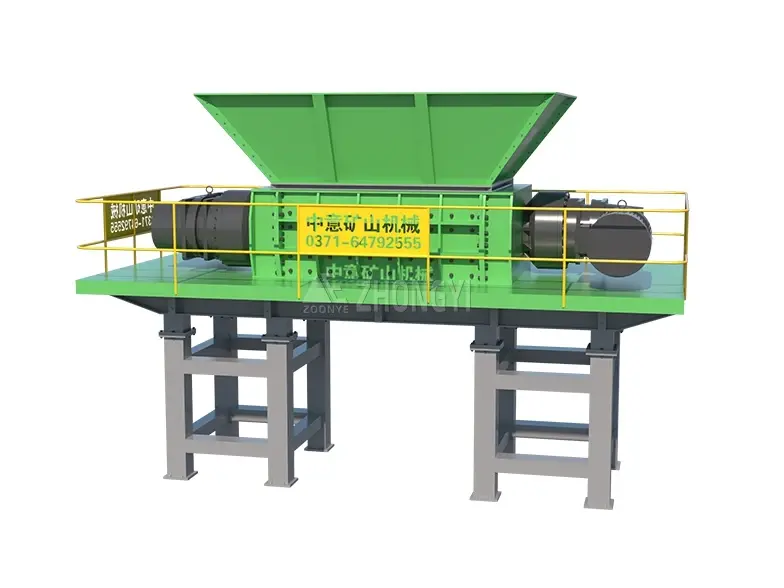
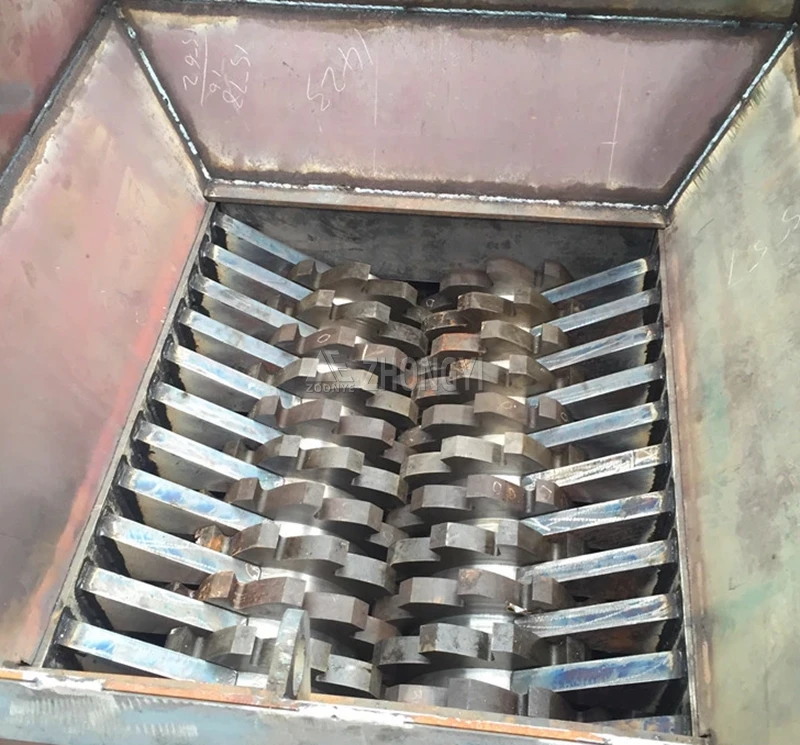
This is where a double shaft shredder is often used. Two counter-rotating shafts fitted with interlocking cutters grab and pull the material into the shredding chamber. As the cutters engage with the feed, the material is progressively torn, sheared, and squeezed into smaller pieces.
But what actually happens between the cutters, and why can this design handle bulky and mixed waste? The answer lies in the interaction between the shaft rotation, cutter arrangement, torque, and material characteristics. In the following sections, we will look at how these parts work together, how the shredding process changes with different types of waste, and what engineers need to consider when selecting a double shaft shredder for a recycling line.
How Does a Double Shaft Shredder Work?
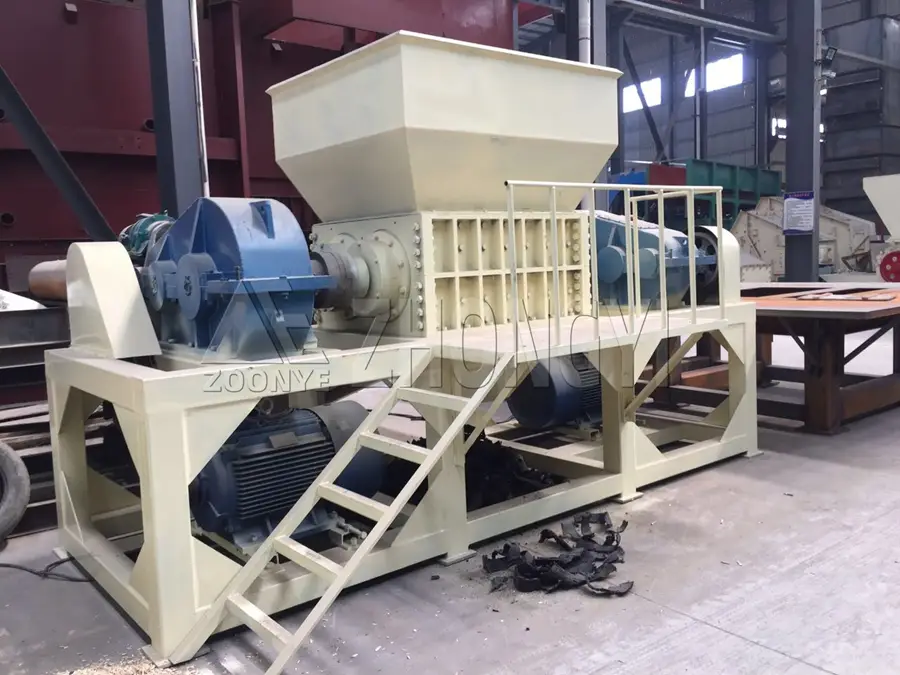
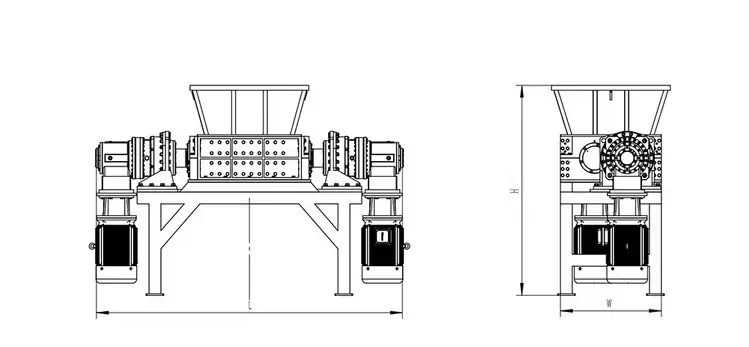
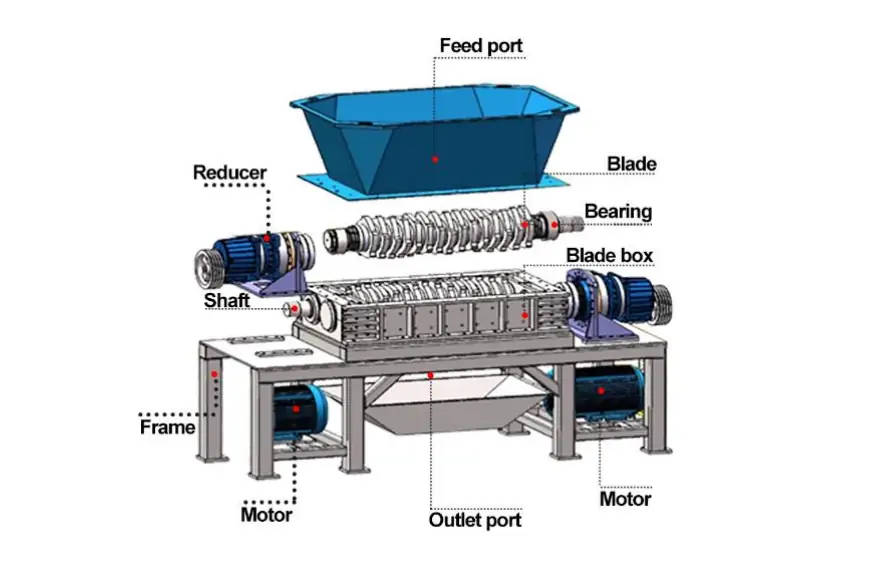
A double shaft shredder uses two counter-rotating shafts and interlocking cutters to grip, pull, shear, and tear waste into smaller pieces. As the material enters the shredding chamber, the cutters catch it and draw it between the two shafts, where several mechanical forces act on the material at the same time.
Unlike a high-speed impact crusher, a double shaft shredder does not depend mainly on impact energy to break the feed. It uses controlled cutting and tearing forces, which makes this design suitable for bulky, mixed, flexible, and tough waste commonly found in recycling plants.
The Shafts Grab and Pull the Material
As the waste enters the chamber, the cutter teeth engage with the material and pull it toward the center of the machine. The two shafts rotate in opposite directions, helping the cutters maintain contact with large or irregular pieces instead of simply pushing them around the chamber.
This gripping action is particularly useful for materials such as plastic bags, wood, tires, bulky waste, and mixed MSW. However, the way material feeds into the cutters can change with its size, moisture, density, flexibility, and tendency to tangle.
Interlocking Cutters Tear and Shear the Waste
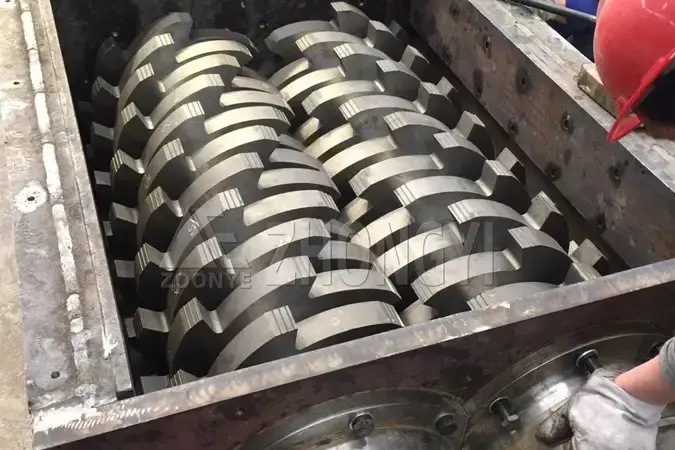
Once the material is caught between the two shafts, the interlocking cutters apply cutting and tearing forces. Material caught between adjacent cutter edges is sheared, while flexible or tough materials can be stretched and torn as the shafts continue to pull in opposite directions.
Compression also occurs around the cutter engagement area. The resulting size and shape are affected by the cutter thickness, tooth configuration, shaft spacing, and material characteristics, so the cutter design needs to be considered together with the required output rather than selected on its own.
Low Speed and High Torque Provide the Cutting Force
Double shaft shredders generally operate at relatively low shaft speeds while producing high torque at the cutters. The drive and gearbox transfer motor power to the shafts, allowing the cutters to maintain force when large or resistant pieces enter the chamber.
The actual shaft speed varies between models and applications, so there is no single rpm that applies to every double shaft shredder. In practice, speed, torque, cutter design, feed size, and material characteristics need to be matched to the required capacity and output.
PLC Control Responds to Overload Conditions
Waste streams are not always predictable. An oversized piece or an unexpectedly hard object can cause a sudden increase in shaft load. When this happens, PLC control with overload protection can trigger reverse rotation, helping the cutters release the material instead of continuing to work against excessive resistance.
After the obstruction is released, the shafts can return to normal rotation. This function is especially useful for mixed waste applications, where feed conditions can change from one batch to another and the shredder needs to respond to these changes during continuous operation.
Why Do Double Shaft Shredders Use Two Shafts?
The reason for using two shafts becomes clearer when you look at how difficult waste behaves inside the cutting chamber. Bulky plastic, tires, textiles, bags, and mixed MSW do not always break when a cutter contacts them. They can bend, move away from the cutting edge, wrap around a shaft, or pass through the chamber without enough engagement. Two counter-rotating shafts give the cutters more opportunities to catch the material and keep it engaged in the cutting zone.
The two shafts are therefore not simply used to “increase crushing force.” Their main value is the way they control the material during size reduction. One shaft pulls the material toward the other, while the interlocking cutters apply cutting and tearing forces as the material passes through the gap. This combination is particularly useful for waste streams where feed size, shape, moisture, and composition can change from one load to the next.
Better Gripping of Bulky Waste
Large waste pieces are rarely presented to the cutter in a neat or predictable position. A piece of plastic may fold over, a mattress may compress as it enters the chamber, and a tire may resist the first cutting action because of its elastic structure. With two counter-rotating shafts, the cutters can engage the material from different sides and pull it toward the center of the chamber.
This gripping action is one reason twin-shaft shredders are commonly used for bulky waste, plastic, tires, textiles, and mixed MSW. The goal is not to make the material pass through a narrow opening in one movement, but to keep catching and reducing it as the shafts continue to rotate.
Stronger Tearing Action
Once the cutters have caught the material, the two shafts create relative movement between opposing cutter edges. This allows the material to be pulled in different directions while the cutter edges apply shear. Flexible materials tend to stretch and tear, while tougher pieces may be cut where the cutter edges engage them.
The actual result depends heavily on the material and cutter configuration. A cutter arrangement that works well for bulky plastic may behave differently with wet MSW or waste containing long, fibrous materials. For this reason, cutter profile, shaft speed, torque, shaft spacing, and feed characteristics need to be considered together.
Continuous Feeding
Another practical reason for the two-shaft arrangement is material feeding. As the shafts rotate toward the center of the chamber, the cutters repeatedly catch incoming waste and draw it into the cutting area. This helps maintain material movement through the shredder instead of relying on the feed to fall through the chamber by gravity alone.
In an actual recycling line, this matters because the feed is rarely uniform. The shredder may receive several large pieces followed by loose bags, plastic film, wood, or other mixed materials. The two-shaft cutting action allows the machine to keep engaging this changing feed, while the required shaft speed and cutter configuration are selected according to the specific application.
For a detailed comparison of the two configurations and their typical applications, see our Double Shaft vs Single Shaft Waste Shredder: Which Is Better? guide.
What Factors Affect Double Shaft Shredding Performance?
The performance of a double shaft shredder depends on more than motor power. Material characteristics, cutter design, shaft speed and torque, and feed size and output requirements all influence how the machine handles the waste. These factors should be considered together when selecting a shredder, especially when the feed contains mixed, bulky, wet, or difficult-to-cut materials.
Material Characteristics
Hardness, moisture, density, flexibility, abrasiveness, and bulkiness affect how the waste behaves in the cutting chamber. Plastic film and textiles can stretch or wrap around the cutters, while dense or abrasive materials place higher loads on the cutters and drive system. Moisture also changes how mixed waste moves through the chamber, particularly when fine or sticky material is present. For this reason, the waste should be assessed by its actual composition and physical condition, not simply by its general category such as MSW or plastic.
Cutter Design
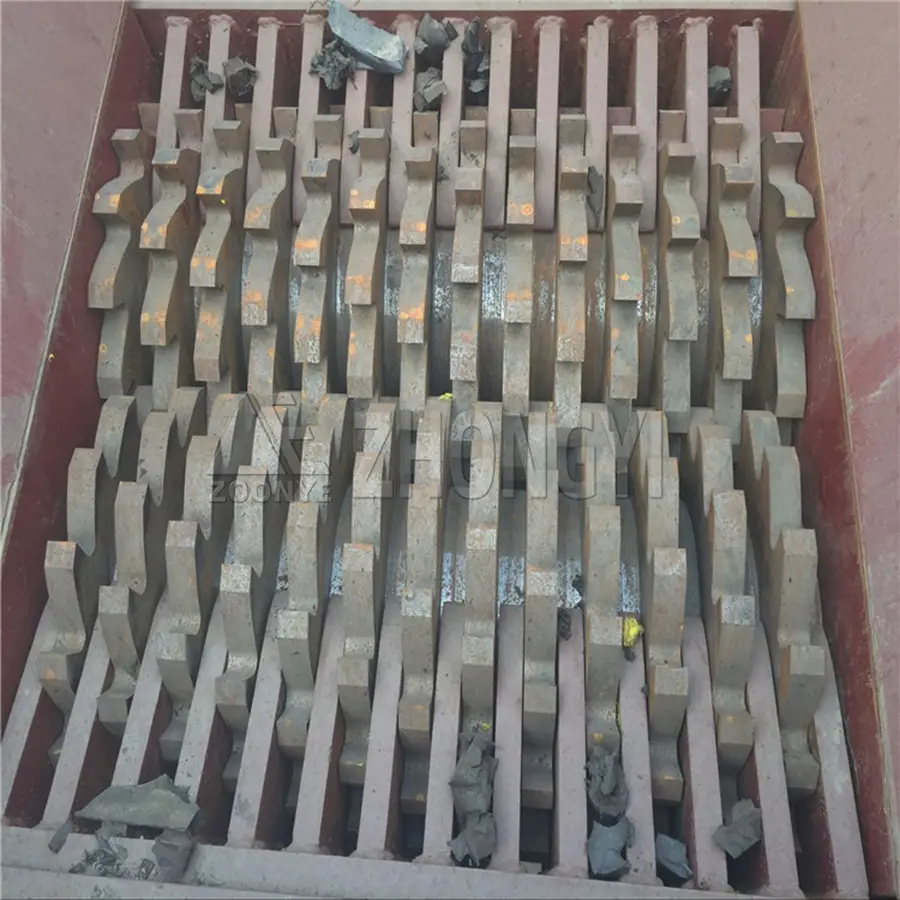
Cutter thickness, tooth profile, number, spacing, and arrangement affect how the cutters catch and reduce the material. Different waste streams require different cutting characteristics; for example, bulky mixed waste may need a cutter arrangement that provides strong engagement, while a more uniform feed may require a different configuration to reach the desired output. Cutter selection should therefore be matched to the material, feed size, capacity, and target particle size.
Shaft Speed and Torque
Shaft speed and torque need to work together. Higher speed does not automatically mean better shredding, because large or resistant pieces can require substantial torque to keep the cutters engaged without stalling. The motor, gearbox, shaft speed, and cutter configuration are therefore considered as a complete drive and cutting system. The appropriate combination depends on the material being processed and the operating conditions of the recycling line.
Feed Size and Required Output
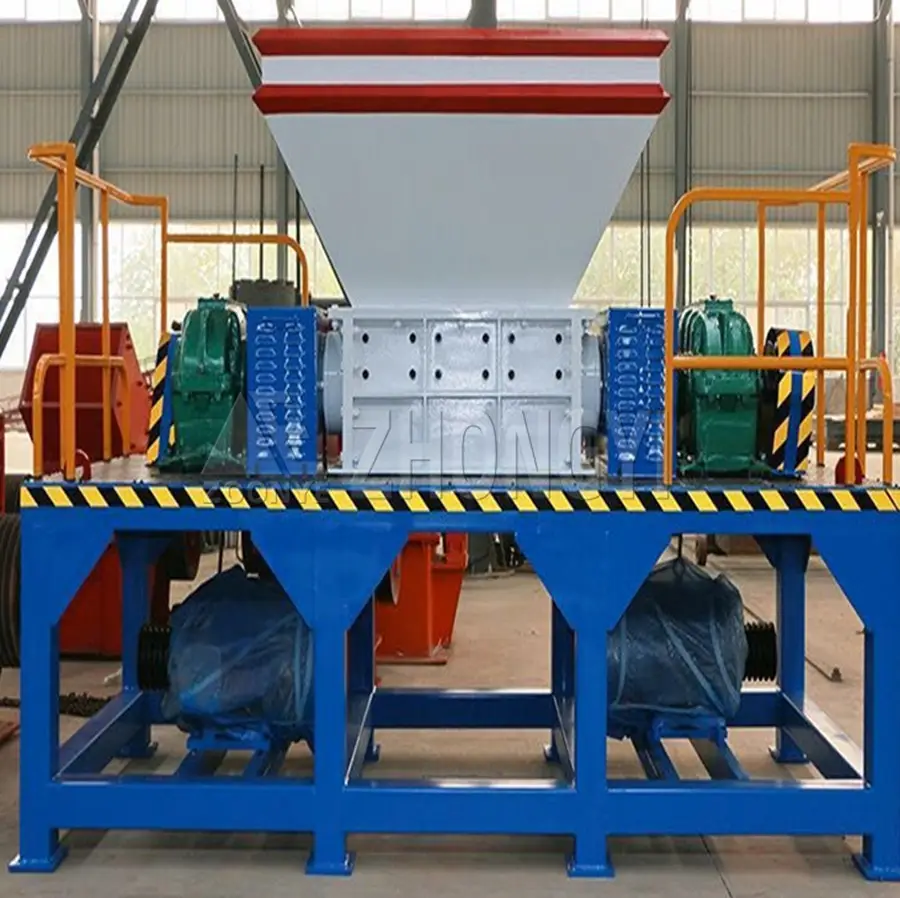
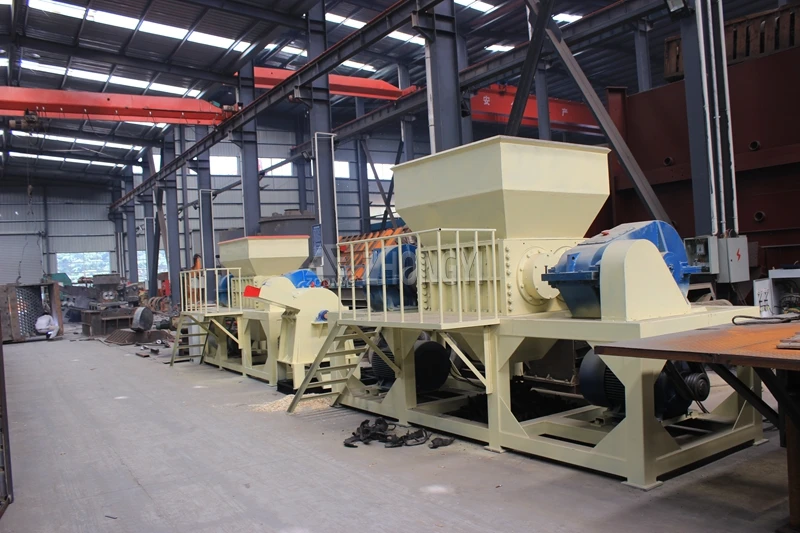
Feed size determines how easily the material can enter the cutting chamber and how much force may be required during engagement, while the required output influences the cutter configuration and operating conditions. A shredder used for coarse reduction before screening does not necessarily need the same configuration as one handling a more controlled feed. Xinzhongyi ECO currently lists double shaft shredder models with capacities from 2 to 80 m³/h, with different motor powers, shaft speeds, and configurations. Selection should be based on material, feed size, required capacity, and target output, rather than capacity alone.
How Does the Shredder Handle Overload?
Mixed waste can contain hard objects, tangled materials, or pieces that are simply too large for the current cutting condition. When one of these enters the chamber and the shaft load rises sharply, the shredder does not need to keep rotating in the same direction. The control system can stop the shafts and reverse them to release the material, after which forward rotation can resume. Xinzhongyi ECO double shaft shredders use PLC automatic start/stop, overload protection, and reverse rotation as part of this control process.
In practice, overload protection is mainly about dealing with occasional abnormal feed, not compensating for an incorrectly selected machine. If the shredder repeatedly reverses or stops, the cause may be oversized feed, unsuitable material, excessive feeding, or a cutter configuration that does not match the application. This is why overload protection is useful in mixed-waste lines, but it still needs to be supported by proper feed control and machine selection.
What Materials Can a Double Shaft Shredder Process?
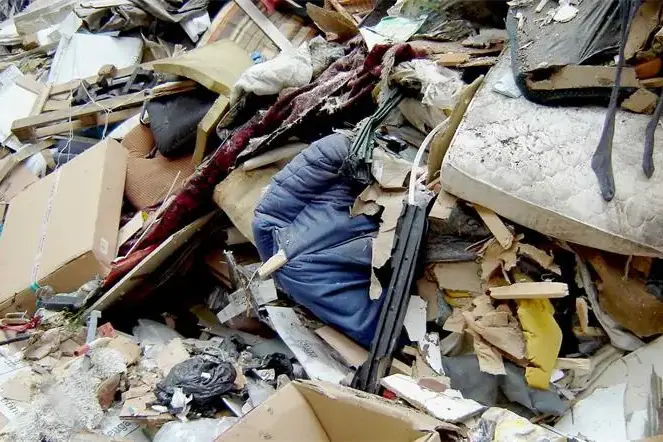
Double shaft shredders are commonly used for bulky, flexible, tangled, and mixed waste that needs coarse size reduction. Typical applications include MSW, bulky waste, industrial waste, plastic, wood, tires, textiles, and some e-waste.
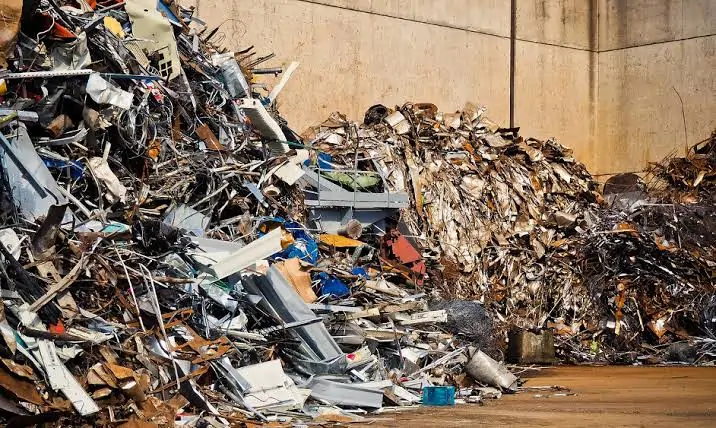

Where Is a Double Shaft Shredder Used in a Recycling Line?
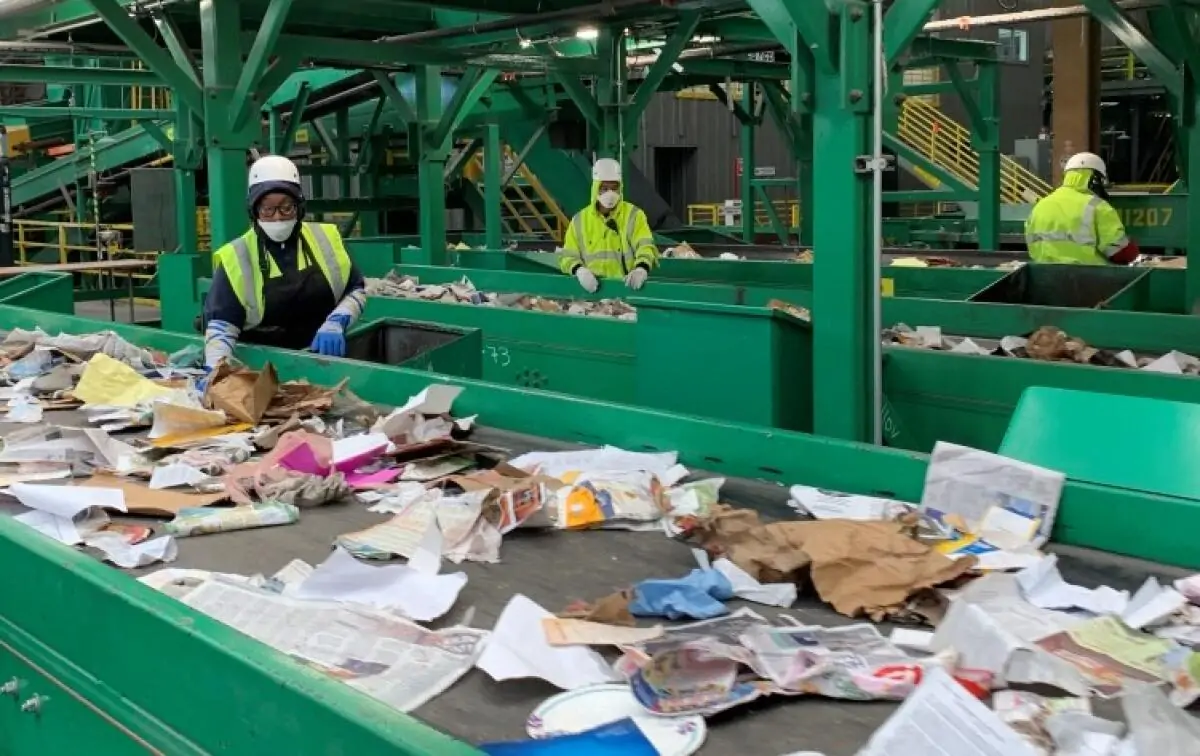
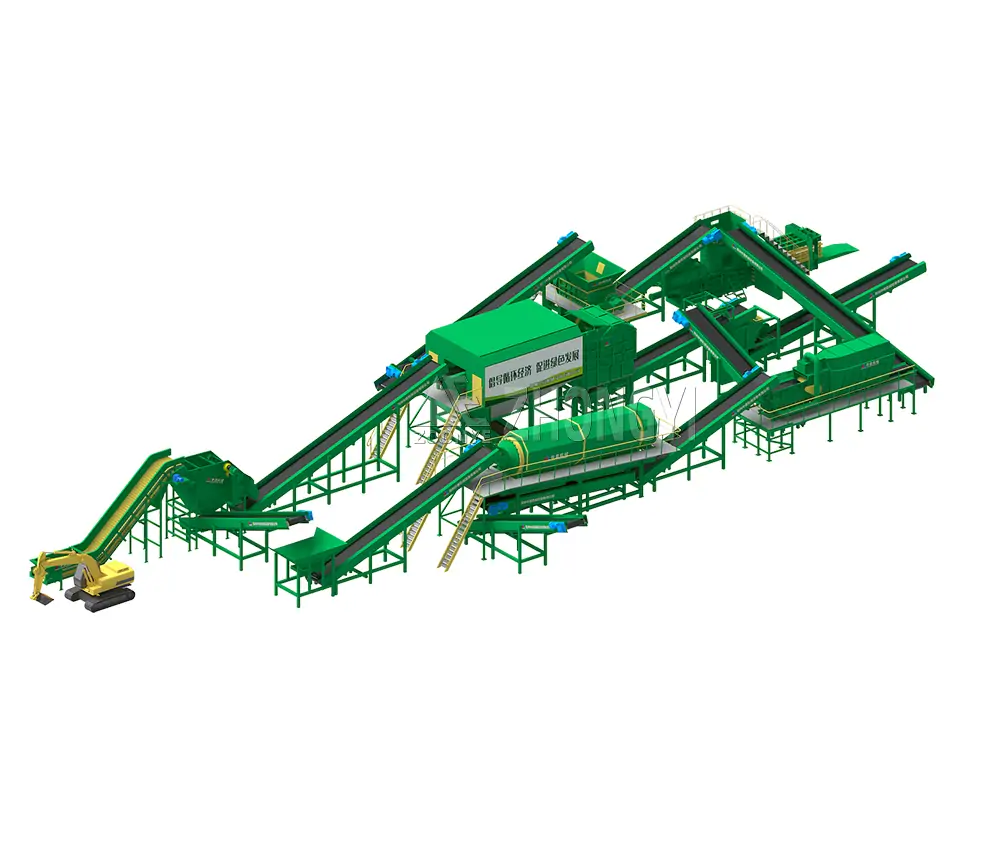
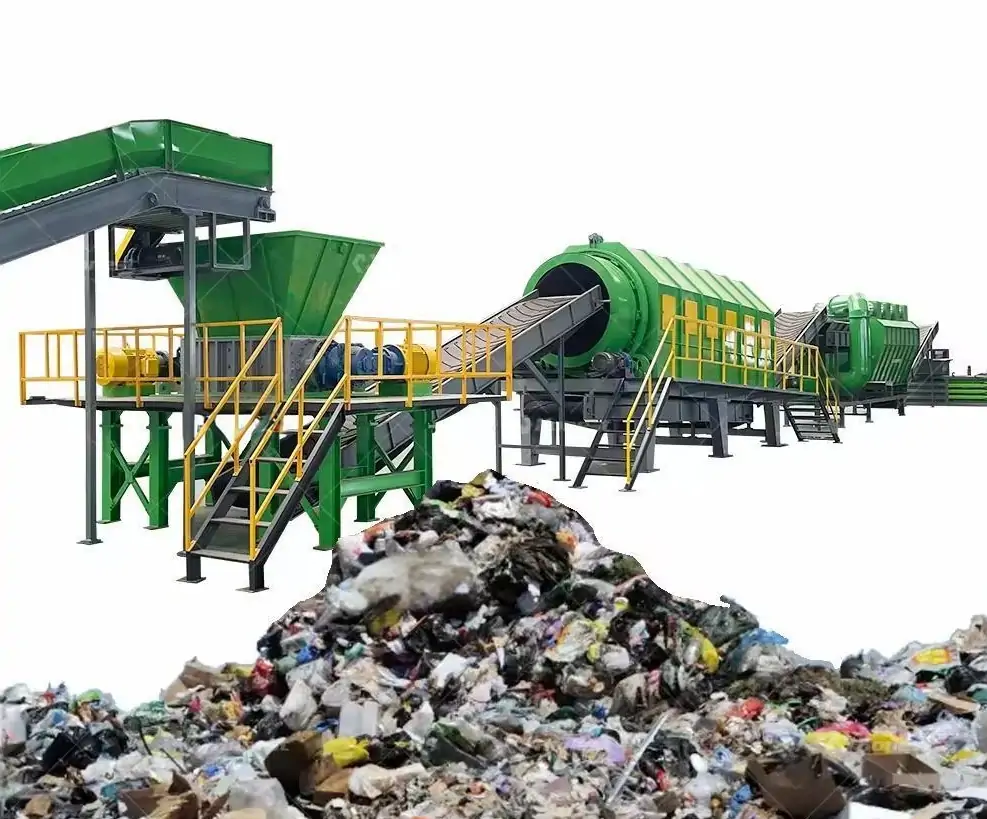
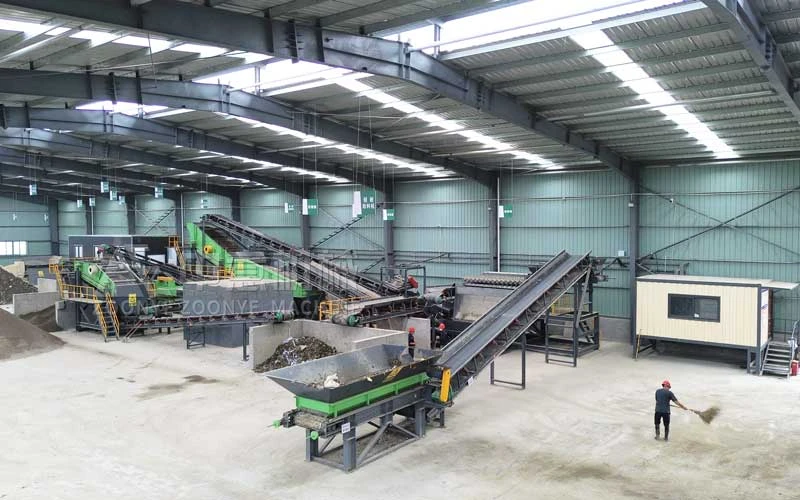
A double shaft shredder is normally placed in the front section of a recycling line, where bulky or mixed waste needs to be reduced before further processing. Depending on the feed, the material may go through manual sorting, feeding, or other pre-treatment first. The shredder then reduces the size and breaks up large pieces so the material can move more easily to the next stage.
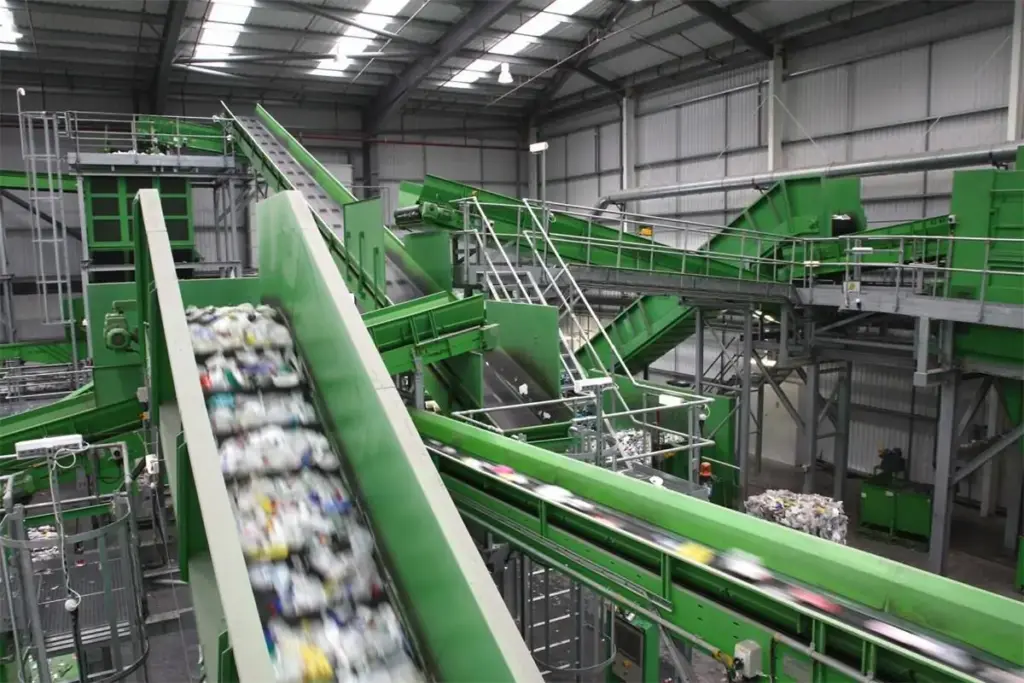
After shredding, the material can be sent to screening, magnetic separation, eddy current separation, or wind separation, depending on what needs to be recovered. For example, a line may use screening to control particle size before separating ferrous and non-ferrous metals, while RDF-oriented lines may use different downstream equipment. This is why the shredder should be selected as part of the process, not as a standalone machine. For a complete system layout, see our [Industrial Waste Processing Plant] solution.
Double Shaft Shredder in a Real Recycling Project
Tibet Construction & Decoration Waste Project
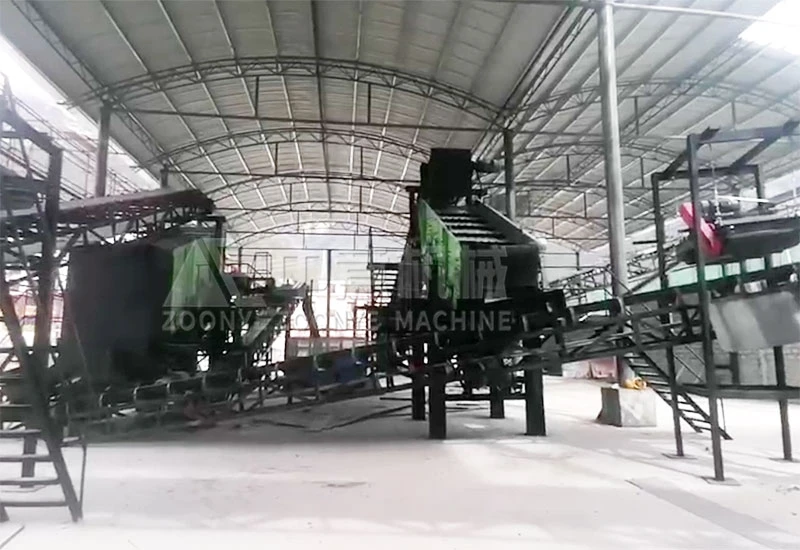
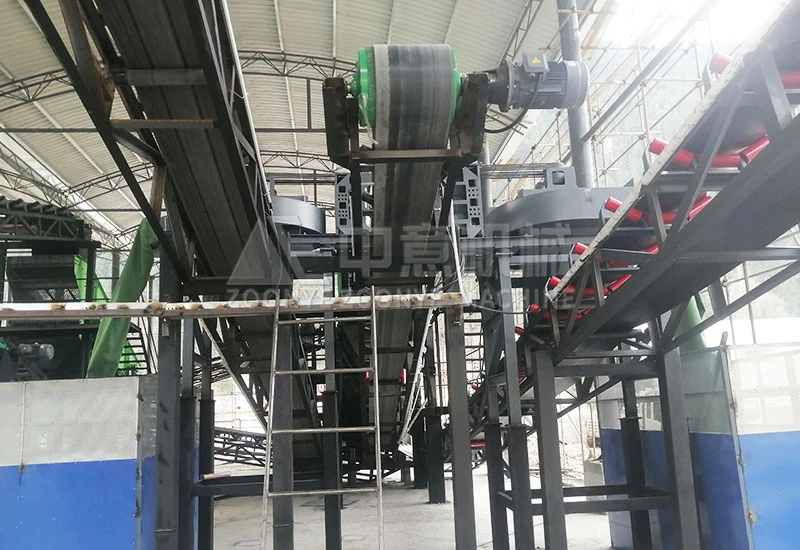
One example is Xinzhongyi ECO’s construction and decoration waste project in Tibet, China. The project has a processing capacity of 150–200 t/h and handles concrete blocks, bricks, and mixed debris. The equipment was installed and commissioned on site under high-altitude, low-temperature, and low-oxygen conditions, which required the equipment and installation work to be considered around the actual site environment.
This project also shows why capacity alone is not enough when selecting a shredder. The material being fed, its size and composition, site conditions, feeding arrangement, and the equipment used later in the process all affect the configuration. In practice, the right shredder is selected around the whole processing line rather than by looking at the throughput figure alone.
Conclusion
The double shaft shredder working principle is relatively straightforward: two counter-rotating shafts keep the material engaged while the cutters grip, tear, and shear it into smaller pieces. Its low-speed, high-torque design makes it particularly suitable for bulky, mixed, and difficult waste that needs coarse size reduction before further processing.
In an actual recycling project, however, the shaft design is only part of the decision. Material type, feed size, capacity, moisture, target output, and downstream equipment all affect the final configuration. At Xinzhongyi ECO, we use these conditions to configure the shredder or the complete processing line around the actual application. If you are planning a project, send us your material type, feed size, required capacity, and target output, and our engineering team can assess the appropriate configuration.


Andy Yu
Technical Engineer | Zhongyi ECO
16+
Years Exp.
300+
Solutions
50+
Countries
16 years’ experience in environmental and solid waste management, specializing in C&D recycling and waste sorting solutions. At Zhongyi Mining Machinery, focused on improving global clients’ efficiency through technical expertise and tailored configurations.
FAQ
A double shaft shredder is mainly used for coarse size reduction of bulky, mixed, and difficult waste. Common applications include MSW, bulky waste, plastic, wood, tires, textiles, industrial waste, and selected e-waste. It is generally used before screening, sorting, or further size reduction, where the main requirement is to break down large or irregular feed rather than produce a tightly controlled fine particle size.
A double shaft shredder can handle many materials, but the material name alone is not enough for selection. Hardness, moisture, density, flexibility, abrasiveness, maximum feed size, and hard contaminants all affect shredding performance. For example, plastic film may wrap around cutters, while dense or abrasive waste places higher loads on the drive system. The actual feed condition should be checked before choosing the machine.
Capacity depends on the material, feed size, moisture, cutter configuration, shaft speed, and required output. Xinzhongyi ECO currently lists double shaft shredder models with capacities from 2 to 80 m³/h. This range should not be treated as a universal capacity for every waste stream. For an accurate selection, the supplier needs the actual material condition and required throughput rather than capacity alone.
A double shaft shredder is normally selected for coarse size reduction, and the output depends on the cutter design, shaft configuration, material properties, and operating conditions. It is not generally used when a very narrow or fine particle size is required directly from the first shredding stage. If the shredded material will enter a screen or secondary shredder, the required downstream feed size should be considered during selection.
When a hard or oversized object causes a sudden increase in shaft load, the shredder can stop or reverse the shafts to release the material. Xinzhongyi ECO double shaft shredders use overload protection and reverse rotation as part of this process. If overload occurs repeatedly, however, the feed condition should be checked. Frequent reversing can indicate oversized feed, unsuitable material, excessive feeding, or an incorrect machine configuration.
It can be used for wet MSW, but the moisture level should be considered together with the waste composition. Wet waste containing plastic bags, textiles, organic matter, or sticky fines can behave differently inside the chamber and may affect feeding and discharge. Before selection, we recommend checking moisture, bulk density, material composition, maximum feed size, capacity, and downstream requirements rather than using moisture as the only selection criterion.
Start with six basic points: material type, maximum feed size, required capacity, target output size, moisture and bulk density, and the equipment following the shredder. These conditions determine the appropriate cutter arrangement, drive capacity, and machine configuration. For mixed waste, it is also important to identify bulky items, flexible materials, abrasive components, and possible hard contaminants that may affect the cutting load.
Yes. A double shaft shredder is usually one stage of a larger processing line. Depending on the material and recovery target, the line may include screening, magnetic separation, eddy current separation, wind separation, or secondary size reduction after shredding. The equipment sequence depends on the feed and final product requirements, so the shredder should be configured as part of the complete process rather than selected separately.
Related Waste Sorting Equipment

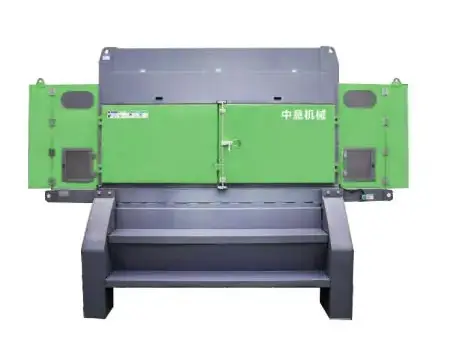
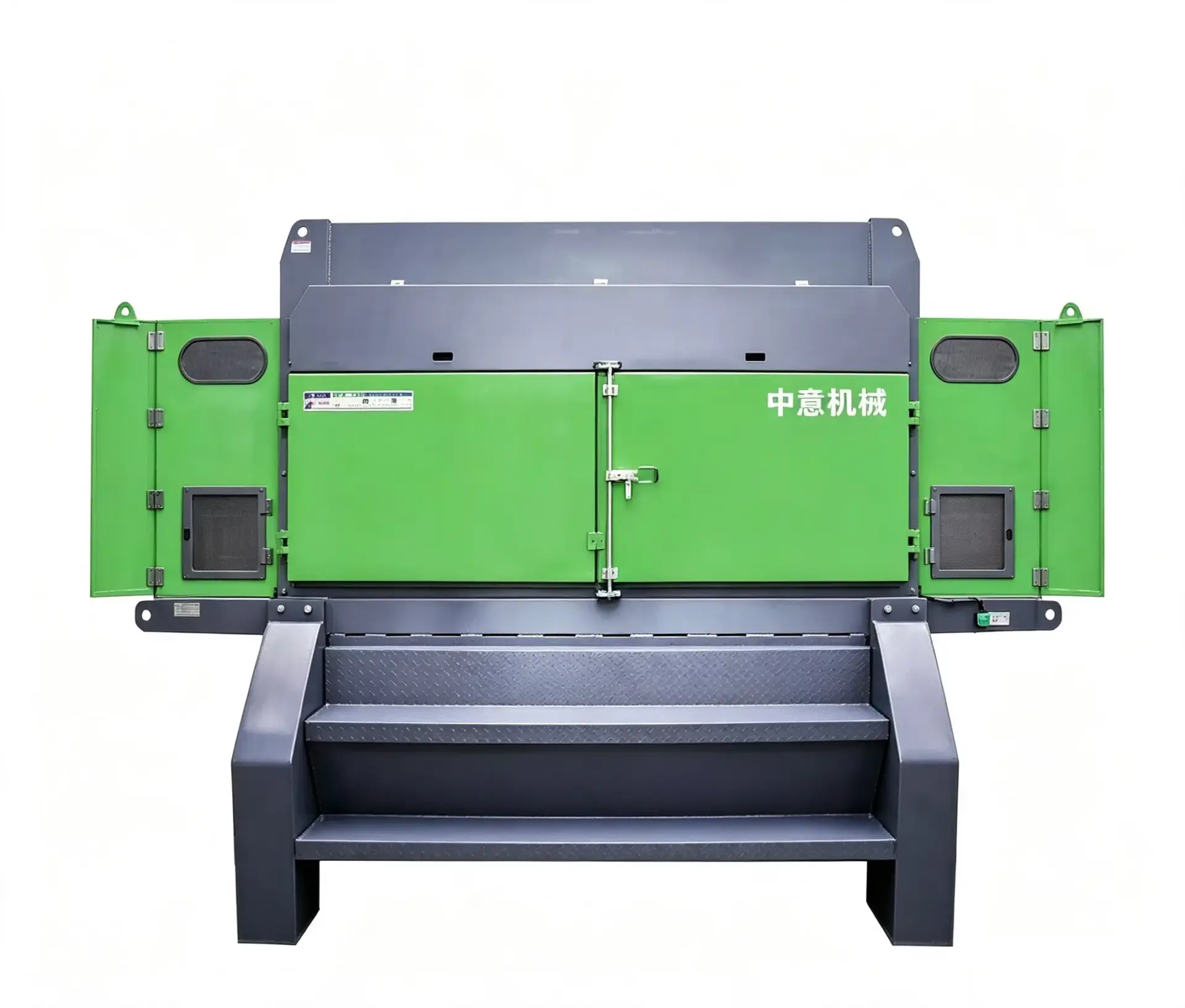
Double Shaft Shredder
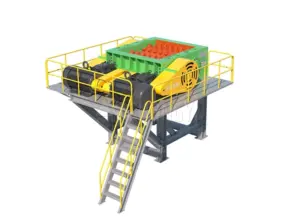
Designed for bulky and mixed waste, the double shaft shredder uses two counter-rotating shafts to grip, tear, and shear incoming material. It is commonly used for MSW, bulky waste, plastic, wood, tires, textiles, and industrial waste before screening or further processing.
Single Shaft Shredder
A single shaft shredder is suited to applications that require more controlled size reduction. The rotor works against a fixed screen to produce a more consistent output, making it useful for prepared plastic, wood, RDF, and other materials that need secondary or finer shredding after primary size reduction.


Construction Waste Shredder
The construction waste shredder is designed for coarse size reduction of concrete, bricks, asphalt, and mixed demolition waste. It helps break down oversized construction debris before screening and separation, making the material easier to handle in construction and demolition waste recycling lines.

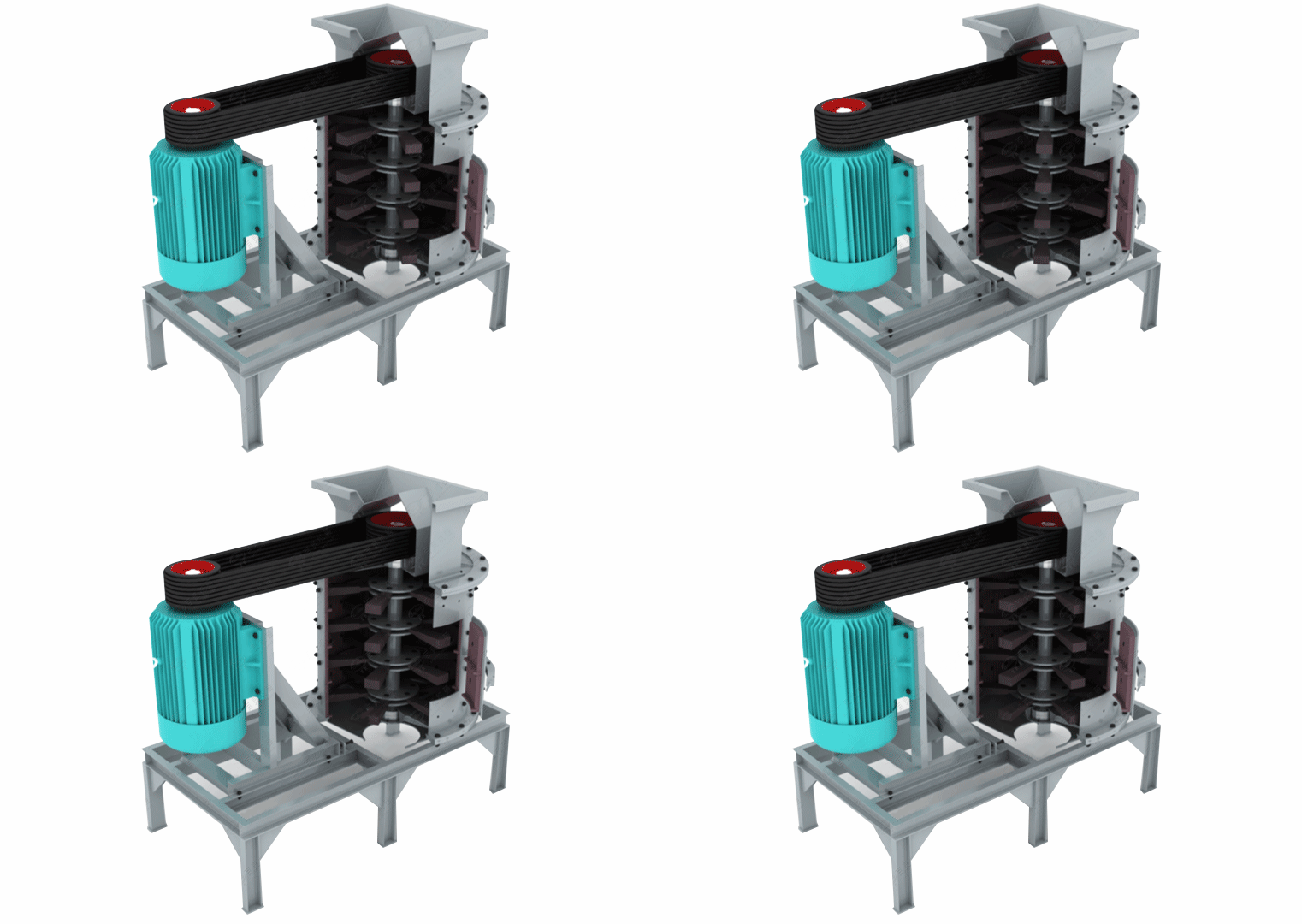
PFL Vertical Compound Crusher
The PFL vertical compound crusher is used for secondary crushing of relatively brittle materials in construction waste and aggregate processing. Its vertical crushing structure reduces material to a smaller size before screening, allowing the output to be classified or sent to further processing stages.