














What is a Heavy Duty Apron Feeder?
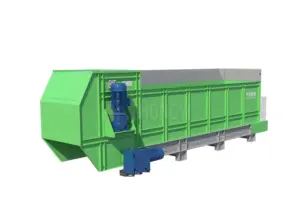
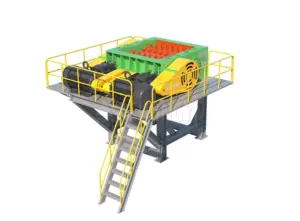
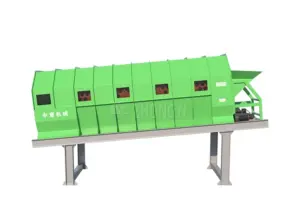
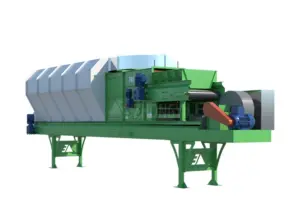
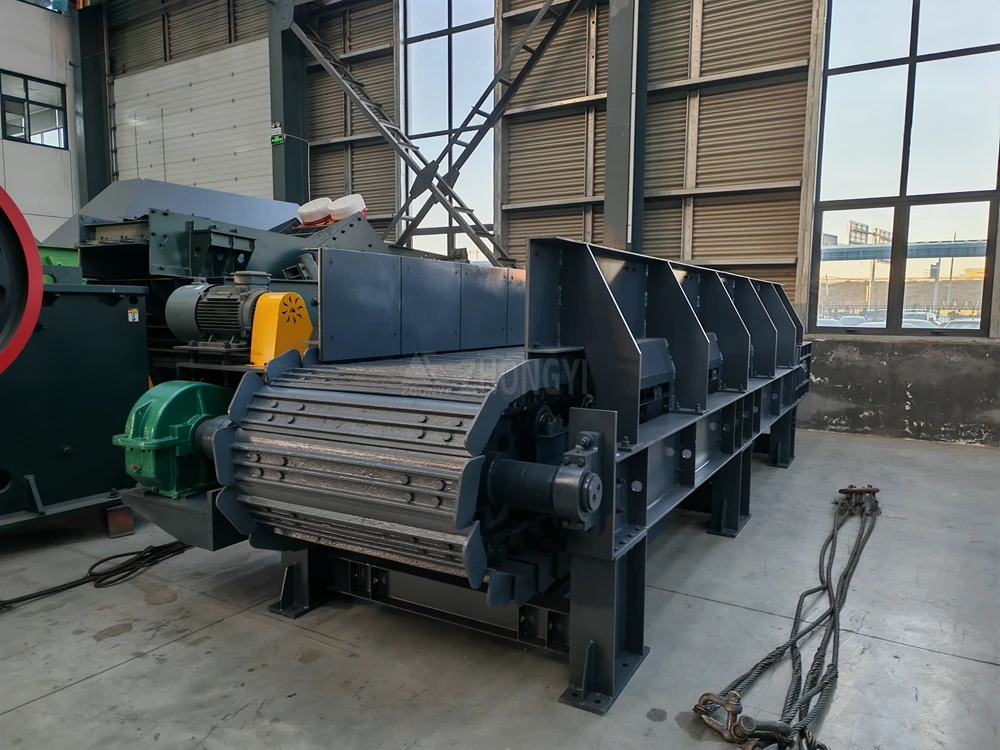
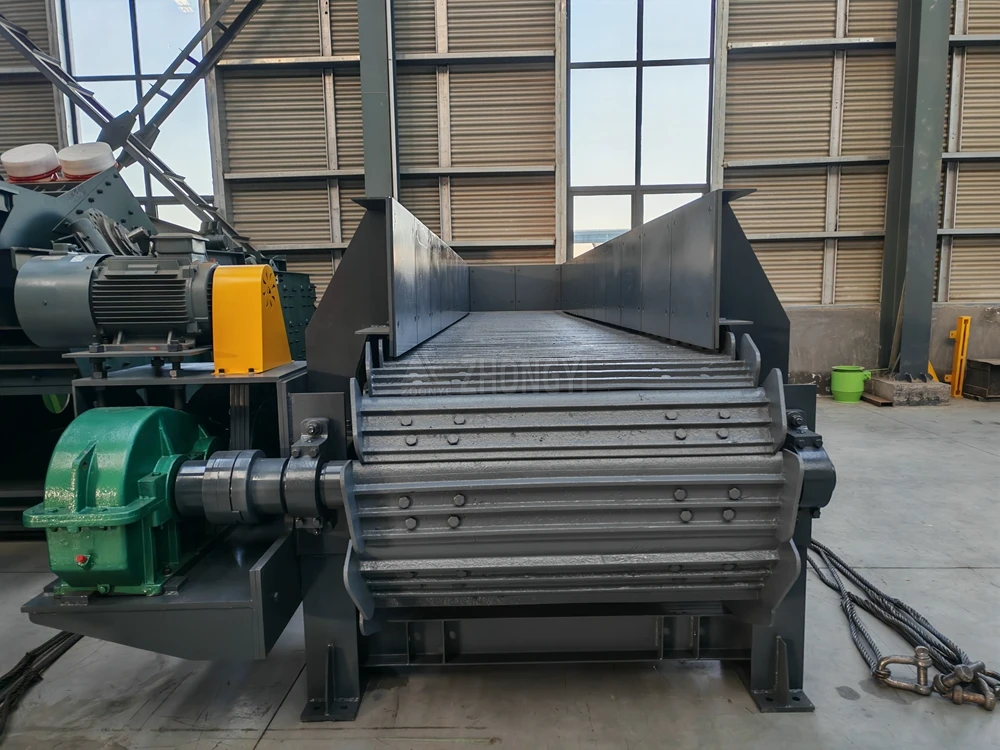
A Heavy Duty Apron Feeder, also known as a heavy plate feeder or chain plate feeder, is a material handling machine used to convey and regulate the flow of large-sized bulk materials. It is commonly installed beneath hoppers or stockpiles to deliver material consistently to jaw crushers, bulk material belt conveyors, and processing systems.
Featuring steel pans, heavy-duty chains, and reinforced drive components, the feeder is designed to withstand high loads, impact forces, and abrasive materials. It is widely used in mining, quarrying, metallurgy, cement, coal, and other heavy industries where reliable feeding of coarse and dense materials is required.
For details, please read this article: What Is an Apron Feeder?
Working Principle
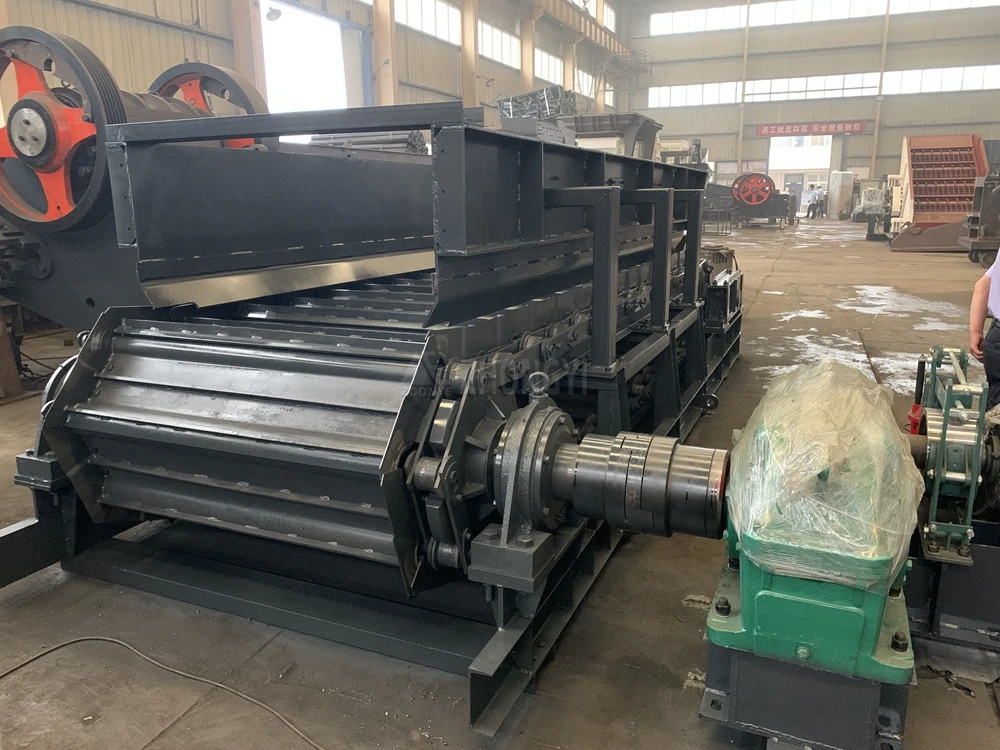
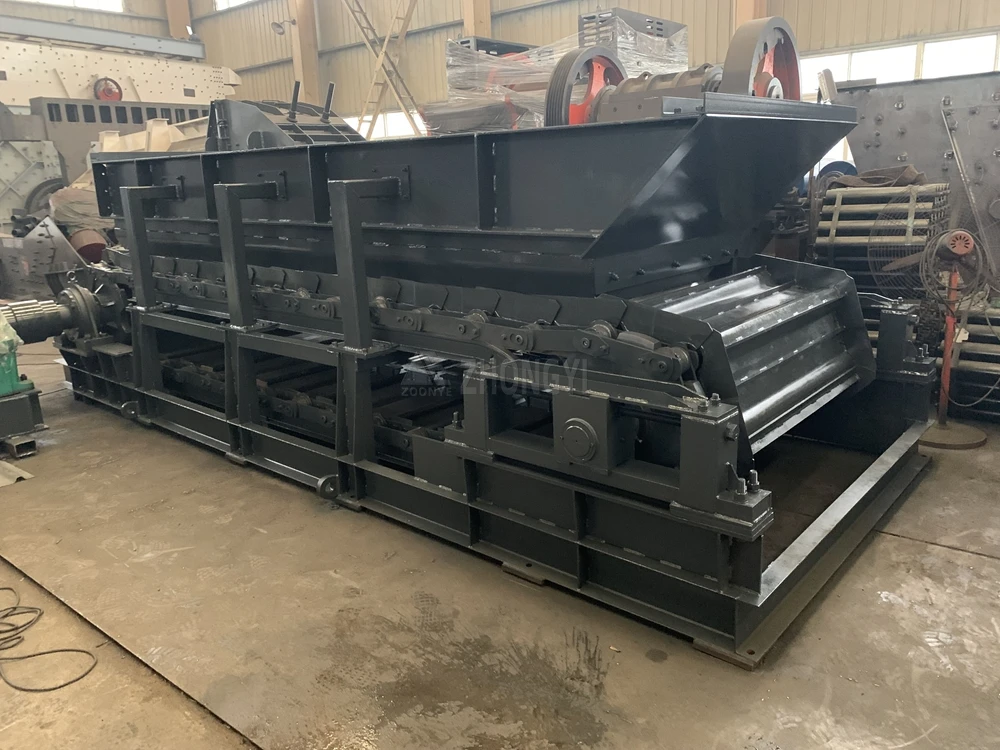
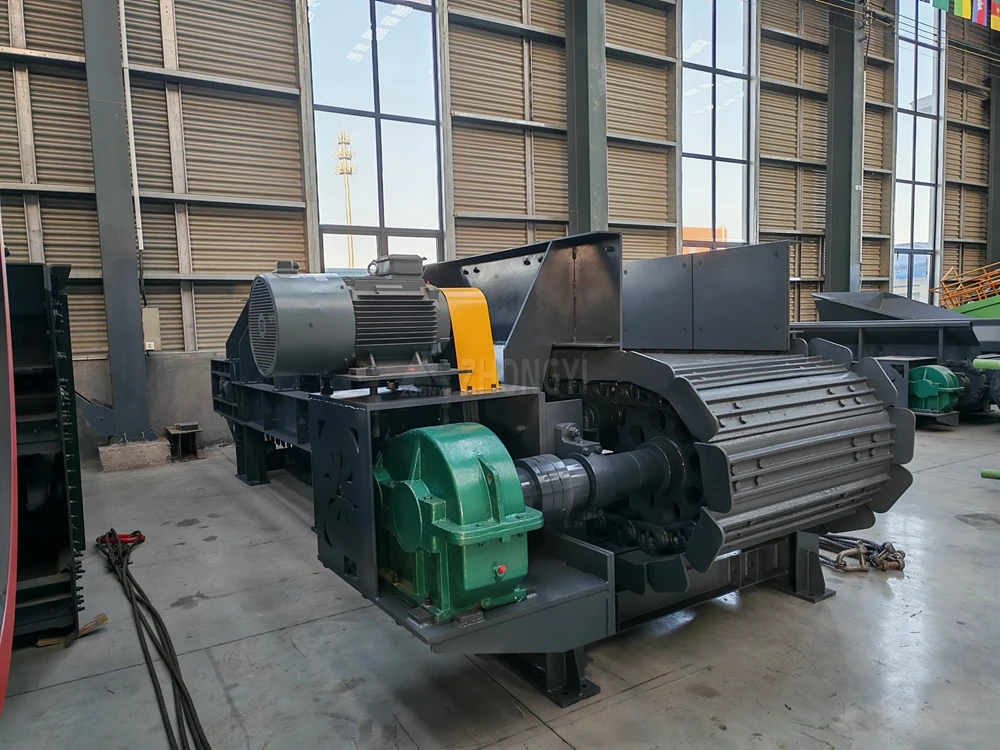
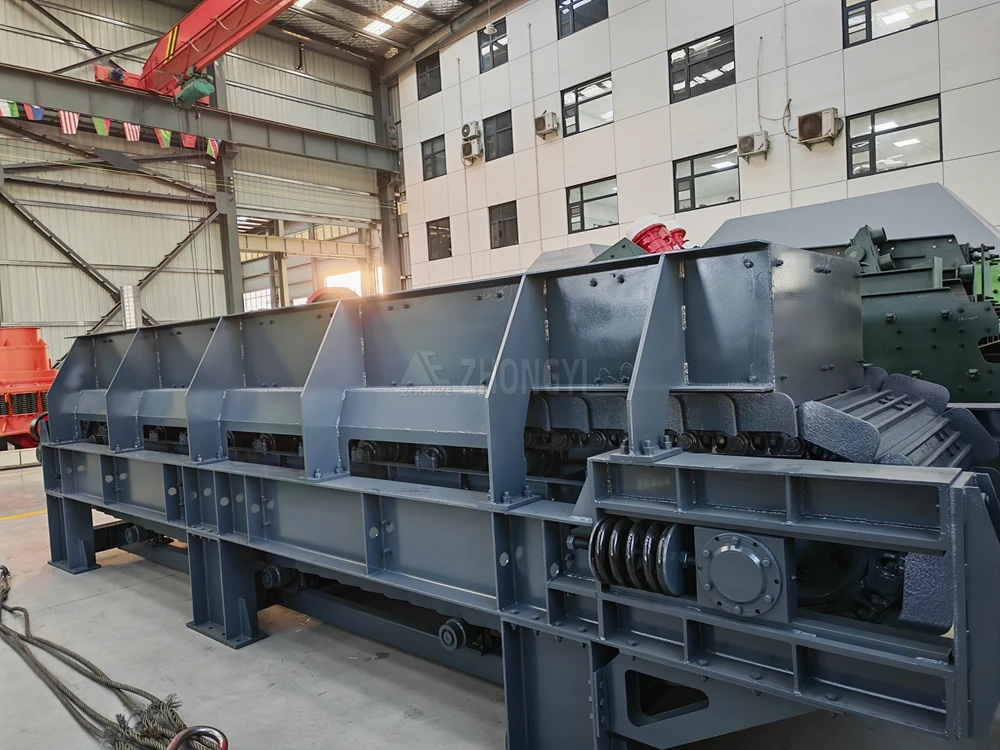
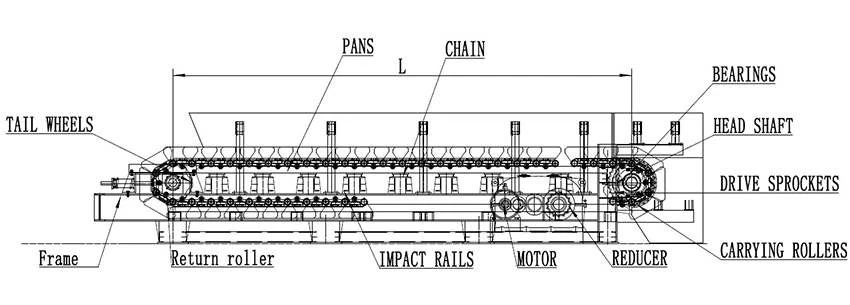
A Heavy Duty Apron Feeder transfers bulk materials by using heavy-duty steel pans mounted on dual chains. The drive system powers the chains and pans to move at a controlled speed, carrying material from the hopper discharge point to crushers, screens, conveyors, or other downstream equipment. It has a robust structure allows reliable handling of large, heavy, abrasive, and high-temperature materials under continuous operating conditions. The following is key components work together:
Tensioning Device: A spiral screw tensioning mechanism, paired with composite springs, consistently maintains the chain’s pre-tension, ensuring proper engagement between the sprocket and the chain. Simultaneously, it absorbs vibrations caused by the impact of large-sized materials, preventing chain slack and protecting critical components.
Support Rollers / Carrier Rollers: These provide support for the apron plates, bearing the combined weight of the plates and the conveyed material. They reduce operational resistance and prevent excessive deflection of the apron plates—caused by their own weight—from disrupting smooth operation.
Apron Plate Assembly: Features a modular, overlapping-arc structure constructed from low-alloy steel plates, offering high strength and excellent wear resistance. The tightly overlapping design ensures zero material leakage. The traction chain typically utilizes heavy-duty bulldozer-style track chains, characterized by minimal pitch error, smooth motion, and high tensile strength, thereby requiring infrequent lubrication.
Vidéo
Avantages
Specifications
The specifications listed below represent our standard models. We provide tailored engineering designs and customized configurations to perfectly match your specific material characteristics and site requirements.
| Modèle | Puissance (kW) | Feed Capacity (m3/h) |
| WBL1040 | 11 – 22 | 50 – 250 |
| WBL1240 | 11 – 22 | 50 – 350 |
| WBL1260 | 15 – 30 | 50 – 350 |
| WBL1440 | 15 – 30 | 50 – 450 |
| WBL1460 | 15 – 30 | 50 – 450 |
| WBL1660 | 15 – 30 | 100 – 800 |
| WBL2060 | 15 – 45 | 120 – 1000 |
| ZBL1040 | 11 – 22 | 50 – 250 |
| ZBL1240 | 11 – 22 | 50 – 350 |
| ZBL1260 | 15 – 30 | 50 – 350 |
| ZBL1440 | 15 – 30 | 50 – 450 |
| ZBL1460 | 15 – 30 | 50 – 450 |
| ZBL1660 | 15 – 30 | 100 – 800 |
| ZBL2060 | 15 – 45 | 120 – 1000 |
Applications
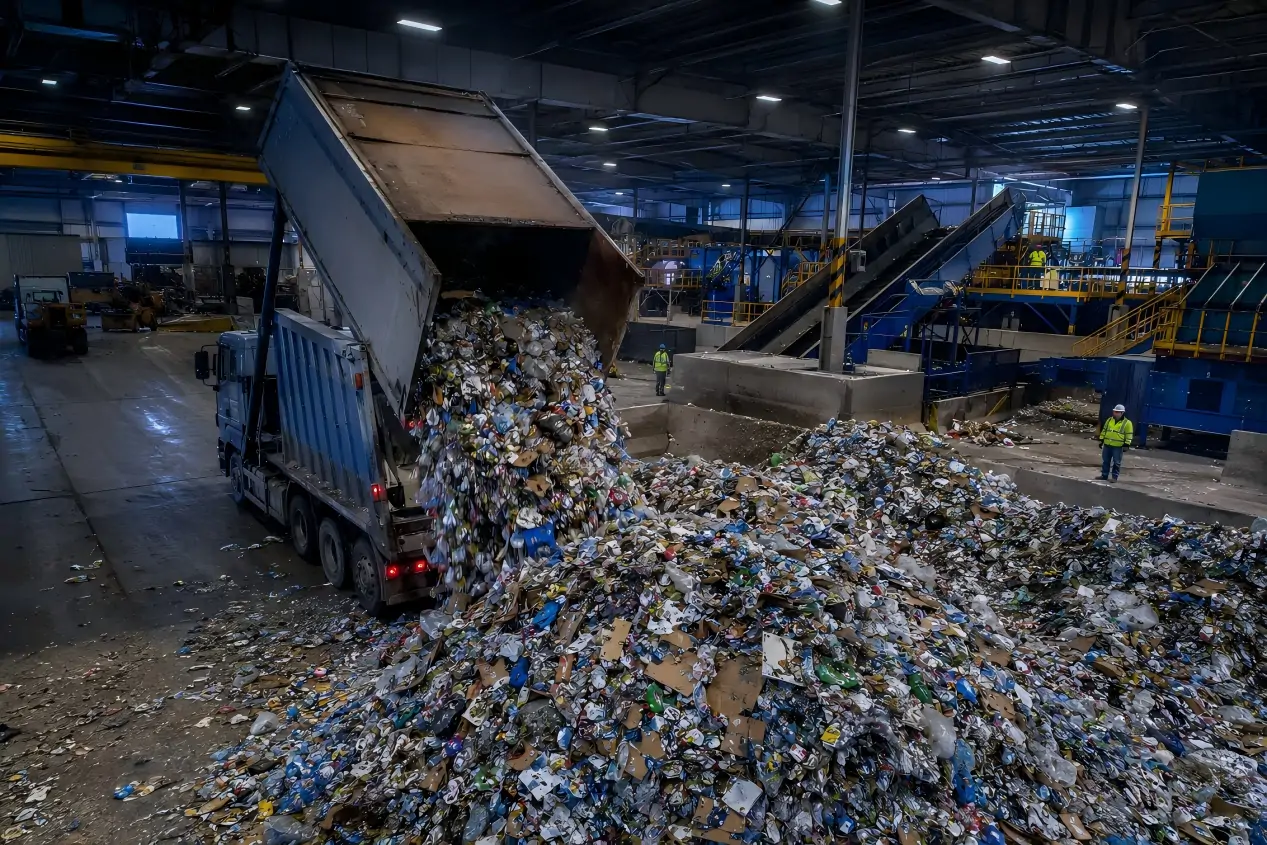
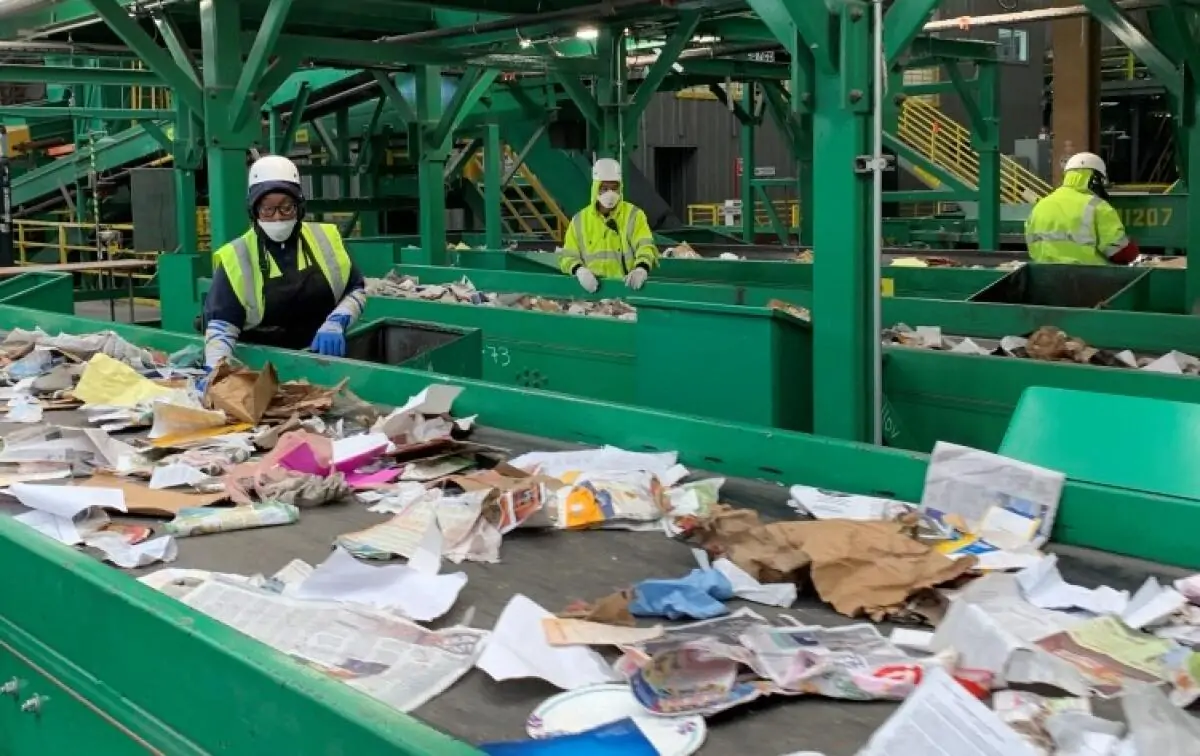
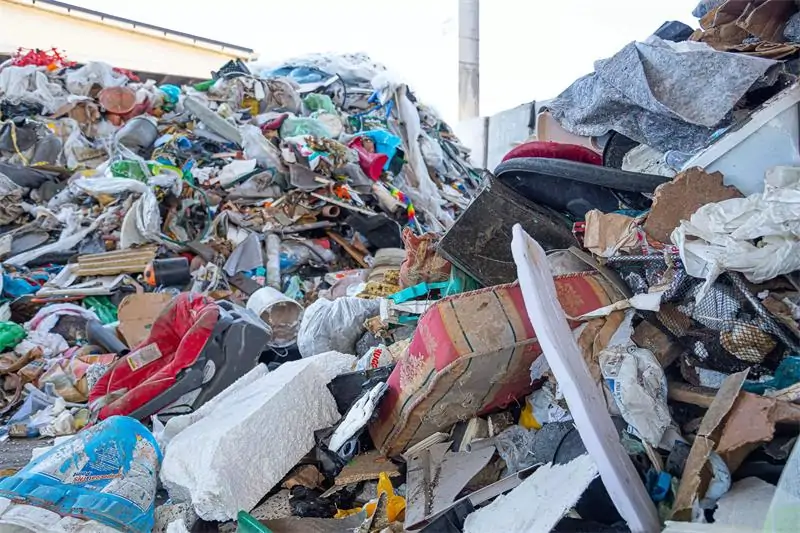
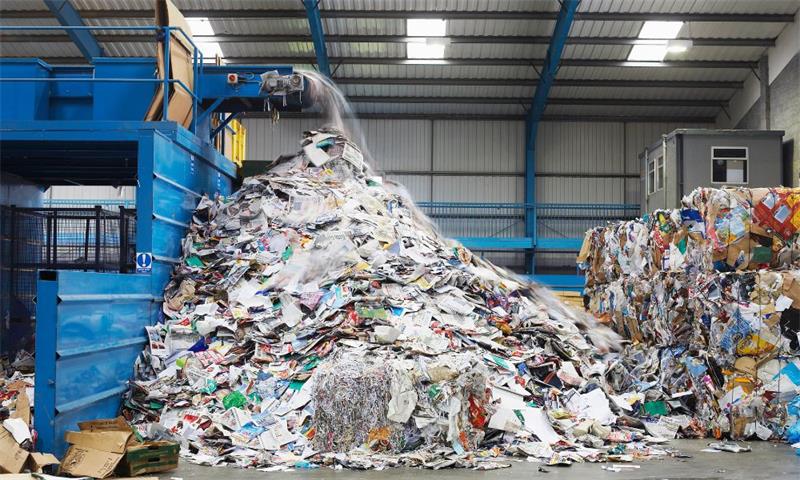
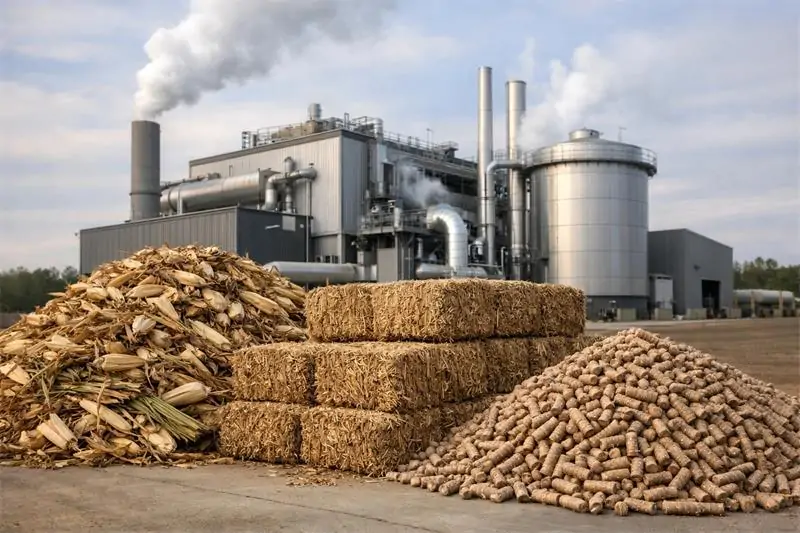
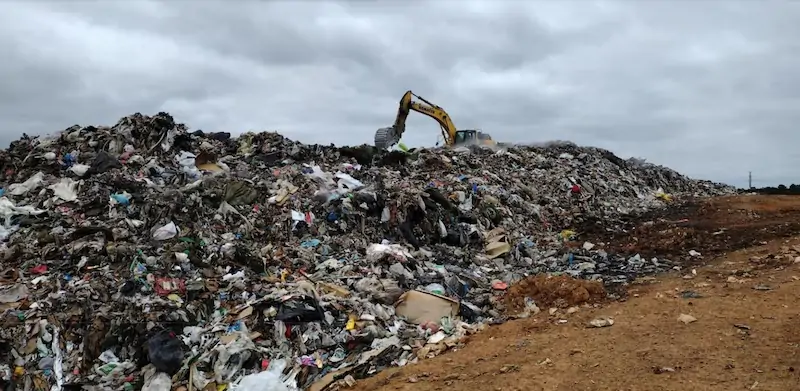
Heavy Duty Apron Feeders are widely used in waste treatment and recycling systems. They are mainly applied for stable feeding of bulky, mixed, and high-impact waste materials, especially in harsh and continuous operation environments such as sorting plants, recycling lines, and solid waste pre-treatment systems.


Custom Heavy Duty Apron Feeder Solutions
We provide customized heavy-duty plate feeder solutions based on material type, processing capacity, and on-site layout conditions. Our engineering designs can be tailored to specific operational requirements, ranging from standalone feeding units to integrated systems within complete waste processing and crushing production lines. To ensure a precise match, please provide key parameters such as material composition and bulk density, maximum feed size, processing capacity (tons/hour), operating conditions, site layout, and downstream equipment requirements. Feel free to contact us at any time for customized selection and technical support.
The following are customization options:
- Processing Capacity (up to 1,000 tons/hour)
- Material Type (Municipal Solid Waste, Construction Waste, Industrial Waste, Bulky Solid Waste, etc.)
- Feed Size (Capable of processing bulky materials up to 1,500 mm)
- Feed Speed Control System (Constant Speed Operation or Variable Frequency/PLC Automatic Control)
- Installation Layout (Horizontal, 0°–35° Inclined, or Integrated Hopper Design)
- Dust Control and Sealing System Options
Heavy Duty Apron Feeder Manufacturer & Supplier
As a professional Heavy Duty Apron Feeder manufacturer and supplier, Xinzhongyi ECO provide durable and customized feeding solutions for mining, quarrying, aggregate, cement, metallurgy, and bulk material handling industries. With advanced manufacturing facilities, experienced engineering teams, and strict quality control processes, we are capable of producing apron feeders tailored to different material characteristics, capacities, installation conditions, and operating environments.
Our heavy duty apron feeders are widely integrated into limestone crushing plants, granite aggregate production lines, iron ore processing plants, coal handling systems, cement production lines, and construction waste recycling projects. From equipment selection and engineering design to manufacturing, installation guidance, and after-sales support, we offer complete project solutions to help you improve material handling efficiency and reduce maintenance costs.
Contact us today to discuss your project requirements and receive a customized solution and quotation.
FAQ
Un alimentateur à tablier métallique robuste est utilisé pour extraire, transporter et réguler le flux de matériaux volumineux, lourds ou abrasifs depuis des trémies, des stocks ou des silos vers des concasseurs, des convoyeurs et des équipements de traitement. Il est largement utilisé dans les applications minières, d'extraction en carrière, de cimenterie, de granulats et de manutention de matériaux en vrac.
Les alimentateurs à tablier robustes peuvent traiter une large gamme de matériaux, notamment le minerai de fer, le minerai de cuivre, le calcaire, le granit, le charbon, le clinker, le gypse, les déchets de construction et d'autres matériaux en vrac. Ils sont particulièrement adaptés aux gros blocs, aux charges à fort impact et aux matériaux abrasifs susceptibles d'endommager les alimentateurs conventionnels.
La taille correcte du distributeur à tablier dépend des caractéristiques du matériau, de la taille des blocs, de la densité apparente, du débit d'alimentation, des dimensions de la trémie et des conditions d'installation. Les ingénieurs évaluent généralement ces facteurs pour déterminer la largeur, la longueur, la spécification de chaîne et la puissance d'entraînement requises du distributeur afin d'assurer un fonctionnement fiable.
Un alimentateur à tablier utilise des plateaux en acier superposés montés sur des chaînes robustes, ce qui le rend adapté à la manutention de matériaux volumineux, coupants et abrasifs. Un alimentateur à bande utilise une bande en caoutchouc et est généralement conçu pour des applications plus légères avec des granulométries plus petites et des charges d'impact plus faibles.
La capacité d'un alimentateur à tablier métallique robuste varie selon la largeur de l'alimentateur, la vitesse et les propriétés du matériau. Les unités standard peuvent traiter des capacités allant de quelques dizaines à plusieurs milliers de tonnes par heure, ce qui les rend adaptées aussi bien aux opérations de moyenne échelle qu'aux projets miniers à haute capacité.
Avec un entretien et des conditions d'exploitation appropriés, un alimentateur à tablier robuste peut assurer un service fiable pendant de nombreuses années. Ses plateaux en acier résistant à l'usure, ses chaînes robustes et ses composants d'entraînement solides sont conçus pour résister à un fonctionnement continu dans des environnements industriels et miniers difficiles.
Routine maintenance typically includes chain tension inspection, lubrication of moving components, wear monitoring of pans and rollers, and checking drive system performance. Regular maintenance helps reduce unexpected downtime, extend equipment life, and maintain consistent feeding efficiency.
Yes. Heavy duty apron feeders can be customized according to material type, capacity requirements, feed opening size, installation layout, inclination angle, and operating conditions. Custom engineering ensures optimal performance, improved reliability, and seamless integration into existing production lines.