














What is a Heavy Duty Apron Feeder?
A Heavy Duty Apron Feeder, also known as a heavy plate feeder or chain plate feeder, is a material handling machine used to convey and regulate the flow of large-sized bulk materials. It is commonly installed beneath hoppers or stockpiles to deliver material consistently to jaw crushers, bulk material belt conveyors, and processing systems.
Featuring steel pans, heavy-duty chains, and reinforced drive components, the feeder is designed to withstand high loads, impact forces, and abrasive materials. It is widely used in mining, quarrying, metallurgy, cement, coal, and other heavy industries where reliable feeding of coarse and dense materials is required.
For details, please read this article: What Is an Apron Feeder?
Working Principle
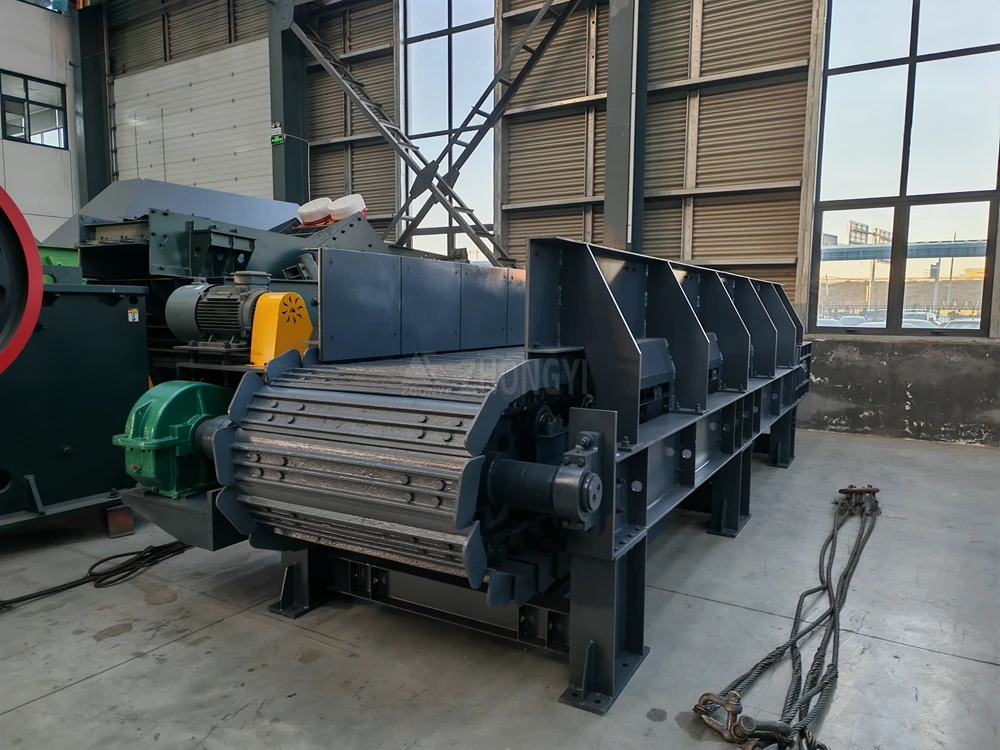
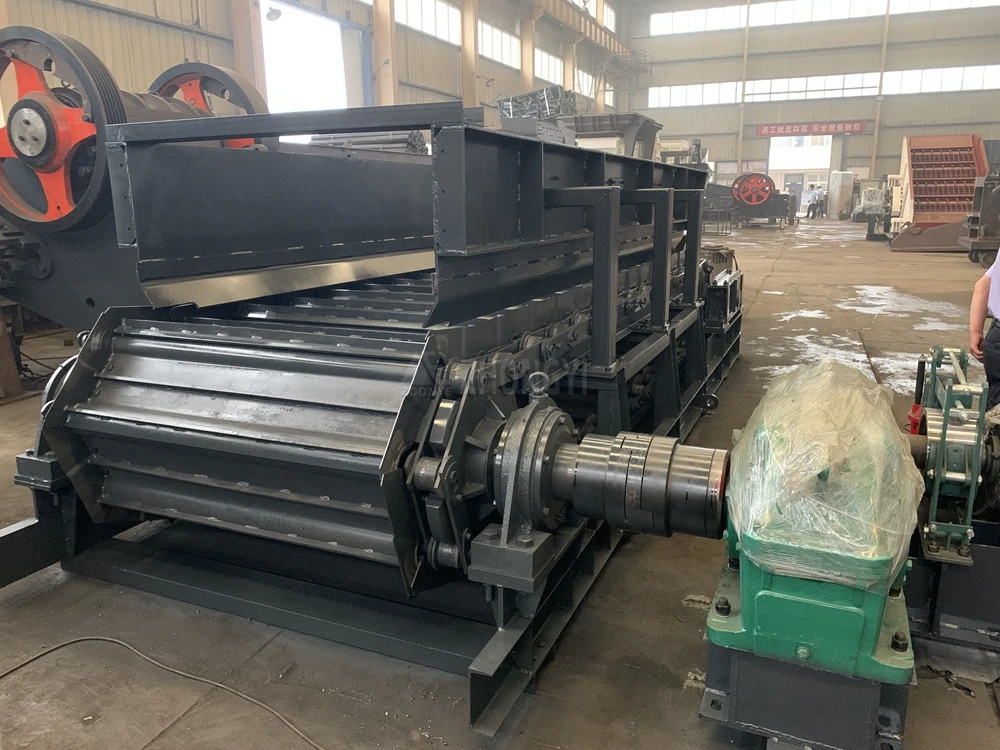
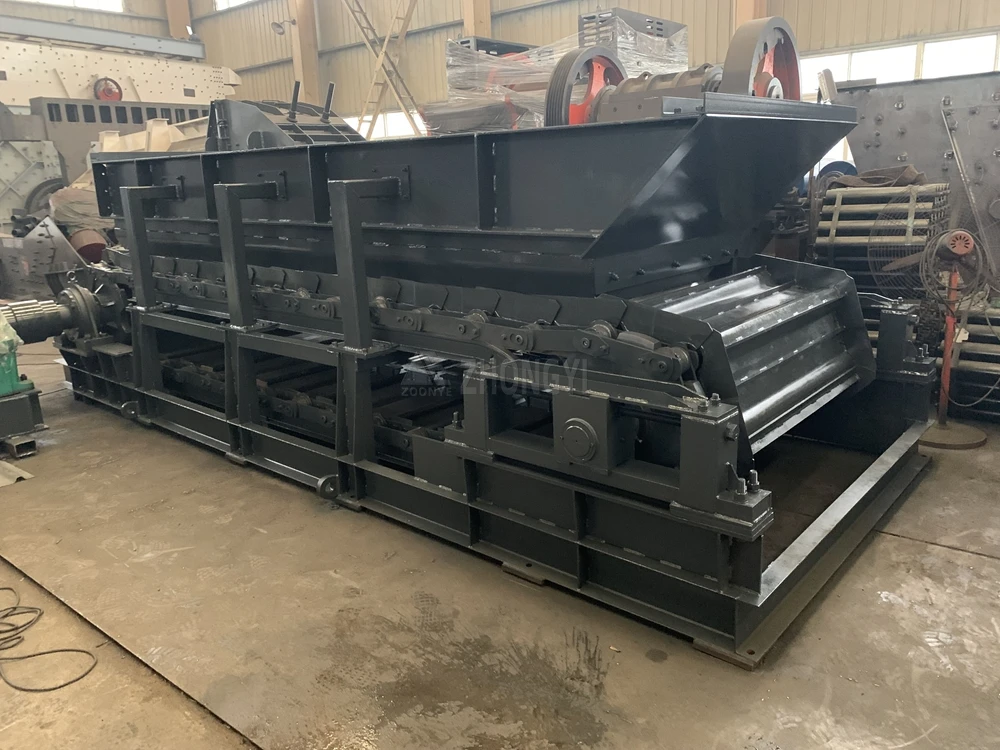
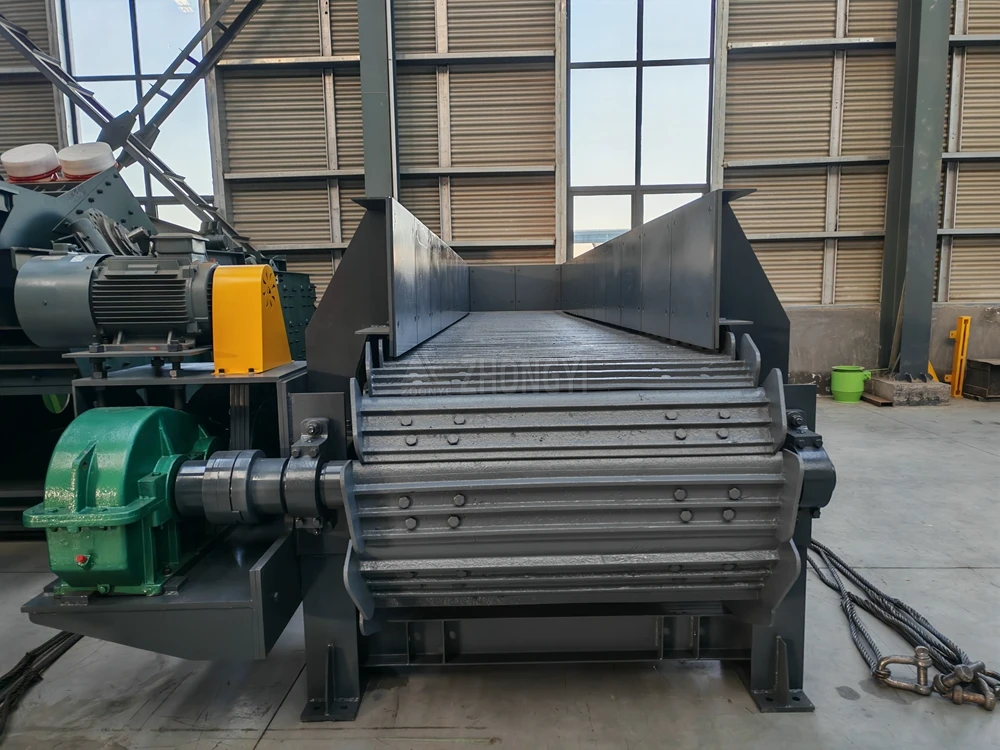
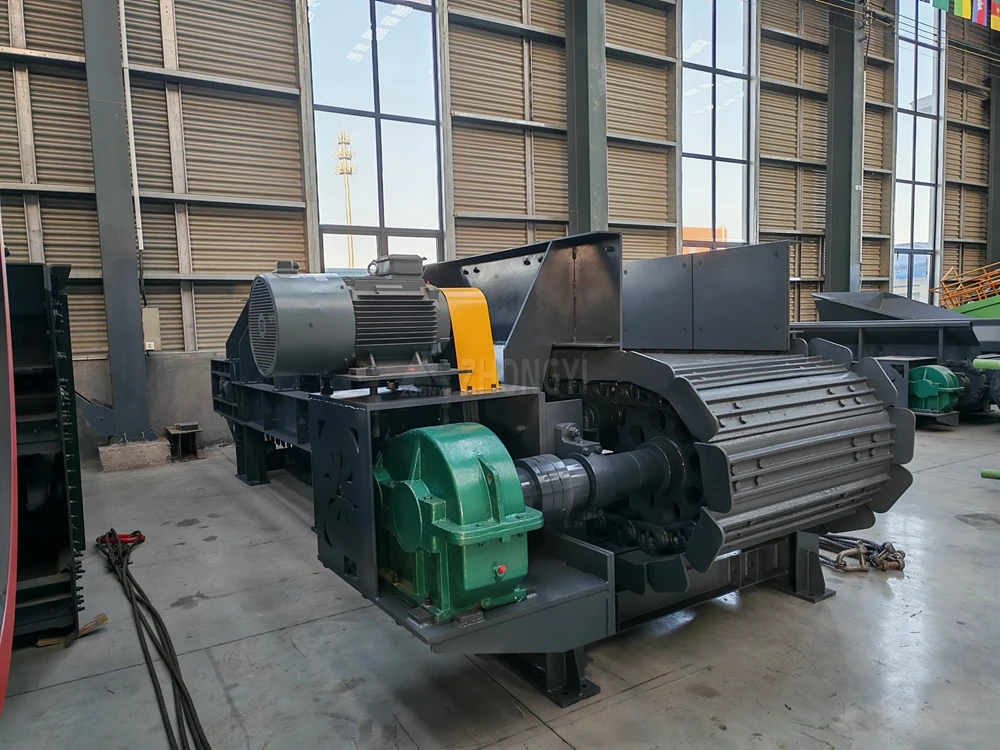
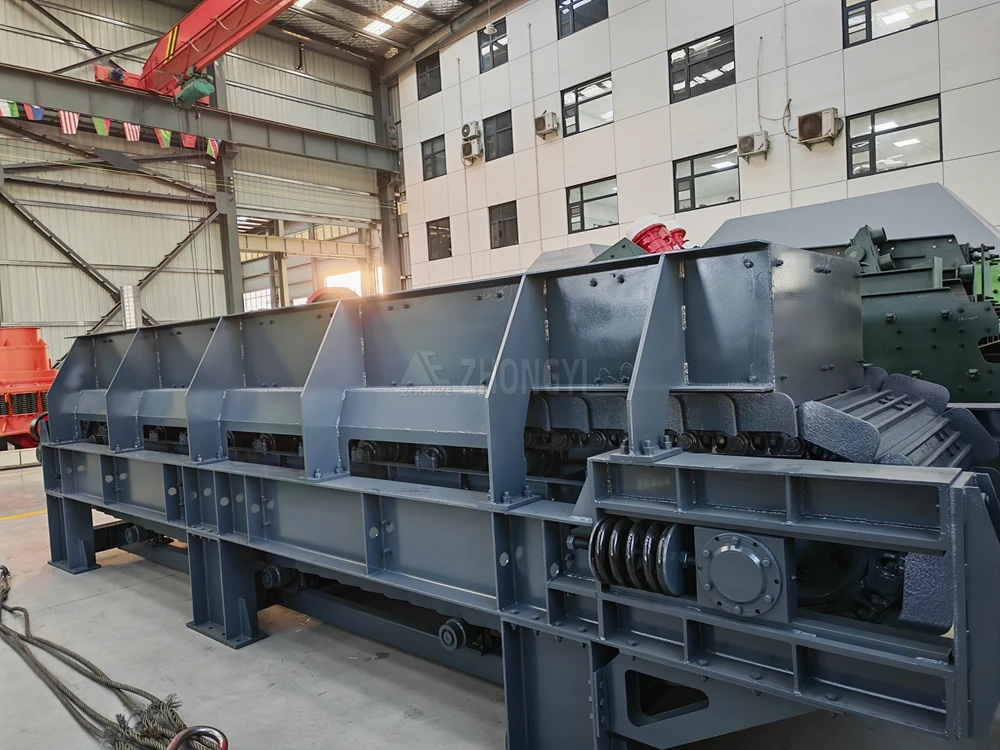
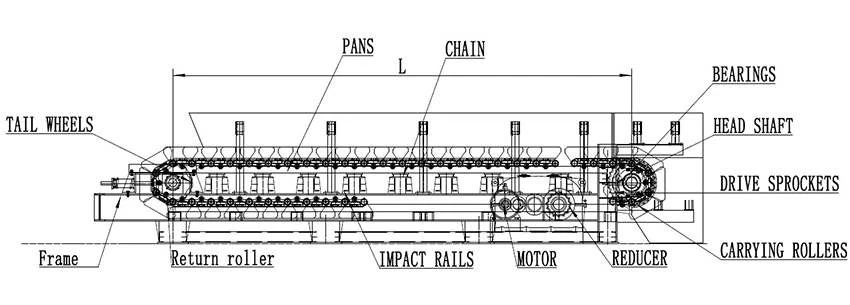
A Heavy Duty Apron Feeder transfers bulk materials by using heavy-duty steel pans mounted on dual chains. The drive system powers the chains and pans to move at a controlled speed, carrying material from the hopper discharge point to crushers, screens, conveyors, or other downstream equipment. It has a robust structure allows reliable handling of large, heavy, abrasive, and high-temperature materials under continuous operating conditions. The following is key components work together:
Tensioning Device: A spiral screw tensioning mechanism, paired with composite springs, consistently maintains the chain’s pre-tension, ensuring proper engagement between the sprocket and the chain. Simultaneously, it absorbs vibrations caused by the impact of large-sized materials, preventing chain slack and protecting critical components.
Support Rollers / Carrier Rollers: These provide support for the apron plates, bearing the combined weight of the plates and the conveyed material. They reduce operational resistance and prevent excessive deflection of the apron plates—caused by their own weight—from disrupting smooth operation.
Apron Plate Assembly: Features a modular, overlapping-arc structure constructed from low-alloy steel plates, offering high strength and excellent wear resistance. The tightly overlapping design ensures zero material leakage. The traction chain typically utilizes heavy-duty bulldozer-style track chains, characterized by minimal pitch error, smooth motion, and high tensile strength, thereby requiring infrequent lubrication.
Video
Vorteile
Specifications
The specifications listed below represent our standard models. We provide tailored engineering designs and customized configurations to perfectly match your specific material characteristics and site requirements.
| Modell | Leistung (kW) | Feed Capacity (m3/h) |
| WBL1040 | 11 – 22 | 50 – 250 |
| WBL1240 | 11 – 22 | 50 – 350 |
| WBL1260 | 15 – 30 | 50 – 350 |
| WBL1440 | 15 – 30 | 50 – 450 |
| WBL1460 | 15 – 30 | 50 – 450 |
| WBL1660 | 15 – 30 | 100 – 800 |
| WBL2060 | 15 – 45 | 120 – 1000 |
| ZBL1040 | 11 – 22 | 50 – 250 |
| ZBL1240 | 11 – 22 | 50 – 350 |
| ZBL1260 | 15 – 30 | 50 – 350 |
| ZBL1440 | 15 – 30 | 50 – 450 |
| ZBL1460 | 15 – 30 | 50 – 450 |
| ZBL1660 | 15 – 30 | 100 – 800 |
| ZBL2060 | 15 – 45 | 120 – 1000 |
Applications
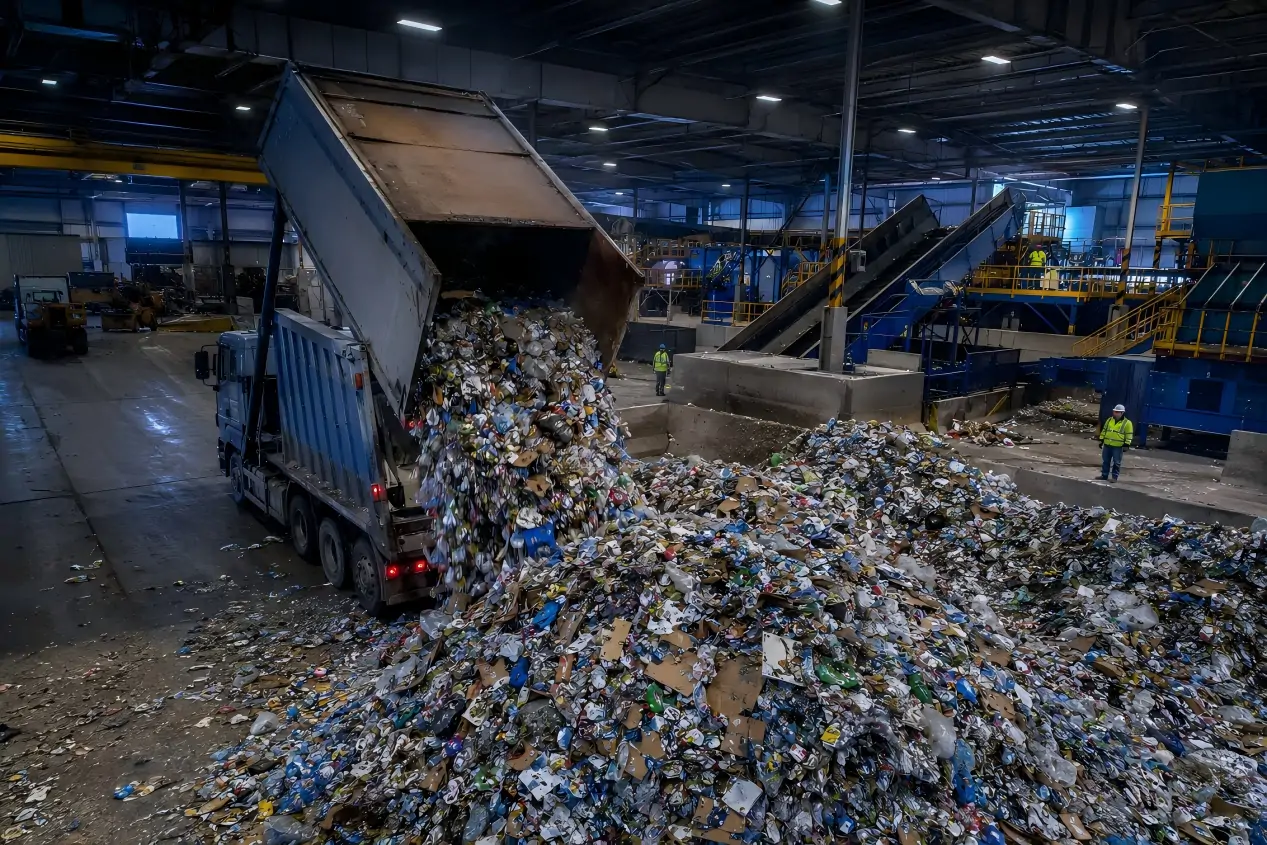
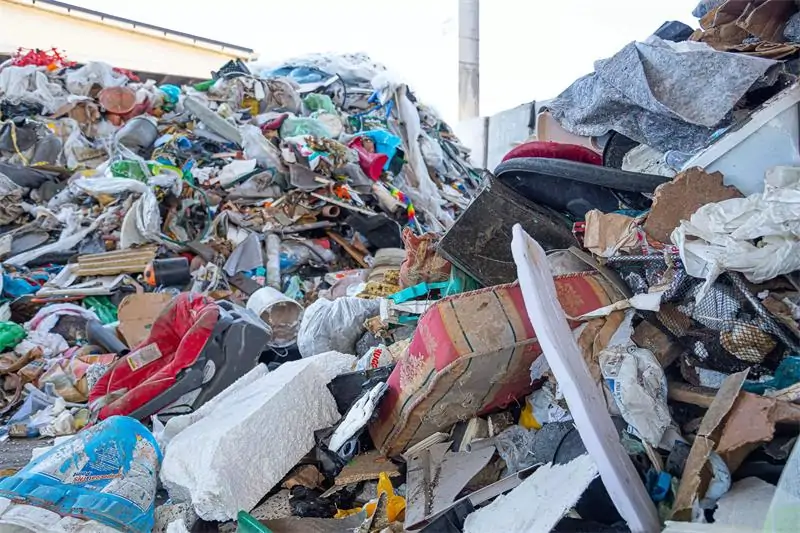
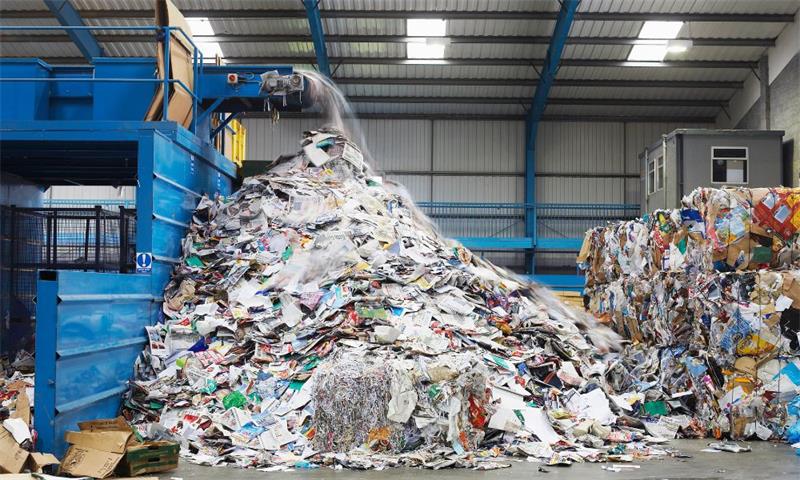
Heavy Duty Apron Feeders are widely used in waste treatment and recycling systems. They are mainly applied for stable feeding of bulky, mixed, and high-impact waste materials, especially in harsh and continuous operation environments such as sorting plants, recycling lines, and solid waste pre-treatment systems.



Custom Heavy Duty Apron Feeder Solutions
We provide customized heavy-duty plate feeder solutions based on material type, processing capacity, and on-site layout conditions. Our engineering designs can be tailored to specific operational requirements, ranging from standalone feeding units to integrated systems within complete waste processing and crushing production lines. To ensure a precise match, please provide key parameters such as material composition and bulk density, maximum feed size, processing capacity (tons/hour), operating conditions, site layout, and downstream equipment requirements. Feel free to contact us at any time for customized selection and technical support.
The following are customization options:
- Processing Capacity (up to 1,000 tons/hour)
- Material Type (Municipal Solid Waste, Construction Waste, Industrial Waste, Bulky Solid Waste, etc.)
- Feed Size (Capable of processing bulky materials up to 1,500 mm)
- Feed Speed Control System (Constant Speed Operation or Variable Frequency/PLC Automatic Control)
- Installation Layout (Horizontal, 0°–35° Inclined, or Integrated Hopper Design)
- Dust Control and Sealing System Options
Heavy Duty Apron Feeder Manufacturer & Supplier
As a professional Heavy Duty Apron Feeder manufacturer and supplier, Xinzhongyi ECO provide durable and customized feeding solutions for mining, quarrying, aggregate, cement, metallurgy, and bulk material handling industries. With advanced manufacturing facilities, experienced engineering teams, and strict quality control processes, we are capable of producing apron feeders tailored to different material characteristics, capacities, installation conditions, and operating environments.
Our heavy duty apron feeders are widely integrated into limestone crushing plants, granite aggregate production lines, iron ore processing plants, coal handling systems, cement production lines, and construction waste recycling projects. From equipment selection and engineering design to manufacturing, installation guidance, and after-sales support, we offer complete project solutions to help you improve material handling efficiency and reduce maintenance costs.
Contact us today to discuss your project requirements and receive a customized solution and quotation.
FAQ
Ein Schwerlast-Plattenbandaufgeber wird verwendet, um den Fluss großer, schwerer oder abrasiver Materialien aus Trichtern, Halden oder Bunkern zu Brechern, Förderern und Verarbeitungsanlagen zu entnehmen, zu fördern und zu regulieren. Er wird häufig im Bergbau, in Steinbrüchen, in der Zementindustrie, in der Zuschlagstoffverarbeitung und in der Schüttguthandhabung eingesetzt.
Schwerlast-Plattenbandaufgeber können eine Vielzahl von Materialien verarbeiten, darunter Eisenerz, Kupfererz, Kalkstein, Granit, Kohle, Klinker, Gips, Bauschutt und andere Schüttgüter. Sie eignen sich besonders für große Stückgrößen, hohe Stoßbelastungen und abrasive Materialien, die herkömmliche Aufgeber beschädigen können.
Die korrekte Größe eines Plattenbandförderers hängt von den Materialeigenschaften, der Stückgröße, der Schüttdichte, der Aufgaberate, den Abmessungen des Aufgabebunkers und den Installationsbedingungen ab. Ingenieure bewerten in der Regel diese Faktoren, um die erforderliche Fördererbreite, -länge, Kettenausführung und Antriebsleistung für einen zuverlässigen Betrieb zu bestimmen.
Ein Plattenbandförderer verwendet überlappende Stahlplatten, die auf Schwerlastketten montiert sind, wodurch er sich für den Umgang mit großen, scharfkantigen und abrasiven Materialien eignet. Ein Bandförderer verwendet ein Gummiband und ist im Allgemeinen für leichtere Anwendungen mit kleineren Partikelgrößen und geringeren Aufpralllasten ausgelegt.
Die Kapazität eines schwerlast-Plattenbandförderers variiert je nach Förderbreite, Geschwindigkeit und Materialeigenschaften. Standardeinheiten können Durchsätze von einigen zehn bis mehreren tausend Tonnen pro Stunde bewältigen, was sie sowohl für mittelgroße Betriebe als auch für Bergbauprojekte mit hoher Kapazität geeignet macht.
Bei ordnungsgemäßer Wartung und entsprechenden Betriebsbedingungen kann ein schwerlast-Plattenbandaufgeber viele Jahre lang zuverlässigen Dienst leisten. Seine verschleißfesten Stahlplatten, Schwerlastketten und robusten Antriebskomponenten sind darauf ausgelegt, dem Dauerbetrieb in rauen industriellen und bergbaulichen Umgebungen standzuhalten.
Die routinemäßige Wartung umfasst typischerweise die Prüfung der Kettenspannung, die Schmierung beweglicher Komponenten, die Verschleißüberwachung von Mulden und Rollen sowie die Kontrolle der Antriebssystemleistung. Regelmäßige Wartung hilft, unerwartete Ausfallzeiten zu reduzieren, die Lebensdauer der Ausrüstung zu verlängern und eine gleichbleibende Zufuhreffizienz aufrechtzuerhalten.
Ja. Schwerlast-Plattenbandaufgeber können entsprechend dem Materialtyp, den Kapazitätsanforderungen, der Aufgaböffnungsgröße, dem Installationslayout, dem Neigungswinkel und den Betriebsbedingungen kundenspezifisch angepasst werden. Kundenspezifische Konstruktion gewährleistet optimale Leistung, verbesserte Zuverlässigkeit und nahtlose Integration in bestehende Produktionslinien.