










Ausrüstung
Siebausrüstung

- Verarbeitungskapazität: 30–400 m³/h
- Sieböffnungsgröße: 25–70 mm
- Motorleistung: 15–37 kW

- Verarbeitungskapazität: 10–150 m³/h
- Aufgabegröße: ≤ 300 mm (anpassbar)

- Verarbeitungskapazität: 60–600 Kubikmeter pro Stunde
- Aufgabepartikelgröße: ≤300 mm

- Installierte Leistung: 15–30 kW
- Verarbeitungskapazität: 30–350 m³/h

- Modellreihe: YKF1540–3YKF3060
- Installierte Leistung: 7,5–45 kW
- Verarbeitungskapazität: 20–500 m³/h

- Verarbeitungskapazität: 40–150 m³/h
- Aufgabegröße: 8–50 mm

- Verarbeitungskapazität: 50–800 t/h
- Maximale Aufgabegröße: ≤ 800 mm

- Verarbeitungskapazität: 20–300 t/h
- Maximale Aufgabegröße: ≤40 mm
Was ist Abfallsiebtechnik?
Abfallsiebtechnik trennt feste Abfälle nach Partikelgröße, um Verunreinigungen zu entfernen und die Recyclingeffizienz in MSW-, RDF/SRF-, Biomasse- und Industrieabfallverarbeitungslinien zu verbessern.
Das System verwendet Siebe und mechanische Bewegung, um feine und übergroße Materialien kontinuierlich zu trennen, wodurch die nachgelagerte Sortiereffizienz, Materialreinheit und Ressourcenrückgewinnung verbessert werden.
Wie funktioniert Abfallsiebtechnik?
Abfallsiebtechnik trennt gemischte Abfälle durch Vibration, Rotation, Luftstrom oder Ballistikbewegung. Feine Partikel passieren das Sieb, während übergroße Materialien zu verschiedenen Austragsöffnungen für das Recycling bewegt werden.
Anwendung:
Zhongyi verfügt über 15 Jahre Erfahrung in Abfallsiebtechnik und Recyclinganlagenprojekten und bietet zuverlässige Sieblösungen für MSW-, C&D-Abfälle, Biomasse und industrielle Festabfallverarbeitung. Mit starken Engineering- und Fertigungskapazitäten bieten wir maßgeschneiderte Siebsysteme basierend auf unterschiedlichen Materialeigenschaften, Anlagenkapazitäten und Recyclinganforderungen. Unsere Ausrüstung wurde in globalen Recyclingprojekten mit vollständiger technischer Unterstützung und langfristiger Betriebsstabilität eingesetzt.
Warum ist Siebung im Abfallrecycling wichtig?
Siebtechnik ist ein zentraler Bestandteil von Abfallrecyclinganlagen. Sie trennt gemischte Abfälle, verbessert die Sortiereffizienz, reduziert das Deponievolumen und erhöht den Rückgewinnungswert recycelbarer Materialien. Henan Xinzhongyi Eco Equipment Co., Ltd. bietet maßgeschneiderte Abfallsieblösungen für MSW-, C&D-Abfälle und RDF-Recyclingprojekte weltweit.
Arten von Abfallsiebtechnik
Abfallsiebtechnik umfasst Trommelsiebe, Scheibensiebe, Ballistikseparatoren und Vibrationssiebe für unterschiedliche Abfallmaterialien und Recyclingprozesse. Verschiedene Maschinen sind für nassen Abfall, sperrigen Abfall, RDF-Produktion und Feintrennung ausgelegt.
Wenn Sie nicht sicher sind, welche Abfallsiebtechnik für Ihr Recyclingprojekt geeignet ist, kontaktieren Sie Henan Xinzhongyi Eco Equipment Co., Ltd. Wir können die richtige Sieblösung basierend auf Ihrem Materialtyp, Ihrer Verarbeitungskapazität und den Anforderungen der gesamten Recyclinganlage empfehlen.
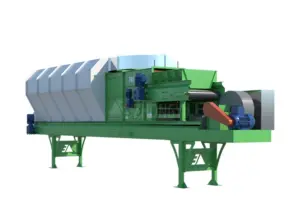
Abfall-Spiralschaftsieb
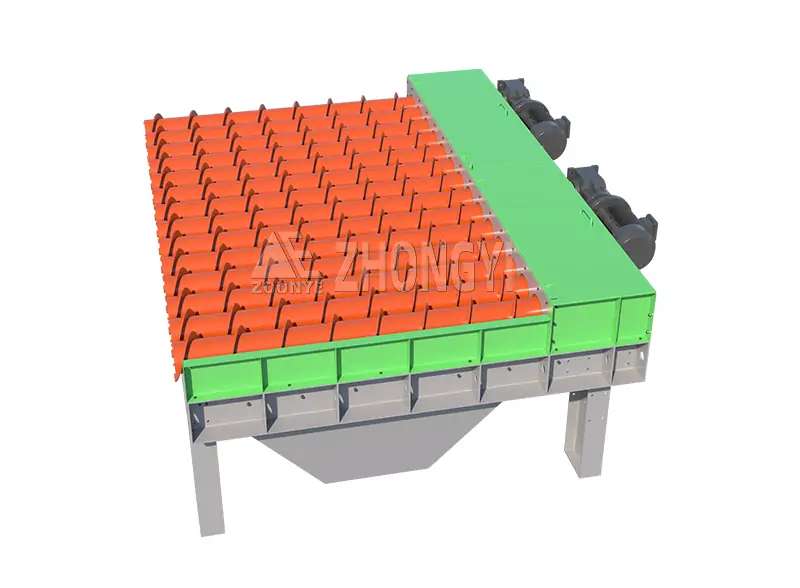
Das LX-Abfall-Spiralschaftsieb trennt Abfälle nach Größe, Dichte und Form durch rotierende Spiralschäfte. Es zeichnet sich durch eine verstopfungsfreie Konstruktion, stabilen Betrieb, geringe Geräuschentwicklung und einen größeren Durchsatz für die Siebung von nassem und klebrigem Abfall aus.
Es ist geeignet für Küchenabfälle, organische Abfälle, Siedlungsabfälle und gemischte Abfallrecyclinglinien. Die Maschine wird häufig in der MSW-Vorbehandlung und in Festabfallsortieranlagen eingesetzt.
Spezifikationen der Abfall-Spiralschaftsiebmaschine
| Modell | Siebstruktur | Leistung (kW) |
| LXS3022 | 12 Spiralschäfte | 2×11 |
| LXS3522 | 14 Spiral Shafts | 2×15 |
Ballistische Separator
The TTS ballistic separator separates 2D and 3D waste through bouncing motion and rotating screening plates. It provides accurate sorting, stable operation and high screening efficiency.
It is suitable for MSW, packaging waste, decoration waste and plastic recycling lines. The machine separates paper, film, bottles and lightweight materials efficiently.
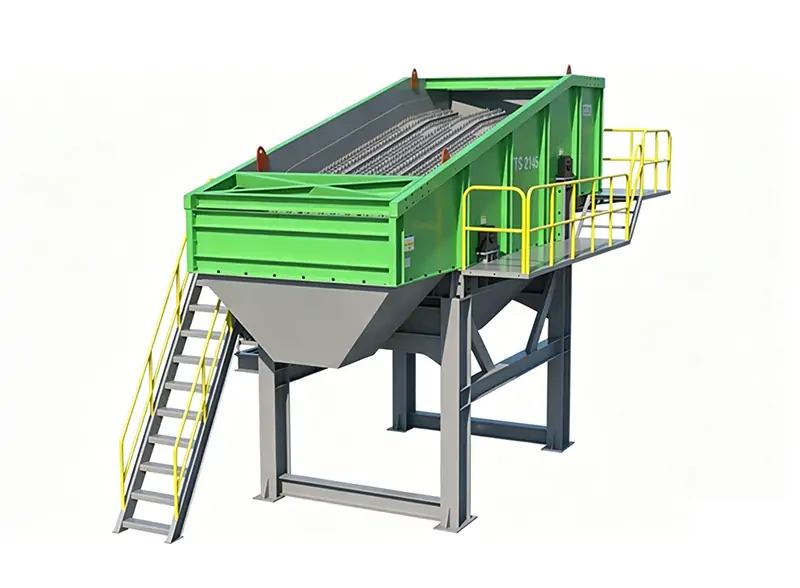
Ballistic Separator Machine Specifications
| Modell | Feed Size (mm) | Screen Aperture (mm) | Leistung (kW) |
| TTS1745 | <400 | 25–40 | 22 |
| TTS2145 | <400 | 25–40 | 22 |
| TTS2160 | <400 | 25–40 | 30 |
| TTS2460 | <400 | 25–40 | 30 |
| TTS2860 | <400 | 25–40 | 37 |
| TTS3070 | <400 | 25–40 | 45 |
Rotary Trommel Screen
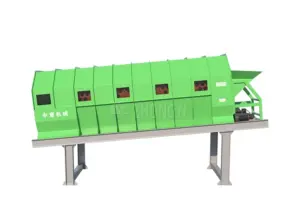
The GTS rotary trommel screen uses an inclined rotating drum to separate waste materials by particle size. Materials tumble and roll inside the drum, while fine particles pass through the screen holes. The machine features stable operation, low noise, low dust and anti-clogging performance.
It is suitable for municipal solid waste, decoration waste, landfill waste, compost and biomass processing. The trommel screen is widely used in waste sorting plants for continuous screening of mixed solid waste and inert materials.
Rotary Trommel Screen Machine Specifications
| Modell | Leistung (kW) | Processing Capacity (m³/h) |
| 3GTS-1530 | 11 | 20-150 |
| 3GTS-1548 | 15 | 30-200 |
| 3GTS-1830 | 15 | 30-250 |
| 3GTS-1850 | 18.5 | 30-250 |
| 3GTS-2030 | 15 | 30-250 |
| 3GTS-2050 | 22 | 30-250 |
| 3GTS-2070 | 30 | 30-250 |
| 3GTS-2230 | 37 | 30-300 |
| 3GTS-2250 | 37 | 30-300 |
| 3GTS-2270 | 37 | 30-300 |
Abfallsortier-Scheibensieb
The Waste Sorting Disc Screen uses rotating star discs to separate waste by size. Small materials fall through gaps, while larger materials move forward. It offers self-cleaning, anti-clogging and stable continuous screening performance.
It is widely used in MSW, RDF production, biomass, kitchen waste and construction waste recycling lines. It improves pre-screening efficiency and separates fine and coarse materials effectively.
Waste Sorting Disc Screen Machine Specifications
| Modell | Material | Disc Opening (mm) | Disc Size (mm) | Shaft Qty | Leistung (kW) | Capacity (m³/h) |
| ZYZ3512 | Polyurethane | 5–160 | 150–350 | 8–12 | 18.5 | 80 |
| ZYZ5012 | Polyurethane | 5–160 | 150–350 | 10–14 | 22 | 130 |
| ZYZ7512 | Polyurethane | 5–160 | 150–350 | 12–16 | 27 | 180 |
MSW Roller Screen Separator
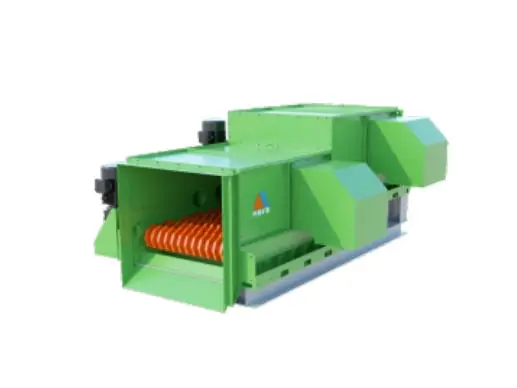
The MSW roller screen separator uses multi-shaft disc rollers to separate waste by size. Large materials move forward, while fine materials fall through gaps. It features high capacity, stable chain drive, low energy use and modular structure for easy maintenance.
It is widely used in MSW, construction waste, decoration waste, kitchen waste and bulky waste recycling. It replaces traditional trommel screens and improves screening efficiency in large solid waste sorting and recycling plants.
MSW Roller Screen Separator Machine Specifications
| Modell | Leistung (kW) | Feed Size (mm) | Processing Capacity (t/h) |
| GZS1440 | 15+3+3+3 | 350 | 180–600 |
| GZS1840 | 22+3+3+3 | 450 | 350–1000 |
| GZS1440 (Soil Discharge Type) | 45–55 | 350 | 180–600 |
| GZS1420 | 37–55 | 330 | 150–500 |
Light Fraction Separator for Waste Recycling
The FS light fraction separator uses water flotation and density differences to separate light materials from heavy aggregates. Plastic, wood, foam and paper float on the water surface, while heavy materials sink. It features high separation purity, low water loss and stable continuous operation.
It is widely used in construction waste, decoration waste and recycled aggregate processing lines. The machine removes lightweight impurities from crushed materials, improving recycled aggregate quality and supporting resource recycling applications.
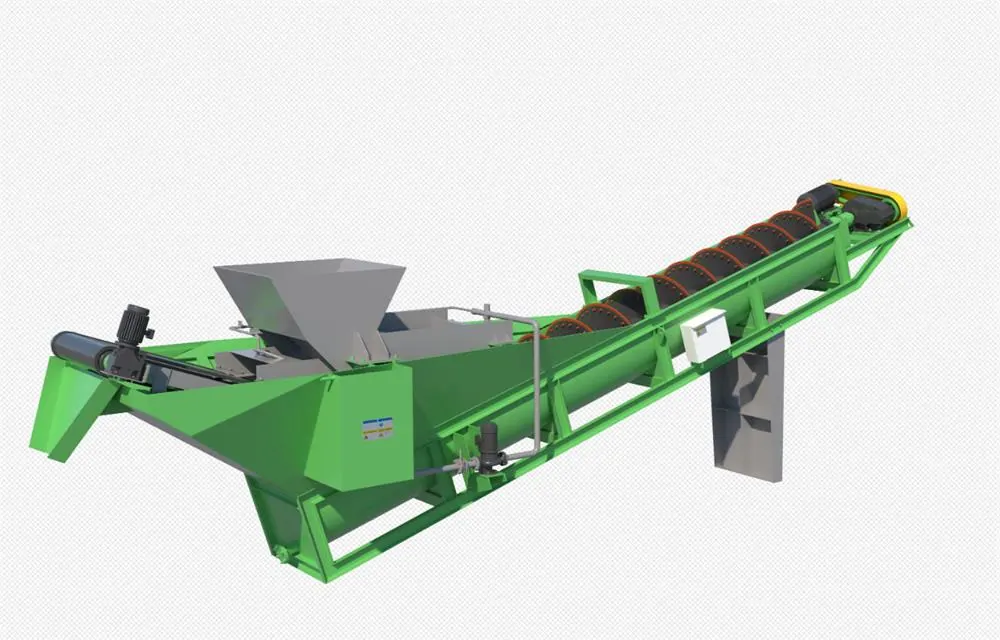
Technical Specifications for Light-Fraction Separators
| Modell | Agitation Power (kW) | Processing Capacity (m³/min) |
| FS-2 | 11 | 1–3 |
| FS-4 | 15 | 2–4 |
| FS-8 | 22 | 4–8 |
| SF-10 | 22 | 5–10 |
| SF-16 | 37 | 5–16 |
| SF-20 | 37 | 5–20 |
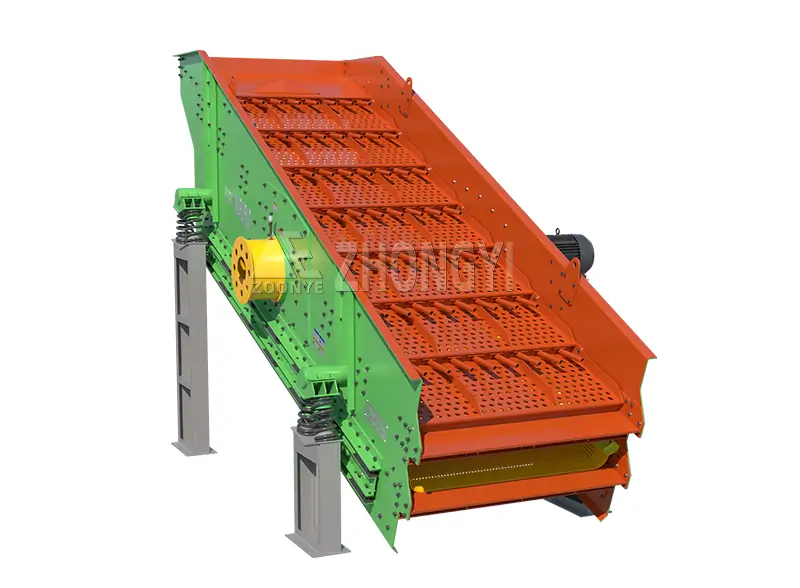
Vibrating Grizzly Screen
The YBF vibrating grizzly screen uses forced vibration and elastic polyurethane screen panels to separate wet and sticky materials efficiently. High-frequency stretching motion prevents screen blockage and improves screening performance for fine and difficult materials.
It is suitable for decoration waste, municipal solid waste, aged waste and other wet mixed materials. The machine is widely used in waste recycling plants for high-efficiency screening and continuous material separation.
Vibrating Grizzly Screen Specifications
| Modell | Screen Aperture (mm) | Leistung (kW) |
| YBF-2P1860 | 8–25 | 22 |
| YBF-2P2160 | 8–25 | 30 |
| YBF-2P2460 | 8–25 | 30 |
| YBF-2P3060 | 8–25 | 30 |
Flip Flow Screen
The YKF flip flow screen uses elastic polyurethane screen panels and high-frequency vibration to screen wet and sticky materials. The continuous stretching and relaxing motion prevents screen blockage and improves screening efficiency for difficult materials.
It is suitable for decoration waste, aged waste, bulky waste, coal and wet mixed materials. The machine is widely used in recycling plants for fine screening and high-efficiency separation of sticky materials.
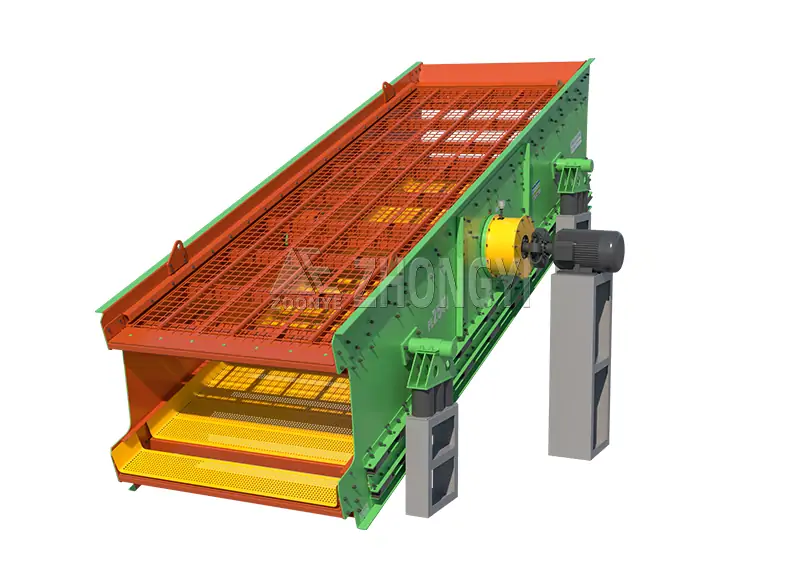
Flip Flow Screen Machine Specifications
| Modell | Leistung (kW) |
|---|---|
| F5YK1540-2P | 11 |
| F5YK1548-2P | 11 |
| F5YK1848-2P | 5.5 |
| F5YK1860-2P | 15 |
| F5YK2148-2P | 18.5 |
| F5YK2160-2P | 22 |
| F5YK2460-1P | 22 |
| F5YK2460-2P | 30 |
| F5YK3060-1P | 30 |
| F5YK3060-2P | 30 |
Comparison of Different Waste Screening Machines
Different waste screening machines are designed for different materials, capacities and recycling goals. Choosing the right equipment can improve screening efficiency, reduce maintenance costs and increase recycling purity. The comparison below helps you quickly understand the advantages, applications and suitable working conditions of each screening machine.
| Ausrüstung | Best For | Vorteile | Materialart | Maintenance | Budget |
| Spiral Shaft Screen LX Series | Wet & sticky waste | Anti-clogging, large throughput, stable operation | Kitchen waste, organic waste, MSW | Low | Medium |
| Ballistic Separator TTS Series | 2D/3D waste separation | High sorting purity, automatic separation | Packaging waste, plastic, paper, MSW | Medium | High |
| Rotary Trommel Screen GTS Series | Wet mixed waste | Stable operation, low blockage, continuous screening | Compost, biomass, landfill waste, MSW | Low | Medium |
| Abfallsortier-Scheibensieb | RDF pre-screening | High efficiency, self-cleaning, compact structure | RDF, biomass, kitchen waste | Low | Medium |
| MSW Roller Screen Separator | Large-capacity waste sorting | High throughput, modular structure, anti-blocking | MSW, C&D waste, bulky waste | Medium | High |
| Light Fraction Separator FS Series | Lightweight impurity separation | High purity, low water loss, low labor cost | Plastic film, paper, recycled aggregates | Medium | Medium |
| Vibrating Grizzly Screen YBF Series | Wet sticky materials | Strong anti-blocking, high screening efficiency | Decoration waste, aged waste, wet fines | Medium | High |
| Flip Flow Screen YKF Series | Fine sticky material screening | Elastic screen surface, anti-clogging | Wet waste, slag, sticky fines | Medium | High |
How to Choose the Right Waste Screening Equipment?
Choosing the right waste screening equipment depends on material type, moisture content, plant capacity and automation requirements. Proper machine selection can improve screening efficiency, reduce operating costs and increase recycling performance.
Different waste materials require different screening systems. Trommel screens suit MSW and compost, ballistic separators fit packaging waste, while grizzly and flip flow screens handle C&D and sticky waste.
Wet and sticky waste requires anti-clogging equipment such as spiral shaft screens or flip flow screens. Dry waste and lightweight materials are suitable for vibrating screens and air separators.
Small plants around 5–20 TPH can use semi-automatic systems, while 100 TPH recycling plants usually require fully automatic screening and sorting lines for stable continuous operation.
If you’re not sure which waste screening equipment fits your recycling project, contact Zhongyi Machinery. We can recommend suitable screening solutions based on your waste type, moisture content, processing capacity and complete recycling line requirements.
Applications
Waste screening equipment is widely used in recycling and solid waste treatment plants. Different screening systems help separate mixed materials, improve recycling efficiency and reduce downstream processing costs.
Complete Waste Screening Solutions with System Integration
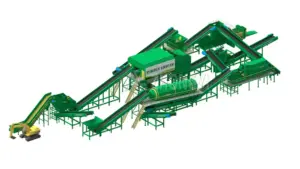
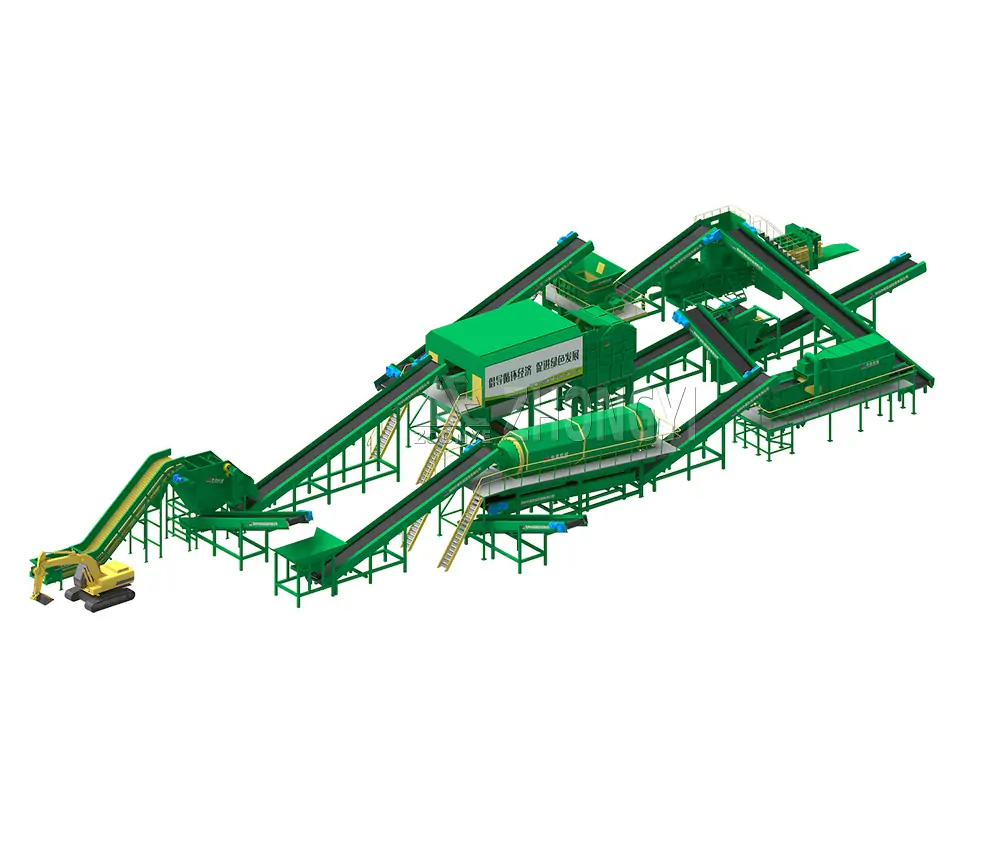
A waste screening machine is usually used as a key unit in a complete recycling and sorting line. In a typical system, it works together with feeders, crushers, conveyors, ballistic separators, air classifiers, magnetic separators, and centralized control systems.
This is important because screening is only one step in the full process. Waste type, moisture content, plant capacity, and final product requirements all determine how the screening equipment should be selected and arranged in the line.
Most customers are not purchasing a single machine. They need a complete and stable process solution. We provide customized screening system design and full plant integration for MSW recycling, C&D waste processing, RDF production, and solid waste recovery projects.
Why Choose Us as Your Bag Opener Machine Supplier?
16+
Jahre Erfahrung
Xinzhongyi ECO is a professional manufacturer and supplier with over 16 years of experience in waste recycling and screening equipment. We focus on providing reliable screening machines and complete solid waste processing solutions for global projects. From single equipment supply to full plant design, we support MSW, C&D waste, RDF production and biomass recycling lines.
60+
Nationale Patente
We combine engineering design, manufacturing and project service in one system. Customers get not only machines, but also layout planning, installation guidance and long-term technical support. With stable quality, customized solutions and fast response service, Xinzhongyi ECO helps clients build efficient and cost-effective recycling plants worldwide.
For many customers, the key point is not just buying a screening machine. It is getting the right screening solution that matches real waste conditions. We support customized screening system design, plant layout, installation, commissioning, and long-term service for MSW, C&D waste, RDF and recycling projects.
Get a Custom Waste Screening Solution
We provide customized waste screening and sorting solutions for different waste processing needs. From single screening equipment to fully integrated systems, our team can design complete production lines for MSW, C&D waste, plastic recycling, biomass, RDF, and industrial waste processing.
Tell us your material type, capacity, and project requirements, and we will recommend the right solution for your plant. Customizable options include screening equipment type, processing capacity, automation level, plant layout, mobility options, discharge size, and control systems.
FAQs
Waste screening equipment can process MSW, C&D waste, biomass, compost, RDF waste, and industrial solid waste. Different screen types are selected based on moisture, size, and material composition.
Selection depends on material type, capacity, moisture content, and required output purity. Trommel screens are used for wet waste, disc screens for RDF, and flip flow screens for sticky materials.
Efficiency can be improved by proper pre-sorting, choosing correct screen type, optimizing feeding system, and using multi-stage screening combined with air separation or ballistic separation.
Yes. Automated screening systems significantly reduce manual sorting needs by separating materials by size and type, improving processing speed and lowering labor dependency.
Screening capacity ranges from small units around 5–20 TPH to large industrial systems over 500–1000 TPH, depending on machine type and waste characteristics.
Yes. Screening systems can be fully customized, including screen size, structure, capacity, and integration with feeding, crushing, and sorting systems for complete recycling lines.
Kontaktieren Sie uns
Starten Sie noch heute Ihr individuelles Projekt!
Teilen Sie uns Ihre Materialspezifikationen und Verarbeitungsziele mit. Unsere Ingenieure erstellen innerhalb von 24 Stunden einen maßgeschneiderten technischen Vorschlag und eine ROI-Analyse, um Ihnen bei der Optimierung Ihrer Ressourcenrückgewinnungsprozesse zu helfen.
Wenn Sie bevorzugen, rufen Sie uns an unter
Nachricht senden
Unser Expertenteam erwartet Ihre Anfrage.
98%
Reinheit
Erreicht