












Einleitung
Concrete, brick and reinforced-concrete waste often arrives at recycling plants with rebar, tie wire, nails and other ferrous pieces mixed in. If these reach the crusher, they can damage equipment or cause stoppages. If they remain in the crushed material, they can complicate downstream sorting. Plant operators must decide not only whether to install a magnetic separator, but where it can remove metal effectively under actual feed conditions.
The application of magnetic separators in construction waste recycling depends on the feed material and where the metal can be separated from it. Before crushing, a separator can remove exposed ferrous items that might otherwise enter the crusher. After crushing, it may recover steel exposed as concrete breaks apart. Its role changes with its position in the recycling line, from removing metal ahead of crushing to recovering ferrous materials from crushed waste.For practical guidance on equipment inspections, startup, feeding, operating checks, and shutdown, see our guide to [Waste Recycling Equipment Daily Operation Standard Process].


Why Magnetic Separators Are Used in Construction Waste Recycling?
A magnetic separator for construction waste is used to recover ferrous scrap, keep stray metal out of downstream equipment, and reduce ferrous contamination in recycled material. Separated steel can be collected as scrap, although long rebar and tangled wire may need separate handling after discharge. The amount recovered also depends on whether metal is exposed and can be lifted from the material stream; steel still embedded in concrete may pass through the magnetic stage.
Ferrous pieces that travel with the material can snag conveyor components, obstruct screens, or reach equipment not designed to handle them. A separator installed ahead of vulnerable equipment helps reduce these risks, while one placed after crushing can recover steel exposed during size reduction. Magnetic separation is not a complete cleaning process: it cannot remove every ferrous item or guarantee aggregate quality. Aluminum and copper generally require other methods, such as eddy current separation. The separator’s role therefore depends on the feed material and the task it is expected to perform at that point in the plant.The amount of metal removed depends on the material and separation conditions. For a closer look at how magnetic separation removes metal impurities, read [Wie entfernt ein Magnetabscheider Metallverunreinigungen?].
Where Should a Magnetic Separator Be Installed in a Construction Waste Recycling Line?
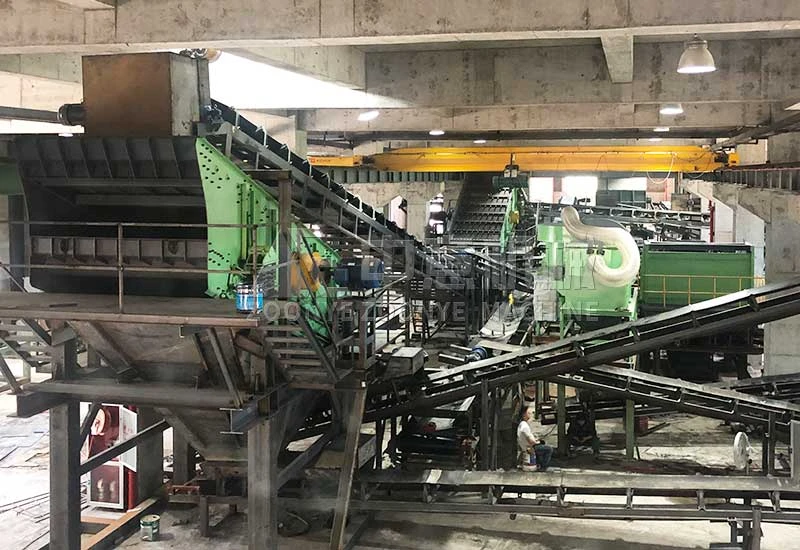
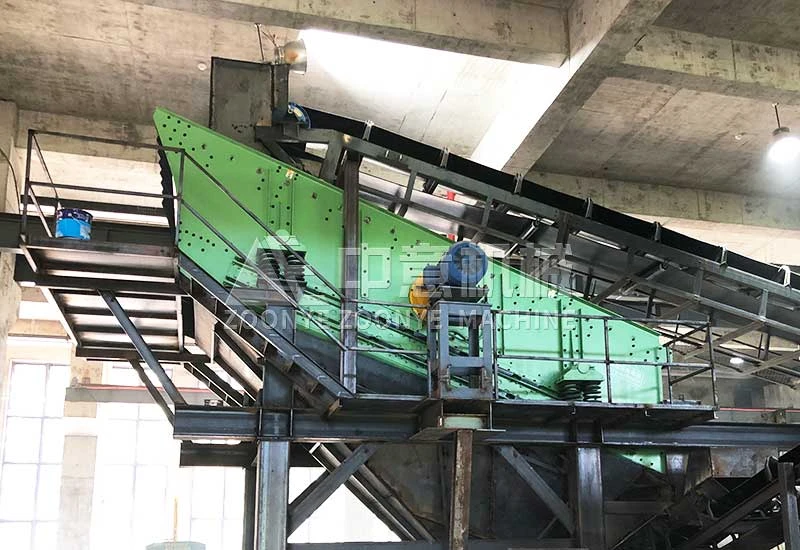
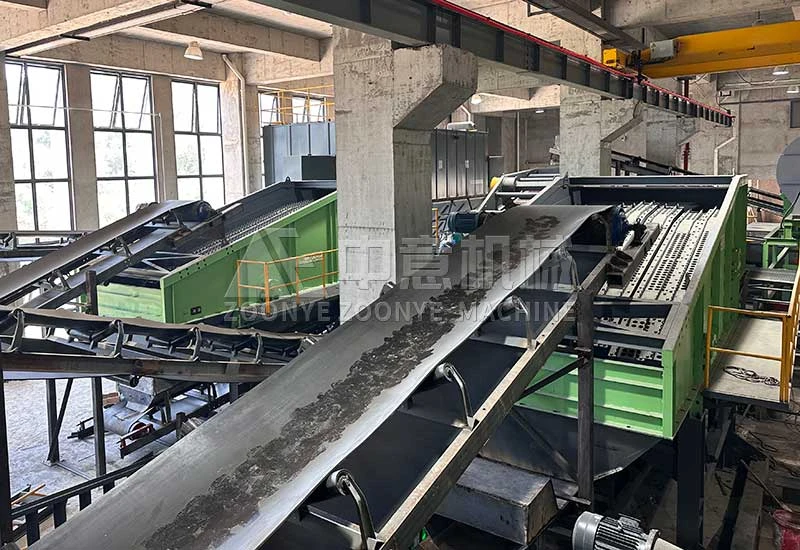
The location of a magnetic separator depends on the feed material, the condition of the steel, and the equipment that needs protection. In many construction waste recycling lines, magnetic separation takes place after primary crushing, when concrete breaks apart and exposes reinforcing steel. A separator may also be installed before crushing to remove accessible metal from incoming waste.
Some plants use a second separator after secondary crushing to recover remaining ferrous metal. Whether this extra stage is needed depends on the amount of metal left in the material and the plant’s recovery targets.
Magnetic Separation Before Crushing
A separator above the feed conveyor can remove exposed rebar, loose steel pieces, and other ferrous objects before they enter the crusher. This reduces the risk of metal-related equipment damage. However, steel embedded in concrete may not be captured at this stage.
Magnetic Separation After Primary Crushing
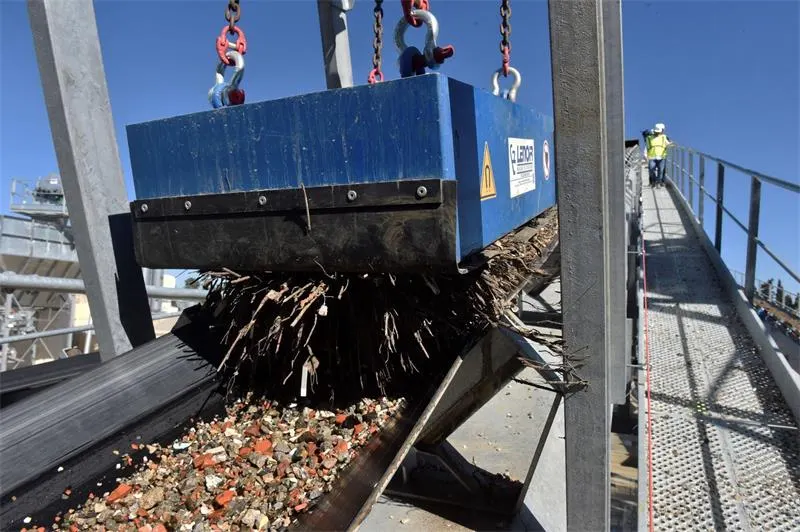
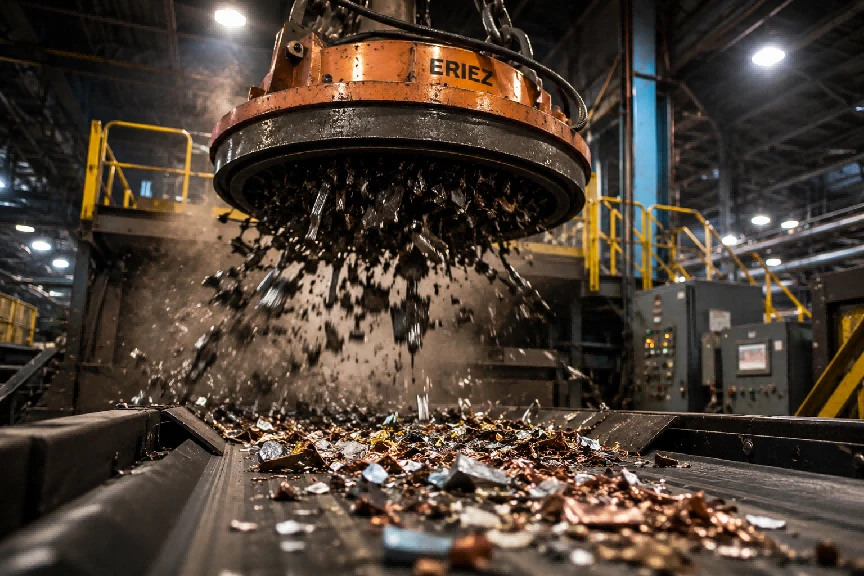
After crushing, steel previously embedded in concrete may become exposed and easier to remove. This makes the crusher discharge conveyor a common location for ferrous metal separation. An overhead self-cleaning magnetic separator can lift captured steel from the conveyor and discharge it separately. Performance depends on material depth, conveyor speed, magnet height, and metal size.
Magnetic Separation After Screening
Screening separates crushed waste into different size fractions. If a particular fraction still contains recoverable steel, another magnetic separator may be installed on its conveyor for further rebar removal. This additional stage is only necessary when the material and recovery targets justify it.
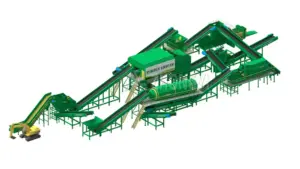
The final layout should reflect the actual material flow, available installation space, and required metal recovery. Construction waste magnetic separation works best when the separator is positioned where the target metal can be exposed, captured, and discharged effectively.
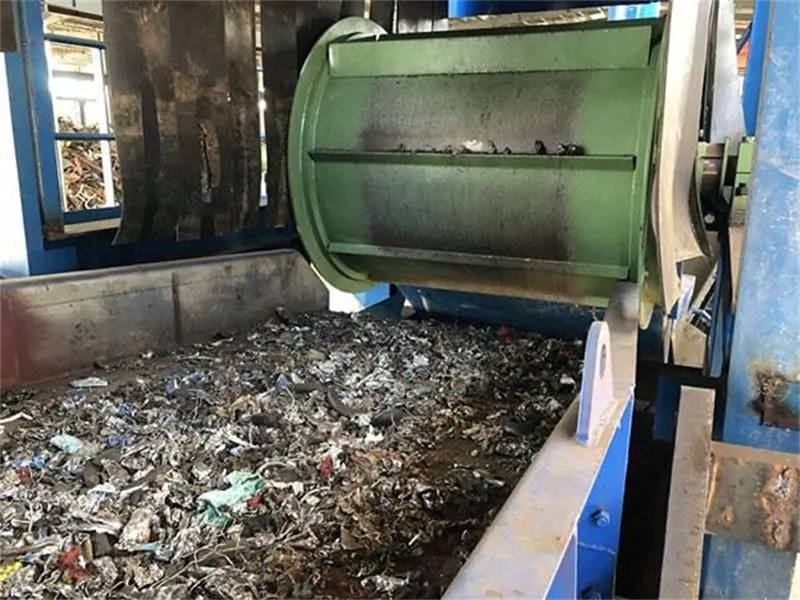
Which Magnetic Separator Is Suitable for Construction Waste Recycling?
Choose a magnetic separator based on how the waste is conveyed and where the recovered steel needs to be discharged. An overband magnetic separator lifts ferrous pieces from a moving conveyor load, a magnetic drum separator separates material as it passes over a rotating drum, and a magnetic head pulley removes ferrous metal at the conveyor discharge. All three recover ferrous metal, but their installation requirements and material-flow arrangements differ.
Overband Magnetic Separator
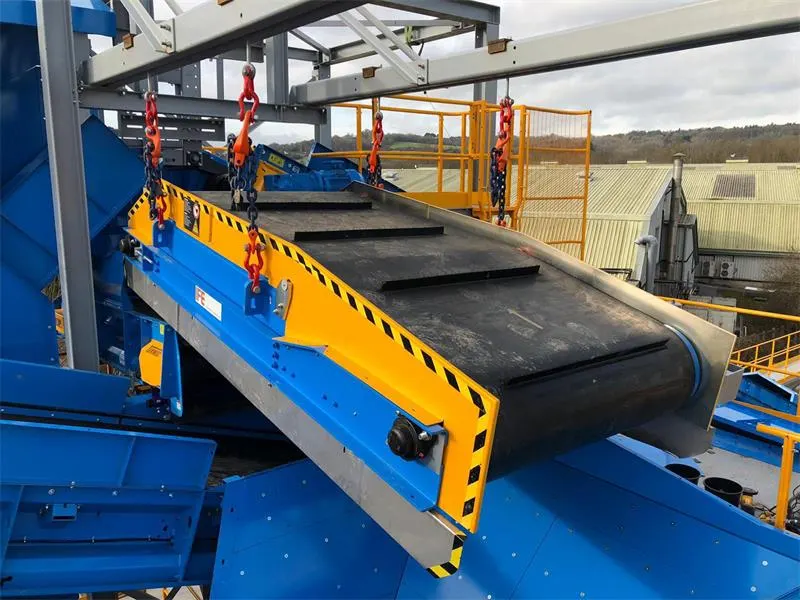
An overband magnetic separator is mounted above a conveyor to remove exposed steel from moving waste. In a self-cleaning design, a separate belt carries captured metal away for collection. This arrangement is commonly used where rebar and steel fragments must be removed before reaching downstream equipment.
Check the conveyor width and speed, material depth, suspension height, and size of the target metal. A deep material layer increases the distance between the magnet and buried metal, which can reduce capture.
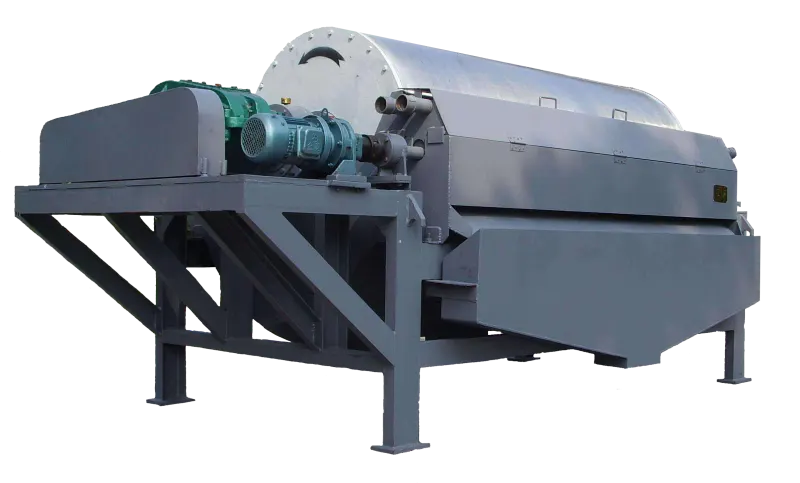
Magnetic Drum Separator
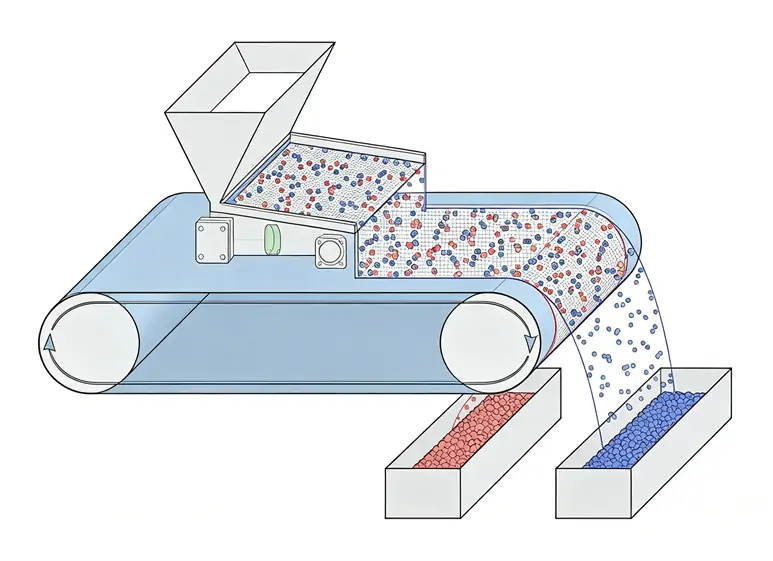
In a dry construction waste recycling line, a magnetic drum separator can be installed at a controlled feed point. Its internal magnetic system holds ferrous pieces against the rotating shell while non-magnetic material follows a different discharge path.
The feed should be distributed reasonably evenly across the drum. Material size, feed rate, and the separation space available for metal and aggregate discharge all affect the layout.
Magnetic Head Pulley
A magnetic head pulley replaces the standard head pulley at the discharge end of a conveyor. Ferrous metal remains attached to the belt as it wraps around the pulley and is released after leaving the effective magnetic field. The remaining material follows its normal discharge trajectory.
This arrangement can provide separation without a separate overhead magnet. However, deep material loads may prevent the pulley from capturing iron buried within the feed. Belt dimensions, material depth, and the discharge chute layout should be checked before installation.
Permanent Magnet or Electromagnetic Separator?
Permanent magnets generate a magnetic field without continuous electrical excitation of the magnet, although drive motors and self-cleaning belts still require power. Electromagnetic separators use electrical current and may be suitable for duties requiring specific field characteristics or greater working depth, depending on the design. Their power supply and cooling requirements must also be considered.
The choice should be based on the target metal, material depth, working distance, and operating conditions rather than magnetic strength alone.Magnetic separators recover ferrous metals, while aluminum and copper generally require other separation methods. For a comparison of the two technologies, see [Eddy Current Separator vs Magnetic Separator Usage].
How Does a Magnetic Separator Remove Ferrous Metals from Construction Waste?
The magnetic separator working principle is straightforward: a magnetic field attracts ferrous pieces from a moving waste stream while other material continues along its normal path. The magnetic force at the metal’s actual position must be sufficient to lift or retain it against gravity and the movement of the feed. In construction waste, this matters because steel may be exposed, partly embedded in concrete, or buried beneath other material.
The separation process depends on the equipment design. In an overband magnetic separator, captured steel is lifted from the conveyor. In a self-cleaning model, a separate belt carries the metal away from the main material stream and releases it at a collection point. In a typical dry magnetic drum separator, ferrous pieces remain attached to the drum surface within the effective magnetic zone, while non-magnetic material follows a different discharge path.
Actual ferrous metal recovery depends on the working distance, material depth, feed distribution, conveyor speed, and the size, shape, and position of the steel. Metal buried deep in a heavy load may escape capture. Crushing can expose steel that was previously embedded in concrete, making it easier to separate, but it does not guarantee complete removal. Aluminum and copper generally require other separation methods, such as eddy current separation.
Factors Affecting Magnetic Separation Efficiency
Magnetic separation efficiency depends on both the waste material and the operating conditions. A separator may capture large, exposed steel pieces but miss smaller items buried deep in a material load. When selecting construction waste recycling equipment, engineers need to consider how the following factors affect metal recovery and continuous operation.
These factors should be assessed together. Do not select a separator by magnetic strength or conveyor width alone. Check the target metal, maximum material depth, belt speed, working distance, and discharge arrangement. Testing representative construction waste under realistic operating conditions can help determine whether the proposed configuration meets the required recovery target.
How to Select a Magnetic Separator for a Construction Waste Recycling Plant?
Choosing a magnetic separator for construction waste starts with identifying the metal to be removed and the stage where separation is needed. The equipment must match the material and the actual operating conditions.
Match the Separator to the Process
Before crushing, an overband magnetic separator installed above the feed conveyor can remove exposed steel before it reaches the crusher. A magnetic head pulley may also suit a conveyor discharge where the layout allows effective metal separation. After crushing, an overband separator can recover steel exposed as concrete breaks apart. A magnetic drum separator may suit a controlled feed stream where material can be distributed evenly across the drum.
Check the Operating Conditions
Conveyor width alone is not enough to determine the required separator size. Belt speed, material depth, target metal size, and the distance between the magnet and the steel all affect capture performance. If the feed contains oversized concrete pieces or tangled wire, the material flow and available separation space also need to be considered.
Plan for Metal Discharge and Maintenance
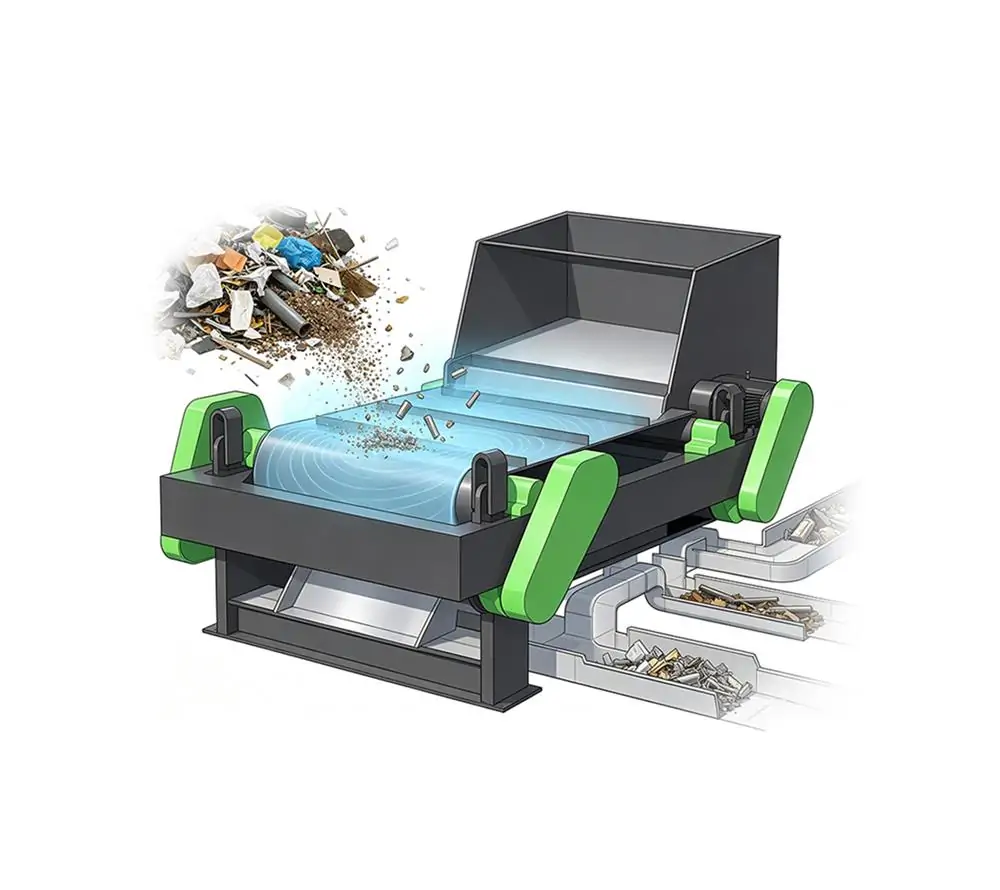
For continuous operation, a self-cleaning separator carries captured metal away on a separate belt. The plant layout must provide enough space for discharge, scrap collection, and routine maintenance. Permanent-magnet and electromagnetic designs should be compared according to the required separation performance, working distance, power supply, and operating conditions.
For a construction waste recycling plant, the final choice should reflect the actual feed and process layout, not magnetic strength or purchase price alone. See Xinzhongyi ECO’s magnetic separators for recycling for available equipment configurations.
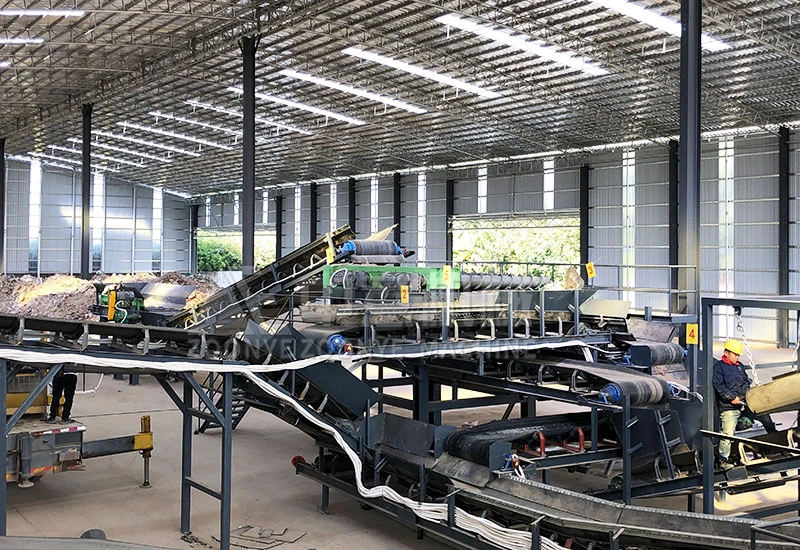
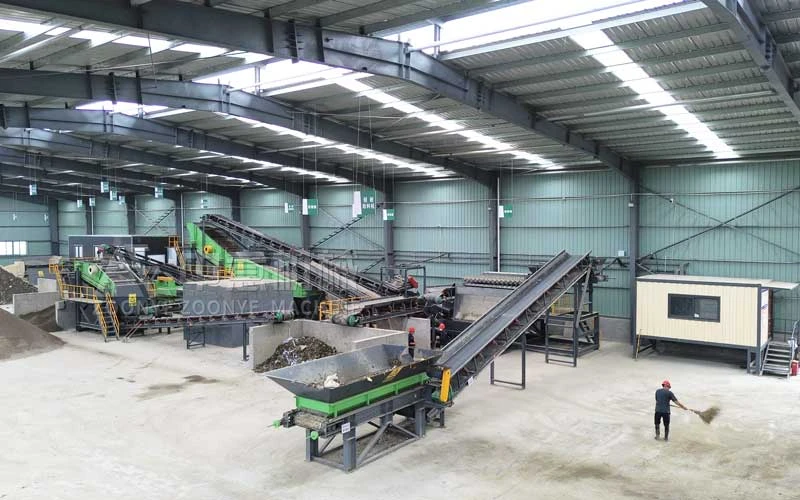
Construction Waste Recycling Case Study
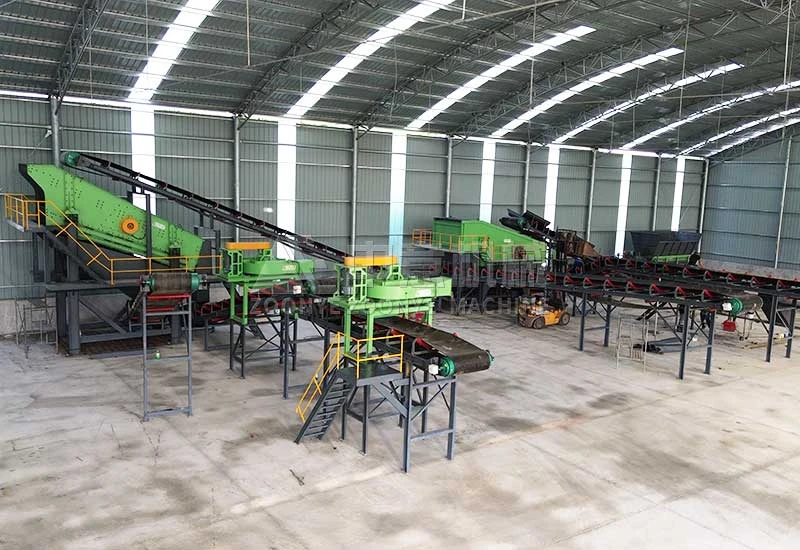
Conclusion
A magnetic separator needs to match the material and the process, not just the required processing capacity. Steel size, material depth, conveyor speed, and installation position all affect metal recovery. Its role should also be considered alongside crushing, screening, and other sorting equipment to ensure the recycling line meets its processing requirements.
Xinzhongyi ECO considers material composition, processing capacity, and site layout when planning recycling equipment and process configurations. Explore our magnetic separators for recycling, or contact our team to discuss your material and project requirements.
FAQ
Ein Magnetabscheider kann freiliegende Bewehrungsstäbe, Stahlfragmente, Nägel, Schrauben, Bindedraht und andere Eisenstücke aus Bauschutt zurückgewinnen. Die Erfassung hängt von der magnetischen Reaktion des Metalls, seiner Größe, seiner Position und seinem Abstand zum Magneten ab. Stahl, der noch in intaktem Beton eingebettet ist, kann den Abscheider passieren; durch Zerkleinerung kann er freigelegt und später entfernt werden. Herkömmliche Magnetabscheider gewinnen normalerweise kein Aluminium oder Kupfer zurück.
Vor dem Zerkleinern kann ein Abscheider zugänglichen Stahl entfernen, der in den Brecher gelangen könnte. Nach dem Primärzerkleinern kann er Stahl zurückgewinnen, der freigelegt wird, wenn der Beton auseinanderbricht. Einige Anlagen nutzen beide Positionen, aber das Layout hängt von den Aufgabebedingungen, den Anforderungen an den Geräteschutz und der nach jeder Stufe verbleibenden Metallmenge ab. Zwei Trennstufen sind nicht automatisch für jede Bauschutt-Recyclinganlage erforderlich.
Ein Separator kann ausreichend sein, wenn der Aufgabestoff und die erforderliche Metallabscheidung an einem einzigen Trennpunkt bewältigt werden können. Mehrere Stufen können sinnvoll sein, wenn Stahl in unterschiedlichen Größenfraktionen auftritt oder nach dem Zerkleinern verbleibt. Bevor eine weitere Einheit hinzugefügt wird, sind das Resteisenmetall im Produktstrom und die in jeder Stufe zurückgewonnene Menge zu bewerten. Zusätzliche Ausrüstung erfordert außerdem mehr Platz, Investitionen und Wartung.
A magnetic separator cannot reliably extract rebar that remains embedded in intact concrete. Crushing must first expose or release the steel from the concrete matrix. Even after crushing, some metal may remain attached to concrete pieces or buried beneath other material. A downstream separator can recover exposed ferrous fragments, but complete removal is not guaranteed. The process should address both equipment protection and metal recovery.
Do not assess performance only by the amount of scrap collected. Check the incoming material and separated product for residual ferrous metal, while recording throughput and material depth under consistent operating conditions. Where practical, sample each separation stage separately to identify whether metal is being missed because of poor exposure, excessive material depth, belt speed, or discharge problems. Use measured results to support recovery claims.
Routine inspection should cover the cleaning belt, belt tracking and tension, pulleys, mounting structure, guards, and metal discharge area. Remove material buildup and check for wear caused by sharp rebar or abrasive debris. Electromagnetic units also require the specified electrical and cooling checks. Inspection frequency depends on operating conditions and equipment design, so follow the manufacturer’s maintenance instructions rather than applying one schedule to every plant.
Conventional magnetic separators recover ferrous metals, not free aluminum or copper. When non-ferrous metal recovery is required, an eddy current separator may be added after suitable material preparation and ferrous separation. Its performance depends on particle size, feed presentation, and equipment design. Magnetic and eddy current separators serve different functions, so the appropriate combination depends on the waste composition and the plant’s recovery objectives.
Provide the waste type, feed-size range, expected throughput, ferrous metal size and quantity, conveyor width and speed, maximum material depth, and proposed installation point. Also describe moisture conditions, tangled materials, installation space, and the required metal discharge method. Photos, a process flow diagram, and a representative material sample can help the supplier determine whether one separator or multiple stages are appropriate.