












引言
For a small recycling plant, deciding whether to invest in an AI waste sorting machine is not simply a question of plant size. A facility with limited throughput may still benefit from automated sorting when it faces rising labor costs, difficulty maintaining experienced sorting workers, inconsistent material quality, or limited space for expanding manual sorting operations. At the same time, AI is not automatically the most economical solution for every small facility. The value of the investment depends on the material stream, target recyclables, processing capacity, required purity, operating hours, and how well the equipment can fit into the existing process.
Small recycling plants often have a different set of challenges from large MRFs. They may process fewer tons per hour, but they also have fewer workers, tighter floor space, and less flexibility when a sorting station becomes a bottleneck. For these facilities, the goal is usually not to build a fully automated recycling plant from the beginning. A more practical approach may be to automate one specific sorting stage where it can reduce repetitive manual work, improve recovery of valuable materials, or provide more consistent output quality. Compact and retrofit-oriented AI sorting solutions are already being developed for lower-volume and space-constrained recycling applications.
This makes the real question more specific: when does AI sorting make economic and operational sense for a small recycling plant? The answer depends on the relationship between material characteristics, throughput, labor requirements, sorting targets, output value, available space, and the existing equipment. The following guide explains these factors and shows how to determine whether an AI waste sorting machine is a practical upgrade for your facility.If you want to know 加拿大交钥匙垃圾分选厂的价格, ,请点击文章。.

Can a Small Recycling Plant Use an AI Waste Sorting Machine?
A small recycling plant can use an AI waste sorting machine, provided that the material stream, sorting target, and processing conditions are suitable. The decision should not be based on plant size alone. A small facility can be a good candidate for AI sorting when it handles a relatively defined material stream, needs to separate specific recyclable materials, or wants to improve sorting consistency without significantly expanding its manual workforce.
The most important factors are feed composition, throughput, target materials, required output purity, and material presentation. AI sorting is generally more practical when the target fraction can be clearly identified and consistently presented to the detection system. In contrast, highly mixed, wet, tangled, or heavily contaminated materials may require more upstream screening and separation before AI sorting can perform effectively.
For a small recycling plant, AI should also be considered as one process stage rather than a complete replacement for the sorting line. It can work together with screening, magnetic separation, air separation, conveyors, and manual quality control. This makes it possible to automate a specific sorting task first and expand the system later as the plant’s capacity and recycling requirements increase. The right question is therefore not simply whether the plant is “large enough” for AI, but whether AI can solve a specific sorting problem and create enough operational value for the facility.
What Makes a Small Recycling Plant Suitable for AI Sorting?
The suitability of an AI waste sorting machine depends more on the material stream and sorting requirements than on the overall size of the recycling plant. A small facility is generally a suitable candidate when it has a stable feed stream, clearly defined target materials, sufficient operating hours, and a specific sorting stage where automation can improve recovery or reduce manual work. Before selecting equipment, buyers should evaluate processing capacity, material composition, target fractions, required output purity, and existing process conditions rather than using plant size alone as the deciding factor.
处理能力
There is no universal minimum capacity for AI sorting. The appropriate system should be matched to the actual hourly feed rate, belt width and speed, material distribution, target material concentration, number of sorting fractions, and operating hours. A small plant with moderate but consistent throughput may be suitable for a compact or single-stage AI sorting system, while a growing facility may require higher capacity or additional sorting points. The key is to avoid both under-sizing and over-sizing the equipment.
Material Composition
Material composition is one of the most important factors in AI sorting. AI systems are more practical when the target materials can be clearly identified and consistently presented to the detection system, such as PET, HDPE, PP, mixed plastics, packaging materials, or other defined recyclable fractions. Highly mixed, wet, tangled, or heavily contaminated waste may require screening and other pretreatment before AI sorting. Therefore, the clearer the target material and feed condition, the easier it is to determine whether AI sorting is technically suitable.
Clear Sorting Targets
A small recycling plant should have a specific sorting objective before investing in AI equipment. The goal may be to recover a particular plastic type, improve the purity of a recyclable fraction, remove unwanted materials, or reduce repetitive manual sorting. Instead of asking whether an AI machine can “sort waste,” buyers should define what needs to be recovered or removed, the required purity, and where the separation should occur in the process. A clearly defined sorting target makes equipment selection and performance evaluation much more practical.
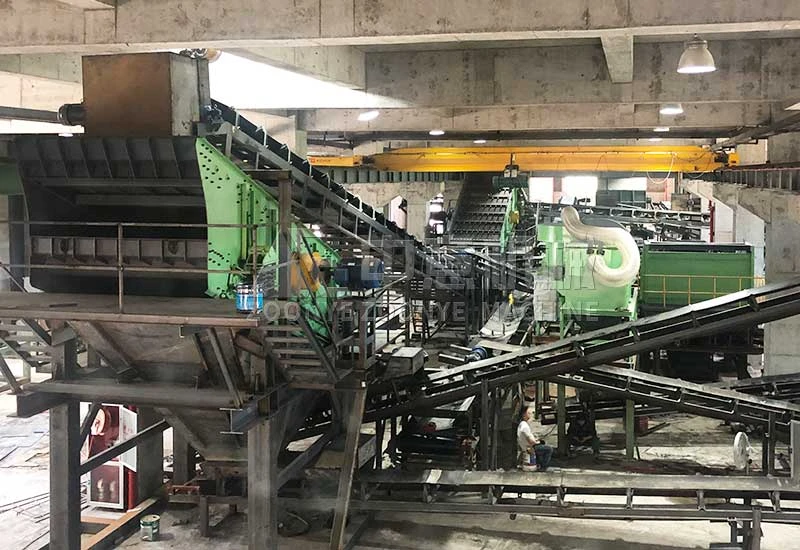
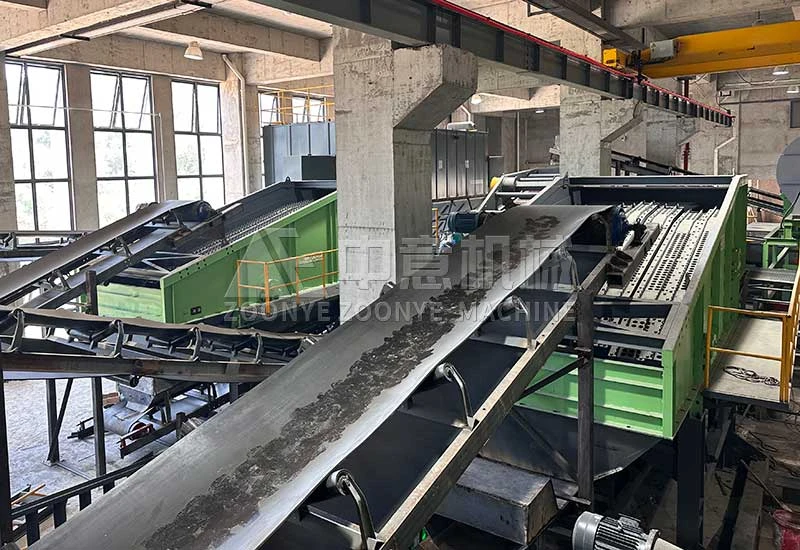
When Is an AI Waste Sorting Machine Worth the Investment?
For a small recycling plant, an AI waste sorting machine is worth considering when it addresses a measurable sorting bottleneck and the expected improvement in labor efficiency, material recovery, or product quality can justify the equipment cost. The evaluation should consider feed composition, operating hours, labor requirements, target material value, output specifications, and equipment utilization rather than capacity alone.
High Labor Dependence
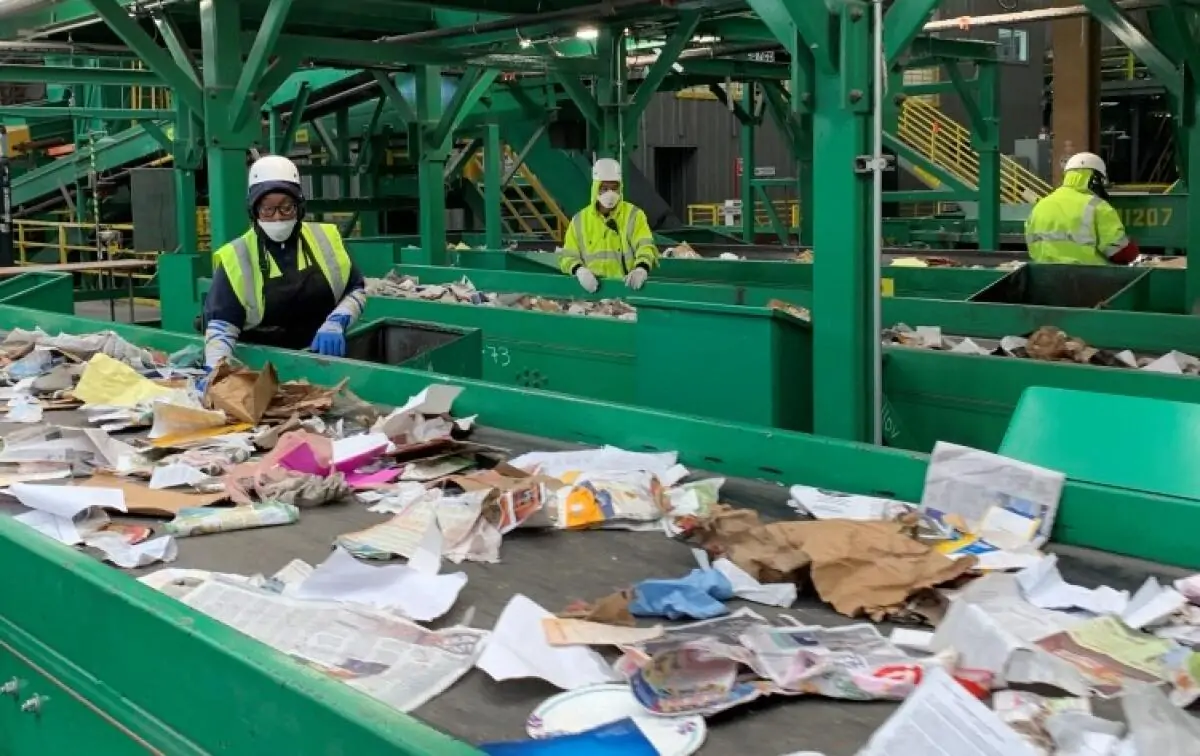
AI sorting has greater value when manual sorting represents a significant operating cost or limits throughput. It can automate repetitive identification and separation of defined material fractions, reducing dependence on continuous manual labor while allowing operators to focus on quality control, equipment monitoring, and material handling.
High Value of Recovered Materials
The business case is stronger when the target materials have meaningful recovery or resale value. For PET, HDPE, PP, color-specific plastics, and other defined fractions, improved separation can increase recovery yield or reduce contamination. The investment should therefore be assessed against the incremental value of recovered material, not simply the machine’s purchase price.
Higher Output Purity Requirements
AI sorting can be particularly useful when downstream buyers require stable material specifications. More consistent identification and separation can help control contamination and maintain product quality. Buyers should evaluate the complete relationship between feed composition, separation performance, recovered-material purity, and selling value, rather than judging the system only by its stated recognition accuracy.
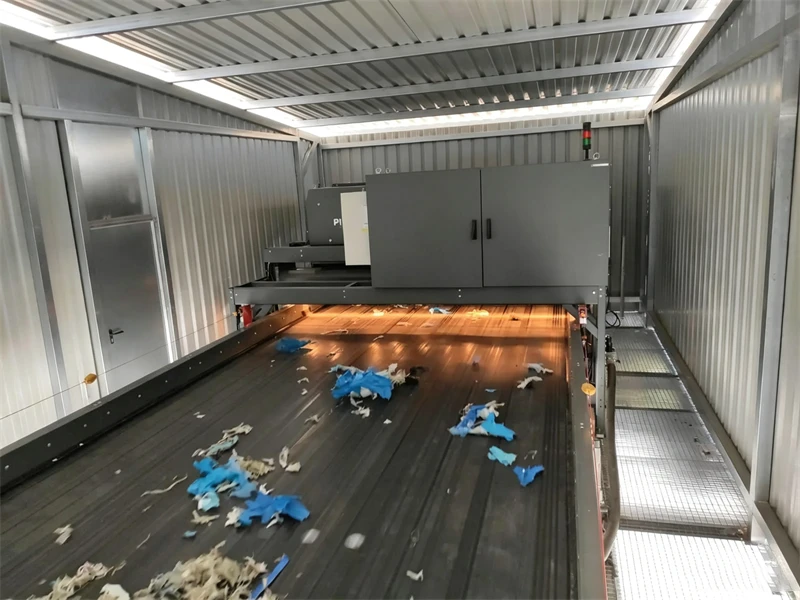
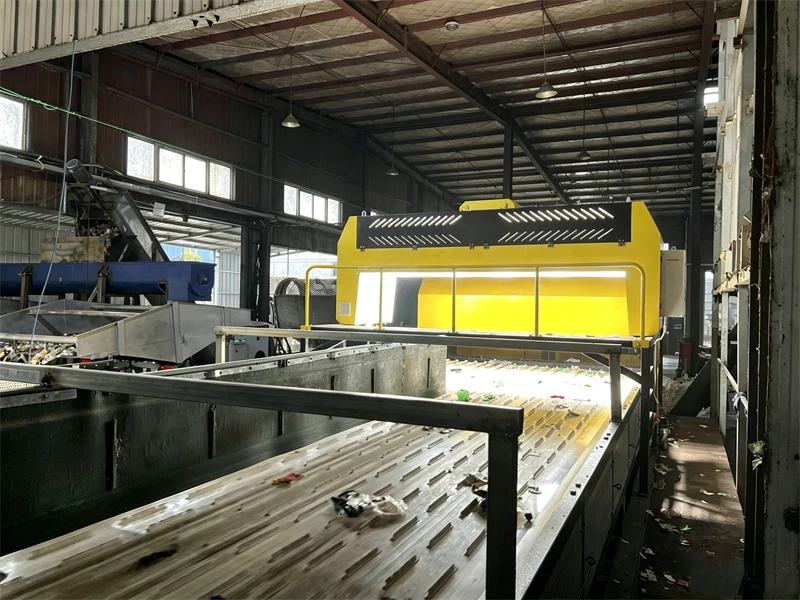
When Is AI Sorting Not the Best Choice for a Small Recycling Plant?
AI sorting is not automatically the right investment for every small recycling plant. When throughput is too low, the target materials are poorly defined, or the feed quality is unsuitable for automated recognition, improving basic sorting and material preparation may provide better value than adding AI equipment.
Very Low or Unstable Throughput
When the actual feed rate is very low or changes significantly from day to day, an AI sorting machine may not be utilized efficiently enough to justify its investment. Equipment selection should consider not only peak capacity but also average throughput, operating hours, and material availability. For plants with highly seasonal or irregular feed, improving the existing process may be a more practical first step.
No Clear Sorting Target
AI sorting requires a defined separation objective. If a plant has no clear target material, output specification, or downstream buyer requirement, installing an AI sorter will not automatically improve the recycling process. The operator should first determine what material needs to be recovered or removed, how much is available, and what purity is required before evaluating an AI solution.
Poor Upstream Material Preparation
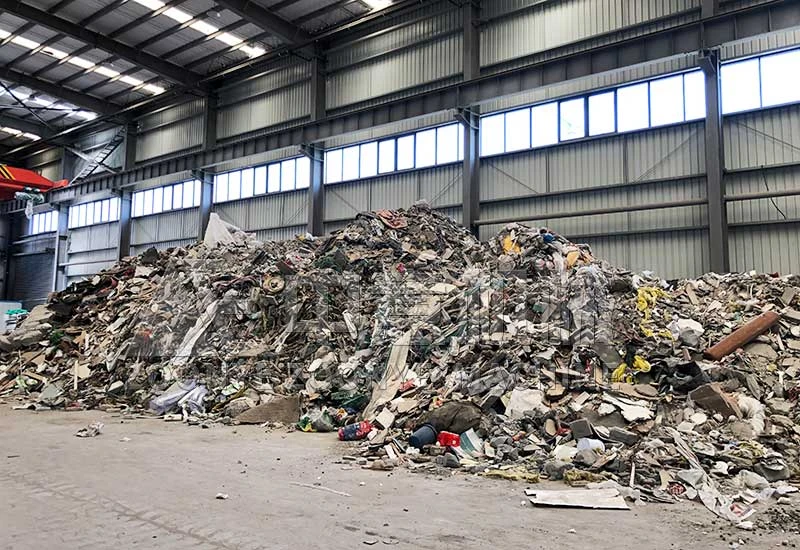
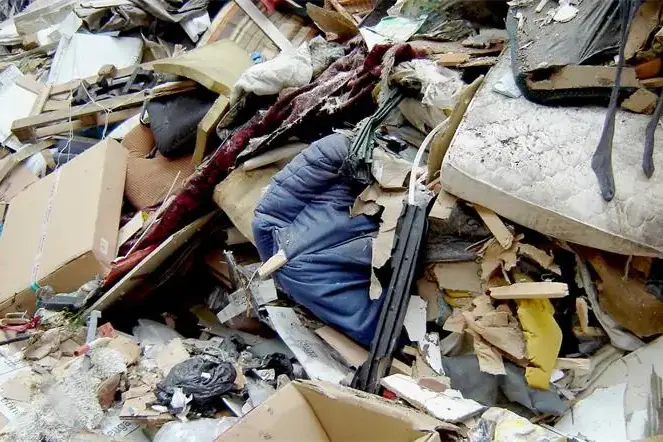
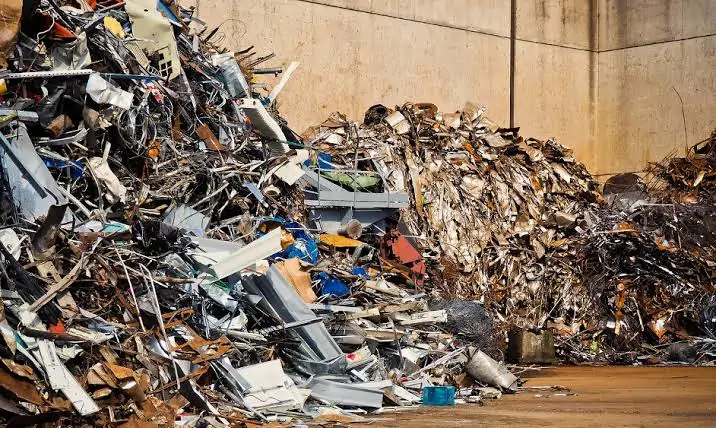
AI sorting cannot compensate for poor material presentation. Excessive moisture, tangled films, overlapping materials, heavy contamination, unsuitable particle sizes, or uneven feeding can reduce detection and separation performance. AI is not a substitute for proper material preparation. Screening, size control, feeding, and material distribution should be addressed first when they are limiting the sorting process.
AI Sorting Machine vs Manual Sorting for Small Recycling Plants
For small recycling plants, the choice between manual and AI sorting should be based on the plant’s actual operating conditions rather than assuming that automation is always better. Manual sorting offers lower initial investment and greater flexibility for simple or irregular material streams, while AI sorting can provide more consistent separation and reduce dependence on manual labor when the sorting task is clearly defined.For a closer look at how non-ferrous metals are recovered from mixed waste, read 涡电流分选机工作原理, which explains how electromagnetic induction separates conductive metals from non-metallic materials.
| 因素 | Manual Sorting | AI分选 |
| Initial Investment | Lower | Higher |
| Labor Requirement | 高 | Lower |
| Sorting Consistency | Operator-dependent | More consistent |
| Processing Stability | Depends on workforce | More automated |
| Material Identification | Human judgment | Sensors, imaging and AI algorithms |
| Output Purity | Can vary | More controllable |
| Flexibility | High for irregular materials | Best for defined sorting tasks |
| Scalability | Limited by labor | Easier to automate |
| 最佳应用 | Low-volume or simple streams | Defined recyclable streams |
For very small operations with simple materials and low labor costs, manual sorting may still be more economical. For plants with growing throughput, labor pressure, or higher purity requirements, AI sorting becomes a more practical automation option.
What AI Sorting Equipment Does a Small Recycling Plant Actually Need?
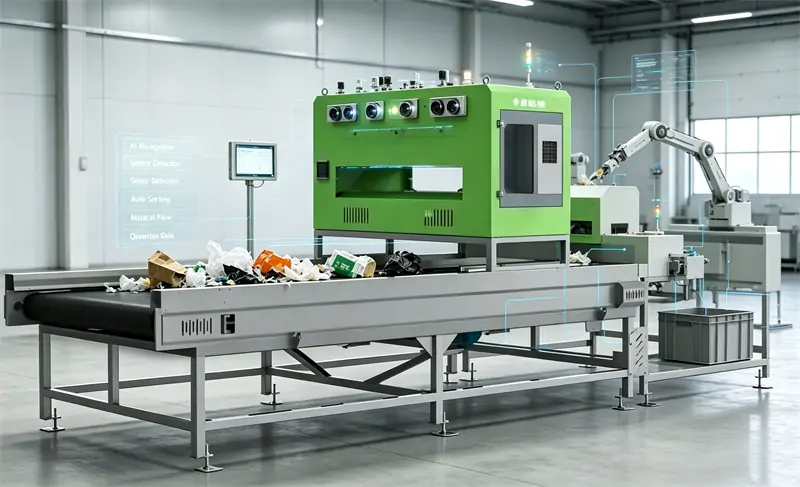
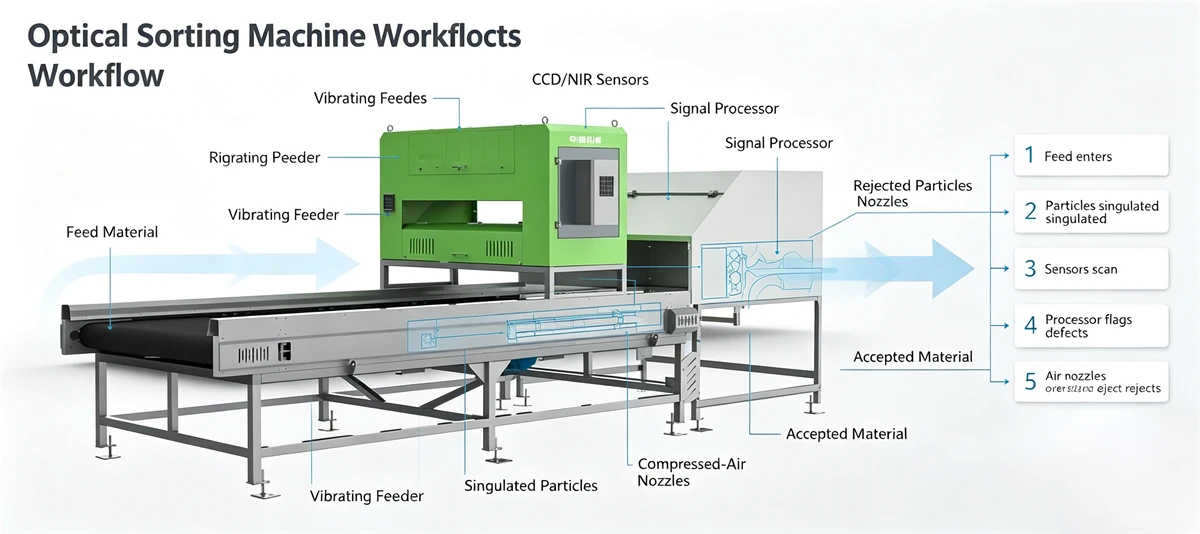
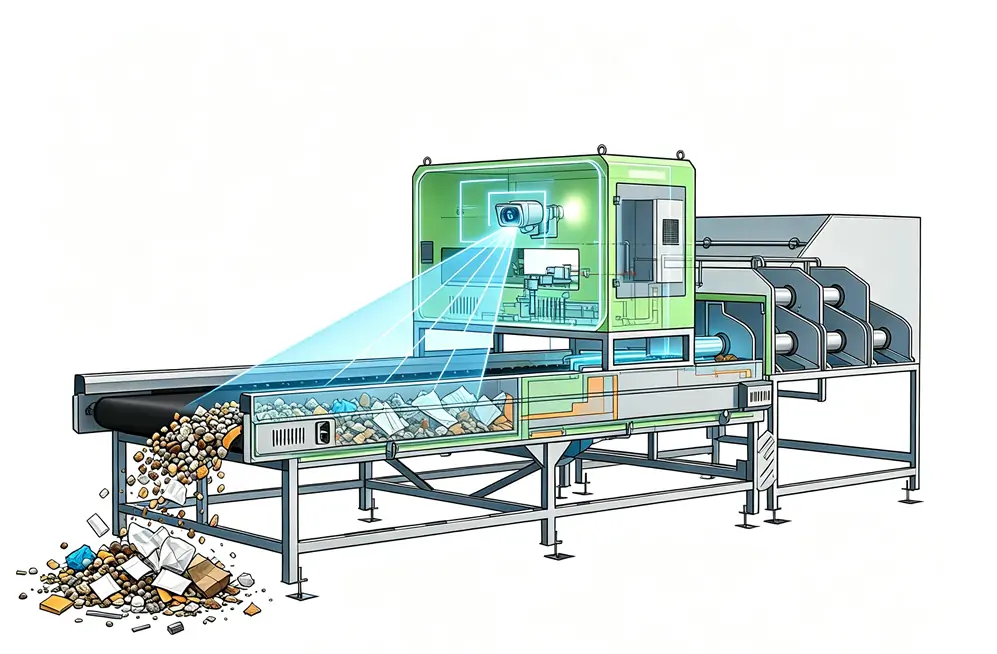
A small recycling plant does not need a fully automated sorting line to adopt AI technology. Xinzhongyi ECO’s AI intelligent sorting machine can be integrated as a dedicated sorting stage within an existing recycling process, focusing on specific material identification and separation tasks that are difficult or labor-intensive to handle manually.
The AI sorting machine can work with existing screening, magnetic separation, 风选, 、以及 conveying equipment to create suitable feed conditions before AI identification. This allows the plant to retain equipment that already meets its production requirements while introducing AI where automated sorting can improve efficiency, consistency, or recovered-material quality.
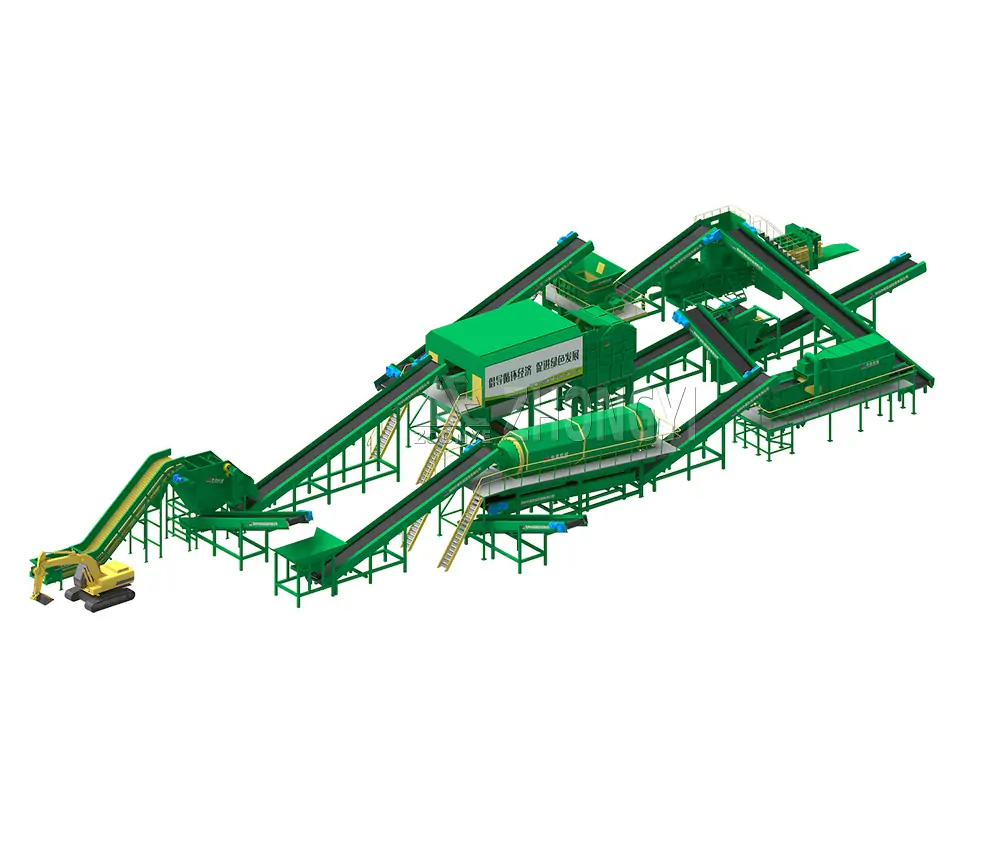
A practical small-plant process may therefore follow Feeding → Screening / Pre-separation → AI Intelligent Sorting Machine → Manual Quality Control → Baling. The exact configuration depends on the waste stream, target materials, throughput, and required output purity. For small recycling plants, the objective is not to automate every process, but to introduce AI at the sorting stage where it can deliver measurable operational value.
How to Select an AI Waste Sorting Machine for a Small Plant?
Selecting an AI waste sorting machine for a small recycling plant should start with the actual material flow and production requirements rather than the machine’s advertised capacity or recognition rate. Before requesting a quotation, buyers should define the feed conditions, existing line, output requirements, and expected operating costs.
Define Feed Capacity and Material
Provide the supplier with the average and peak feed rate (t/h), operating hours, material composition, and expected fluctuations. The target materials should also be clearly identified, such as PET, HDPE, PP, paper, aluminum, or mixed plastics. These details determine whether AI sorting is technically suitable and how the machine should be applied.
Check Existing Line Compatibility
For an existing recycling plant, check the conveyor width and speed, material discharge position, available installation space, electrical supply, and compressed-air requirements. This information helps determine how the AI sorting machine can be integrated with existing screening, magnetic separation, wind separation, and conveying equipment without unnecessary modifications.
Evaluate Output Requirements and Total Cost
Define the required output purity and downstream buyer specifications before comparing machines. Do not judge a system only by its stated AI accuracy; consider the complete separation result and its effect on recovered-material value. Total cost should also include equipment, installation, energy, compressed air, maintenance, and labor requirements to determine whether the investment makes economic sense for the plant.
Can AI Sorting Be Added to an Existing Small Recycling Plant?
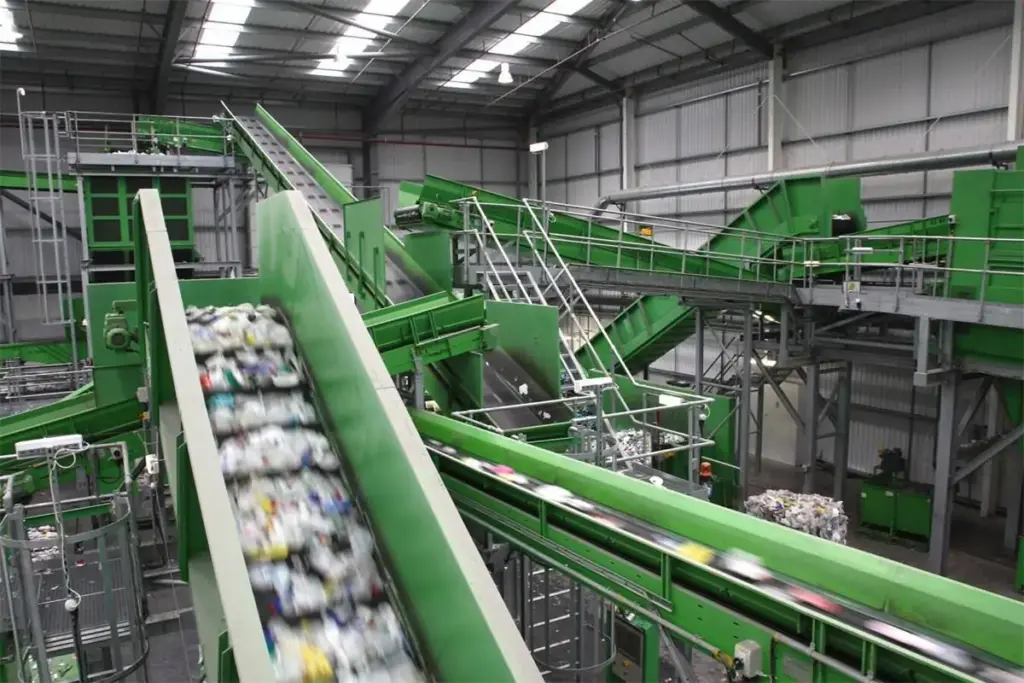
An AI waste sorting machine can often be added to an existing small recycling plant without rebuilding the entire line. A practical retrofit starts by identifying the sorting stage that creates the greatest labor or quality bottleneck, such as post-screening separation or final product quality control. This allows the plant to introduce AI gradually while keeping existing equipment that still performs effectively.
Before installation, the existing conveyor layout, feed consistency, material flow, available space, electrical supply, air supply, and target sorting point should be evaluated. These factors determine whether the AI sorting machine can be integrated efficiently and whether modifications to the existing line are required. Proper material presentation is particularly important because unstable feeding or excessive material overlap can affect sorting performance.
An engineering assessment should be completed before selecting the machine. The supplier should review the plant layout, representative material, processing capacity, and required output quality to determine the appropriate installation position and process arrangement. For small recycling plants, this retrofit approach provides a practical path to automation while avoiding unnecessary investment in a completely new sorting system.
Benefits of AI Sorting for Small Recycling Plants
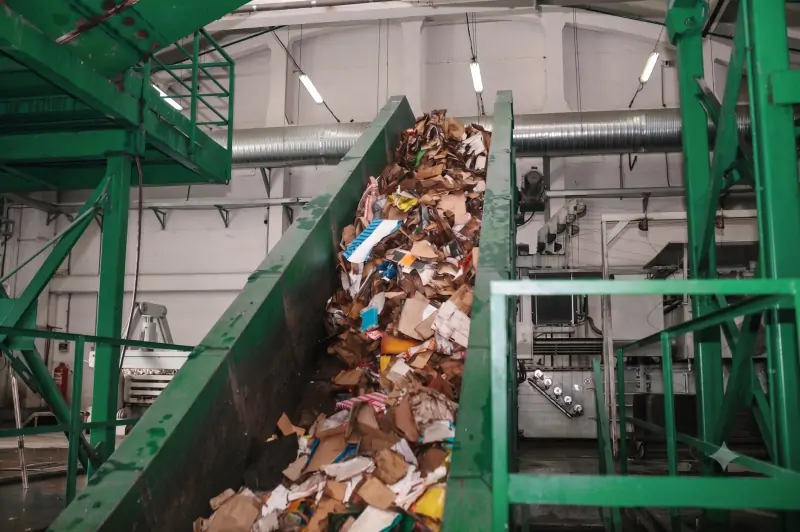
AI sorting can help small recycling plants improve operating efficiency, reduce dependence on manual sorting, and achieve more consistent material recovery. Compared with a fully manual process, automated identification and sorting can reduce the impact of labor shortages, worker fatigue, and inconsistent sorting decisions, while providing a practical path toward gradual plant automation.
More Consistent Sorting and Reduced Labor Dependence
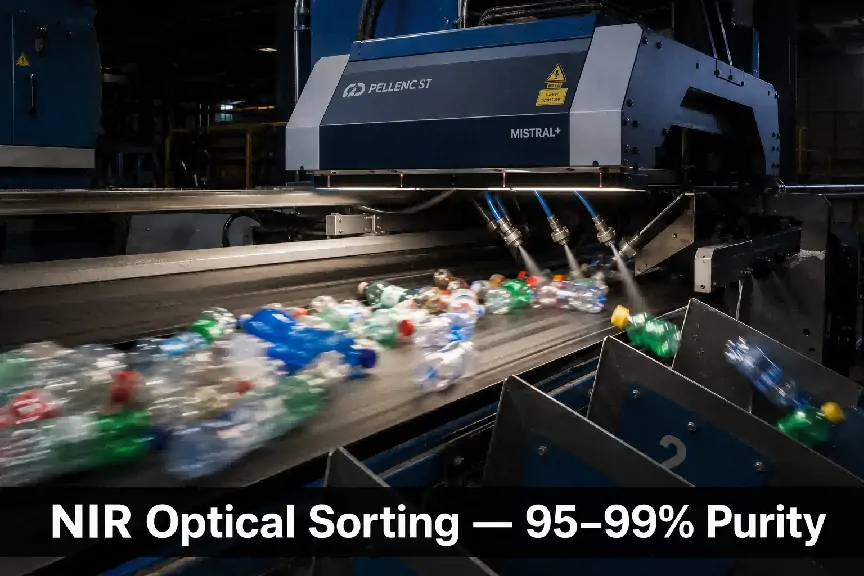
AI sorting uses machine vision and configured recognition algorithms to identify and separate target materials more consistently than manual sorting. This can reduce differences between operators and the need for continuous manual sorting work. Operators can instead focus on equipment monitoring, quality control, maintenance, and material flow management. For small recycling plants facing labor shortages or rising labor costs, this can make daily operations more stable and easier to manage.
Better Material Recovery and Output Quality
More consistent material identification can help separate valuable recyclable materials from unwanted fractions and reduce the amount of target material lost with rejects. This can improve the recovery of plastics, paper, packaging waste, and other recyclable materials while helping maintain more stable material quality. Consistent sorting performance is particularly important when downstream buyers require controlled material composition and fewer unwanted materials in recovered fractions.
Easier Future Automation and Plant Upgrades
AI sorting can serve as one step in a gradual automation strategy rather than requiring a complete replacement of the existing recycling line. Small plants can integrate AI sorting with existing conveyors and later add optical sorting, automatic baling, and centralized control as processing requirements increase. This allows operators to expand automation according to actual throughput, labor conditions, and investment capacity while keeping the plant flexible for future upgrades.
AI Waste Sorting Machine Investment: What Should Buyers Evaluate?
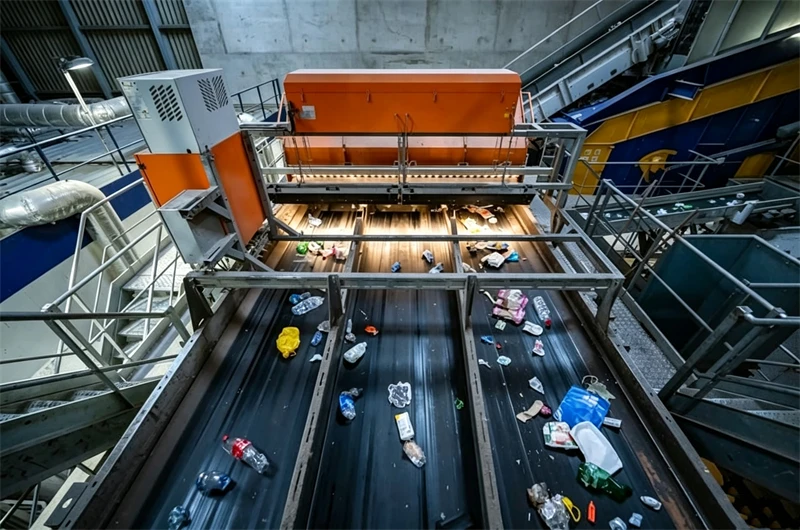
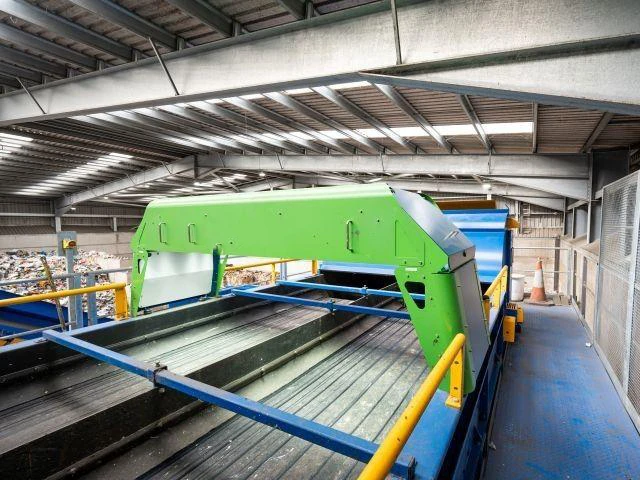
When buying an AI waste sorting machine, buyers should evaluate material compatibility, actual sorting performance, total operating cost, system integration, and manufacturer support rather than comparing equipment prices alone. The right questions are whether the machine can recognize your target materials, achieve the required capacity and output purity under actual feed conditions, integrate with the existing recycling line, and remain practical to operate and maintain over its service life.
Material Compatibility, Capacity, and Sorting Performance
Start by asking the manufacturer what materials the AI waste sorting machine can recognize and what feed conditions it requires. Material composition, particle size, moisture, contamination, and the degree of material overlap can all affect sorting performance. Buyers should request capacity and output purity data based on materials similar to their own rather than relying only on laboratory or nominal specifications. It is also important to confirm whether pre-sorting, screening, shredding, or other feed preparation is required before AI sorting.
System Integration, Utilities, and Total Operating Cost
The machine should be evaluated as part of the complete waste sorting process, not as an isolated piece of equipment. Ask whether it can connect with the existing conveyor, control system, air supply, electrical system, and downstream sorting equipment. Buyers should also clarify power consumption, compressed-air requirements if applicable, maintenance intervals, spare parts, operator requirements, and expected service costs. Comparing these factors helps determine the actual cost per ton rather than simply comparing the initial purchase price.
Manufacturer Support, Commissioning, and Future Expansion
Before signing a purchase contract, buyers should confirm what commissioning, operator training, remote support, spare parts, and after-sales service the manufacturer provides. A reliable supplier should be able to discuss installation requirements and performance under the buyer’s actual material conditions. It is also worth asking whether the AI sorting machine can be upgraded or integrated with additional conveyors, optical sorting equipment, automatic baling, and centralized control in the future. This makes the initial investment easier to adapt as processing capacity and automation requirements grow.
结论
An AI waste sorting machine can be a practical investment for a small recycling plant when labor costs, material recovery value, output purity, or future automation justify the investment. However, AI should not be selected based on machine specifications alone. Feed composition, throughput, existing equipment, installation space, target materials, and total operating cost all need to be considered.
For plants that are ready to reduce manual sorting and gradually automate their operations, AI sorting can provide a scalable solution that works with conveyors, screening, magnetic separation, air separation, and other recycling equipment. Xinzhongyi ECO can evaluate the material characteristics and processing requirements of your project and provide a customized AI waste sorting solution for your recycling plant.


安迪·余
技术工程师 | Zhongyi ECO
16+
年经验.
300+
解决方案
50+
国家
拥有16年环境与固体废物管理经验,专注于C&D回收和废物分选解决方案。在中意矿山机械,致力于通过技术专长和定制化配置提升全球客户的效率。.
常见问题
是的,当设施具有相对稳定的物料流、明确的分选目标以及足够的回收价值来证明自动化合理时,AI 垃圾分选机可以适用于小型回收厂。小型工厂不一定需要全自动化生产线。AI 分选机可以安装在特定的分选阶段,以减少人工劳动、提高分选一致性并支持逐步自动化。.
There is no universal capacity that fits every small recycling plant. The right capacity depends on feed material, bulk density, particle size, belt speed, target materials, required sorting accuracy, and operating hours. Buyers should compare the machine’s actual processing capacity under similar material conditions rather than relying only on the manufacturer’s rated capacity. Material testing is recommended before final equipment selection.
初始投资不一定更高。一台AI分选机通常需要较高的前期成本,但可以减少对人工的长期依赖并提高分选一致性。对于处理量很低的工厂,人工分选可能仍然更经济。实际的比较应涵盖设备成本、人工、电力、维护、备件、运行时间,以及更好的物料回收和产出质量所带来的附加价值。.
是的。AI 分选设备通常可以集成到现有的回收处理厂中,而无需更换整套分选系统。但是,应首先评估现有输送机的宽度和速度、物料流量、安装空间、供电、压缩空气需求以及下游设备。通过现场评估可以确定最合适的安装位置,以及是否需要额外的筛分、输送或物料预处理。.
根据传感技术和AI配置,AI垃圾分选机可设计用于识别特定塑料、颜色、包装材料、纸张及其他定义的废物类别。识别性能在很大程度上取决于物料特性及其在输送机上的呈现方式。买方应提供具有代表性的物料样品、照片或视频,以便制造商评估所需物料能否被可靠识别和分选。.
没有单一的准确率或纯度数值适用于所有应用场景。实际结果取决于进料成分、污染程度、颗粒尺寸、物料重叠情况、输送机条件以及所选的分选配置。买家应要求提供使用与其自身物料相似的测试结果,并明确所报数值是指识别准确率、回收率还是最终产出纯度。.
不一定。AI 分选旨在实现特定识别与分离任务的自动化,而设备的运行监控、质量控制、维护保养以及非目标物料的处理仍可能需要操作人员。对于许多小型回收厂而言,将 AI 分选与有限的人工检查相结合的混合配置,相比试图完全取消所有人工操作,能在自动化程度、投资成本与产出质量之间提供更实用的平衡。.
请提供物料类型、预计处理能力、运行时间、目标物料、所需产出纯度、现有分选设备、输送机规格、可用安装空间以及 preferred 自动化水平。物料照片或视频也有帮助。如有可能,请提供具有代表性的物料样品用于测试。这些详细信息使制造商能够评估分选工艺并推荐合适的 AI 分选配置,而不是仅根据标称产能对机器进行报价。.
相关废物分选设备

Artificial Intelligence Waste Sorting Machine
AI waste sorting machines use machine vision and AI recognition technology to identify and separate target materials from mixed waste streams. They can be applied to plastics, RDF/SRF, packaging waste, and other recyclable materials, helping small recycling plants improve sorting consistency, reduce manual labor, and achieve more stable recovery and output quality.

垃圾分拣圆盘筛
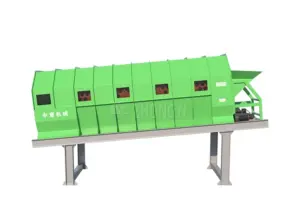
垃圾分拣圆盘筛 is designed for continuous size-based separation of MSW, compost, biomass, wood chips, and other solid waste. Its self-cleaning disc structure helps reduce clogging and maintain stable material flow, making it suitable for pre-sorting before AI sorting, air separation, magnetic separation, and other downstream processes.

Magnetic Separators for Recycling
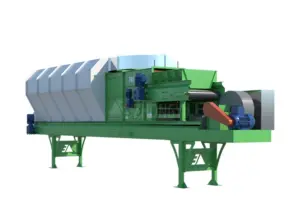
Magnetic Separators for Recycling continuously remove ferrous metals such as iron and steel from mixed waste streams. They can be installed before or after shredding and screening to reduce metal contamination, protect downstream equipment, and recover recyclable ferrous materials from MSW, C&D waste, RDF, biomass, and plastic recycling lines.

FYF系列卧式负压风选分离机
FYF系列水平负压风选机 uses controlled negative-pressure airflow to separate lightweight materials such as plastic film, paper, textiles, and RDF from heavier fractions. With stable airflow and continuous operation, it can improve material purity and prepare suitable fractions for downstream AI sorting or other automated separation processes.