












บทนำ
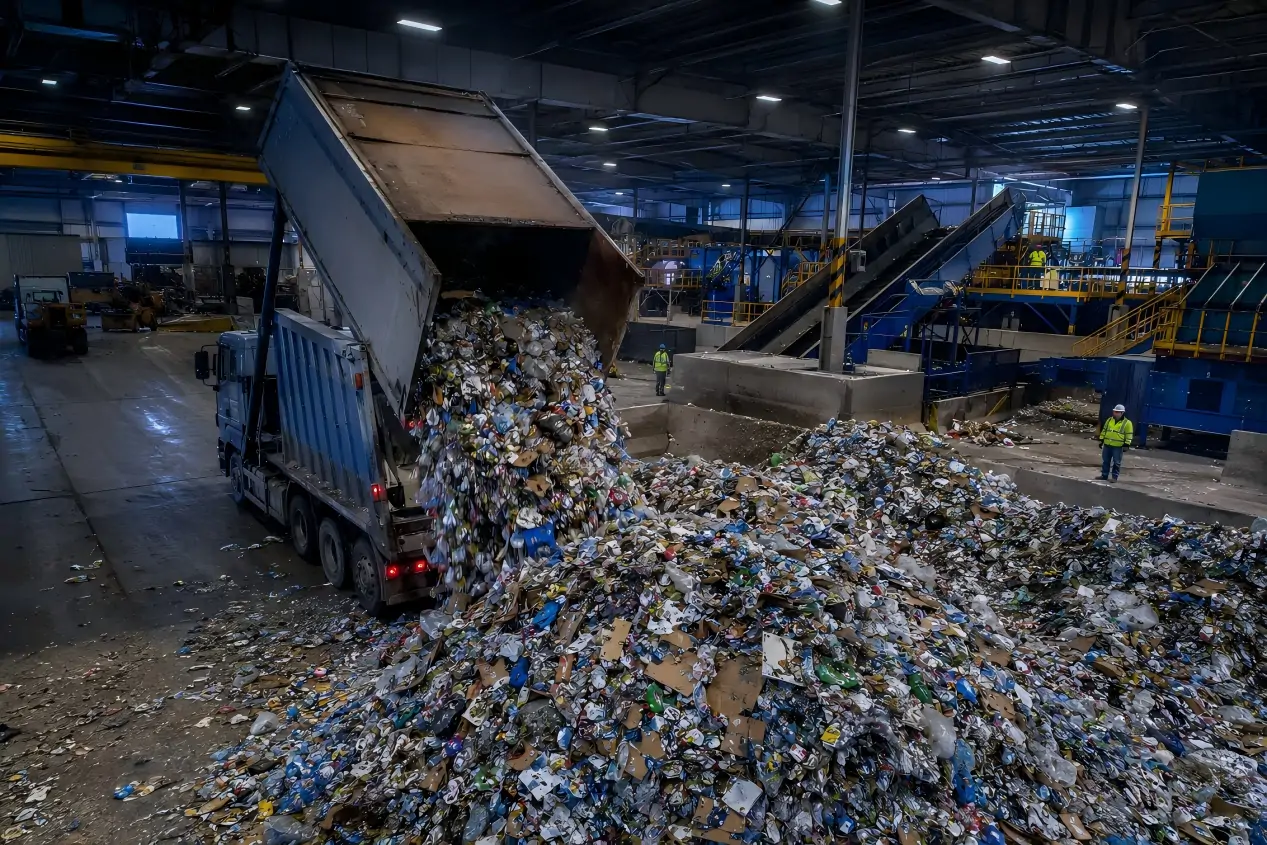
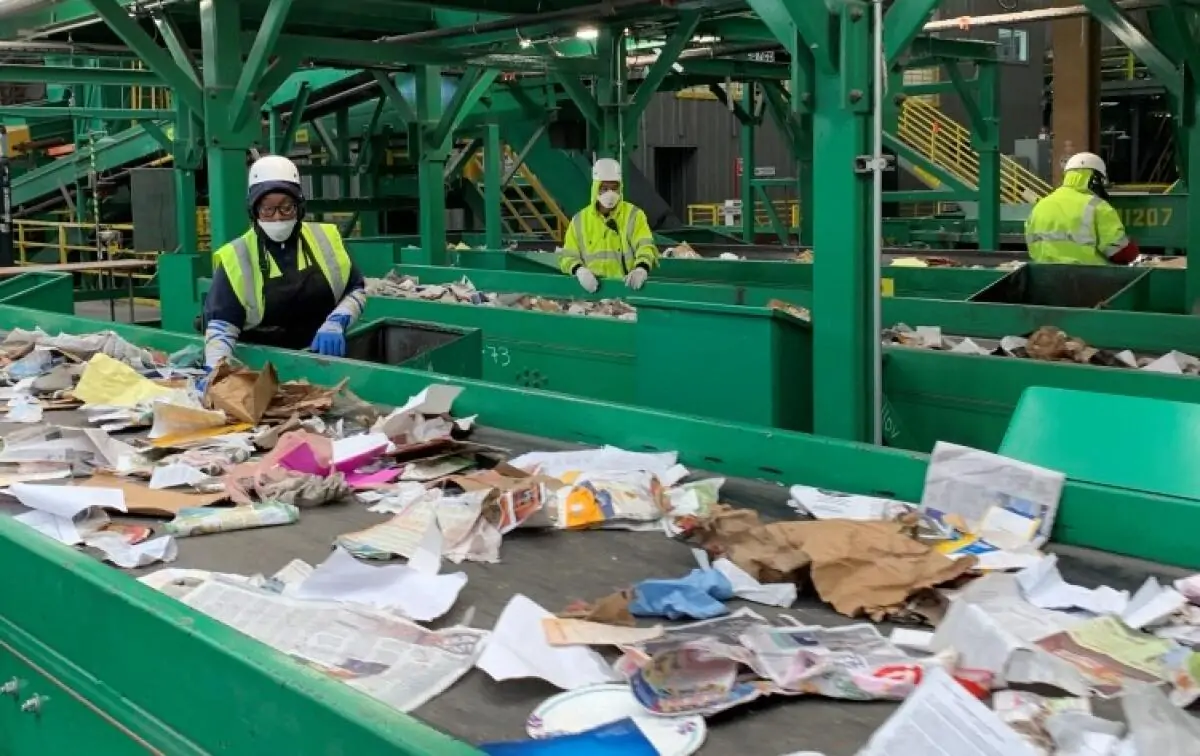
In a recycling plant, mixed waste often contains overlapping items, contaminated packaging, and materials that look similar but require different handling. These conditions make consistent sorting difficult because recognizing a target material does not guarantee that it can be separated successfully. The AI Waste Sorting System Working Principle is to use machine vision and trained AI models to identify and locate target materials, then convert that information into control signals for physical separation.
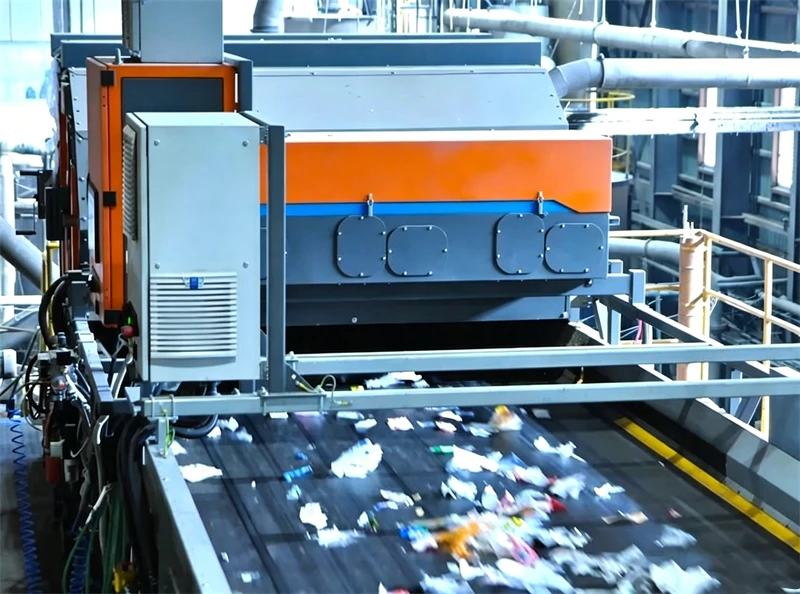
Cameras capture images as waste moves along a conveyor, and the AI model analyzes visible features to classify or detect target items. The control system then coordinates the sorting mechanism, such as a robotic picker or air ejector, to separate selected materials at the appropriate time. Actual sorting performance depends on more than recognition accuracy; material presentation, conveyor speed, and the mechanical separation process also affect the result. This guide explains the AI Waste Sorting System Recognition & Sorting Principle, the technologies behind it, the factors that influence sorting performance, and how to assess AI waste sorting equipment for a recycling plant.For a practical look at costs, benefits, and ROI, read เครื่องคัดแยกขยะ AI คุ้มค่าที่จะลงทุนในปี 2026 หรือไม่?.
What Is the Working Principle of an AI Waste Sorting System?
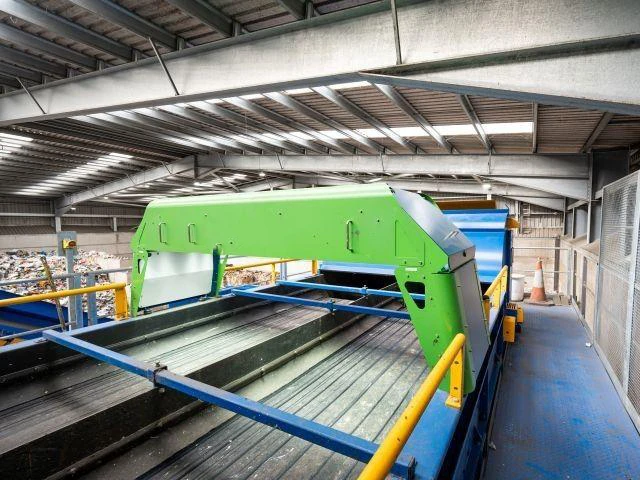
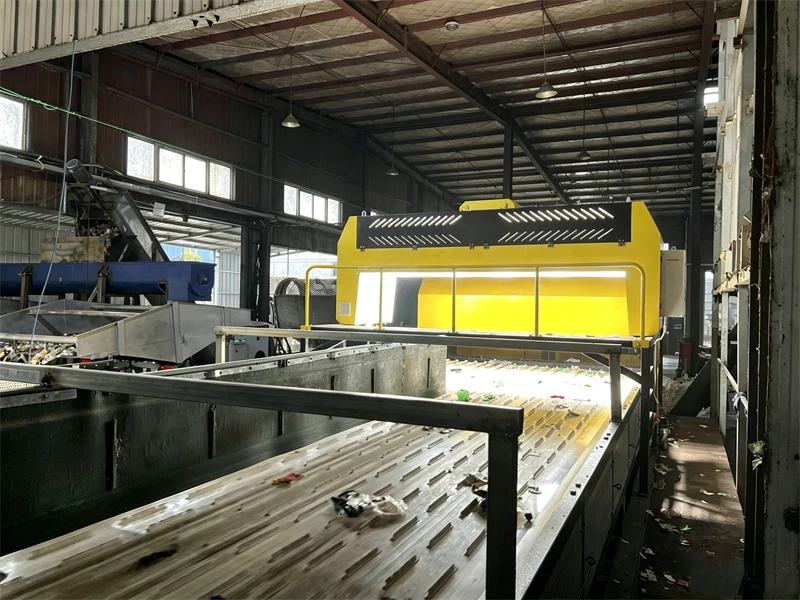
The AI Waste Sorting System Working Principle combines material presentation, sensor data acquisition, AI recognition, and automated separation. As waste moves along a conveyor, cameras or other configured sensors collect data, the AI model identifies target materials, and the control system directs the sorting mechanism. The actual configuration depends on the waste composition, sorting objectives, and required throughput.
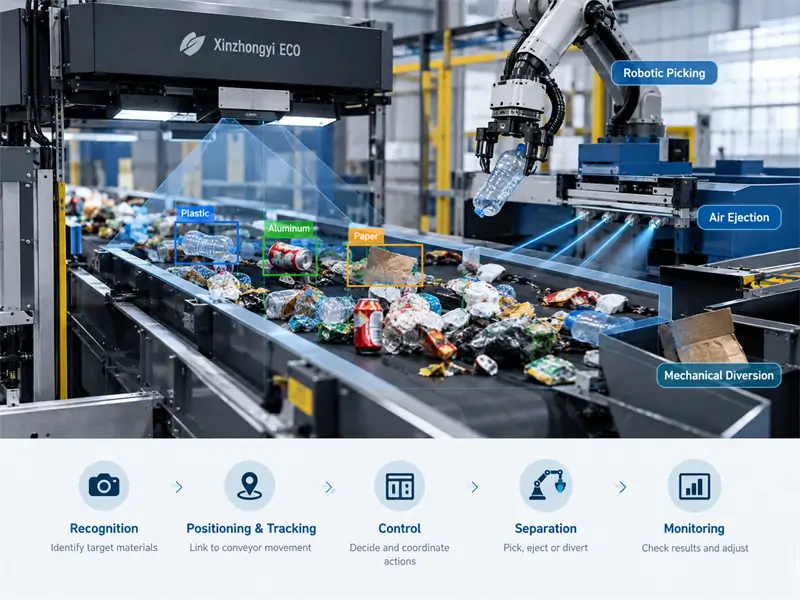
Recognition alone does not guarantee successful separation. Material overlap, conveyor speed, target tracking, and actuator response all affect the final result. A typical Automated Waste Sorting System follows four main stages.
How Does AI Recognize Different Waste Materials?
An AI Waste Recognition System uses machine vision and trained AI models to identify target materials from images or sensor data. Recognition depends on image quality, material condition, and the model’s ability to distinguish similar objects. Dirt, deformation, and overlapping items can obscure useful features in mixed waste streams.
Image Acquisition and Preprocessing
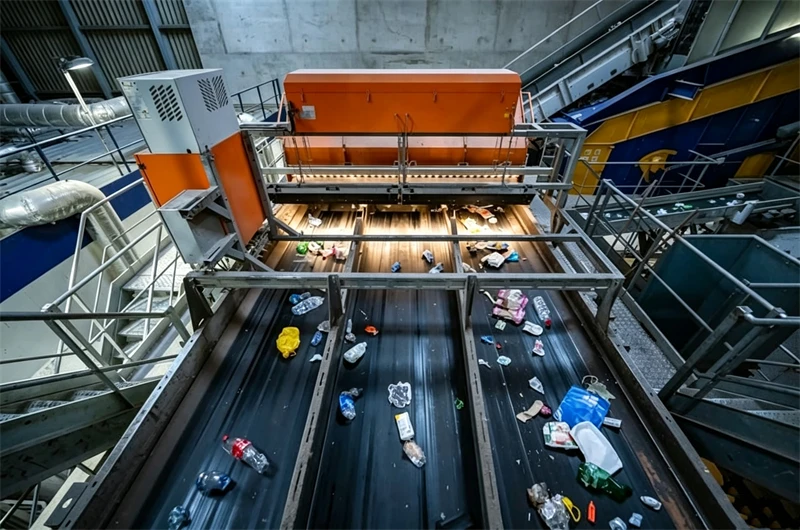
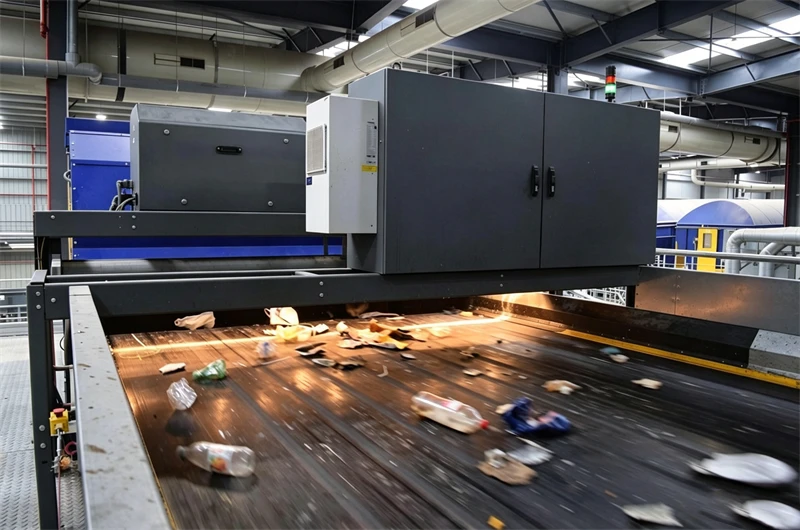
In Machine Vision for Waste Sorting, industrial cameras capture images as waste moves along a conveyor. Depending on the system, preprocessing may include image resizing, pixel normalization, or noise reduction. The specific steps depend on the camera and recognition model.
Lighting, exposure, camera angle, lens cleanliness, and material overlap affect image quality. Stable illumination and clear material presentation help capture useful details, while severe occlusion can prevent reliable identification.
Deep Learning and Visual Feature Extraction
Deep Learning for Waste Sorting allows models to learn visual patterns from labeled training images. Convolutional neural networks (CNNs), for example, extract features such as edges, textures, and shapes to distinguish target categories.
During training, model parameters are adjusted to reduce prediction errors. After deployment, the model applies these learned patterns to new images. Performance depends on whether the training data reflects actual plant conditions, including dirty, crushed, or unfamiliar items. The AI Waste Sorting Algorithm should therefore be tested against representative waste from the intended application.
Image Classification vs. Object Detection
Recognition methods differ in the information they provide.
| Method | Output | Role in sorting |
| Image classification | Category label | Classifies an image or individual item |
| Object detection | Category and location | Locates and classifies multiple items in one image |
| Object tracking | Position across successive frames | Helps coordinate sorting timing for moving items |
For example, object detection can locate a plastic bottle, cardboard piece, and metal can on the same conveyor. Tracking may follow their movement toward the sorting point, allowing the control system to coordinate the separation mechanism. Recognition and physical separation remain distinct steps.
Material Identification Beyond RGB Vision
RGB cameras use visible features such as color, shape, and texture. These features can distinguish many waste categories but may not reliably identify different plastic polymers with similar appearances.
NIR Waste Sorting adds near-infrared spectral information to help distinguish materials with different spectral responses. Its effectiveness depends on the material and sensor configuration; contamination and certain dark plastics can limit detection.
Additional sensors should be selected according to the sorting objective. In Sensor-Based Waste Sorting, the key is choosing technology that can distinguish the target materials under actual operating conditions.
How Does AI Turn Recognition Results into Sorting Actions?
AI recognition identifies target materials, but physical separation requires accurate positioning, control timing, and a suitable sorting mechanism. The system links each detection to the material’s movement along the conveyor, then determines when and how to remove the target. Actual results depend on the recognition output, conveyor conditions, and actuator performance.For metal recovery, [Eddy Current Separator vs Magnetic Separator Usage] explains how these two technologies differ and which materials each is designed to separate.
Target Localization and Conveyor Tracking
Waste Object Detection provides the target category and its location in an image. To sort moving items, the system must relate that position to the conveyor and estimate when the target will reach the separation point. Conveyor speed, equipment layout, overlapping items, and signal delays can all affect this estimate. If the target position is inaccurate or its movement is not tracked correctly, the actuator may miss the item or remove adjacent material.
Sorting Decisions and Industrial Control
The control system evaluates the detected category and position against predefined sorting rules and current equipment status. It then sends commands to the appropriate actuator. A PLC (programmable logic controller) typically manages machine sequences, actuator signals, and safety interlocks, while the AI model performs the configured recognition task. Their roles are different but connected: recognition identifies the target; industrial control determines and coordinates the required action. This is the practical basis of AI Waste Sorting Control.
Robotic Picking, Air Ejection and Mechanical Separation
The separation method must suit the target material and the operating conditions.
- Robotic picking: A robot and gripper pick selected items. Performance depends on target positioning, object shape, spacing, and whether the item can be gripped securely.
- Air ejection: Timed air jets divert selected items from the main stream. Nozzle placement, air pressure, conveyor speed, and spacing between items affect separation accuracy and air consumption.
- Mechanical diversion: Flaps, gates, or guide plates redirect materials into designated paths. These mechanisms are suitable when the material flow and separation points can be controlled.
These methods may be used separately or combined where the process requires it. Not every Automated Waste Sorting Equipment configuration uses the same actuators.
Performance Monitoring and Process Feedback
Operating records help identify missed picks, actuator faults, and changes in throughput, but the separated material must also be checked. Sampling can reveal whether target materials remain in the residual stream or unwanted materials enter the recovered fraction. These findings help operators adjust conveyor speed, actuator timing, or other process settings.
Changing the AI model is a separate task that may require new training data, validation, and controlled deployment. Routine monitoring does not necessarily mean the system supports online learning or automatic model updates. Final performance should be judged against the plant’s sorting objectives, not recognition accuracy alone.
Which AI Technologies Are Used in Waste Sorting Systems?
An AI Waste Sorting System combines several technologies to meet different material identification and separation requirements. The main options differ in their functions, operating limits, and integration requirements.
| Technology | Main Function | Selection Considerations |
| CNN and Deep Learning | Learn visual features and classify waste materials | Training data coverage and variations in actual waste conditions |
| Object Detection | Identify target categories and locate objects in images | Material overlap, object size, and detection speed |
| Machine Vision | Capture images for analysis by the recognition model | Lighting, camera position, image quality, and material presentation |
| NIR / Spectral Sensing | Help distinguish materials based on their spectral responses | Target material, contamination, and sensor detection limits |
| Robotics / Motion Control | Pick or redirect selected materials | Target positioning, item spacing, cycle time, and actuator capability |
| PLC / Industrial Control | Coordinate equipment sequences, actuator signals, and safety interlocks | Integration with the sorting line and existing control system |
For AI Waste Sorting Technology selection, the priority is matching each component to the target materials and sorting objectives. For example, Machine Vision for Waste Sorting may be sufficient for distinguishing visible object categories, while identifying certain plastic polymers may require NIR or another suitable sensing method. The selected AI Waste Sorting Algorithm and sorting mechanism should be validated using representative feed material under actual operating conditions.
What Factors Affect AI Waste Sorting Accuracy?
AI Waste Sorting Accuracy depends on waste conditions, image quality, training data, and mechanical performance. Laboratory test results may differ from actual sorting results because plant feed and operating conditions vary.
When evaluating Waste Sorting System Performance, distinguish recognition accuracy, sorting success rate, product purity, recovery rate, and throughput. These metrics measure different outcomes and should be compared using consistent definitions and test conditions.
Where Is AI Waste Sorting Used in Recycling Plants?
AI Waste Sorting in Recycling Plants helps identify target materials in different waste streams. The required configuration depends on material composition, sorting objectives, and processing conditions.
ขยะมูลฝอยชุมชน (MSW)
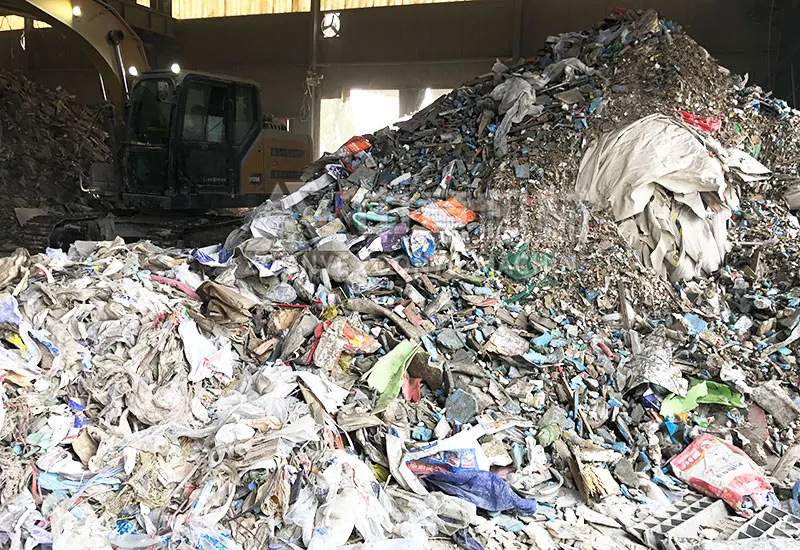
AI systems identify selected recyclables and unwanted materials in mixed municipal waste. Moisture, contamination, and overlapping items can affect recognition, making pretreatment and controlled feeding necessary in some applications.
Plastic and Packaging Waste
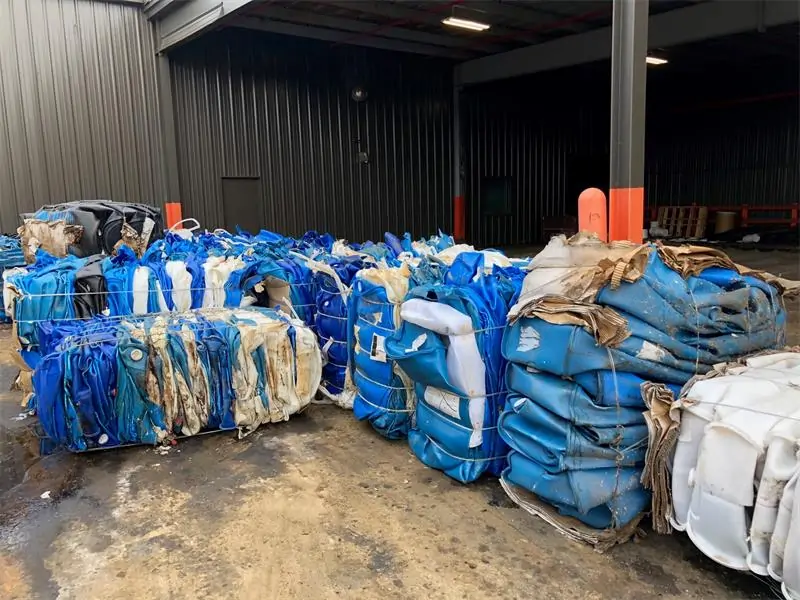
AI vision identifies packaging, plastic bottles, and other target items by their visible features. Distinguishing visually similar polymers may require NIR Waste Sorting or other suitable material-sensing technologies.
Construction and Demolition Waste
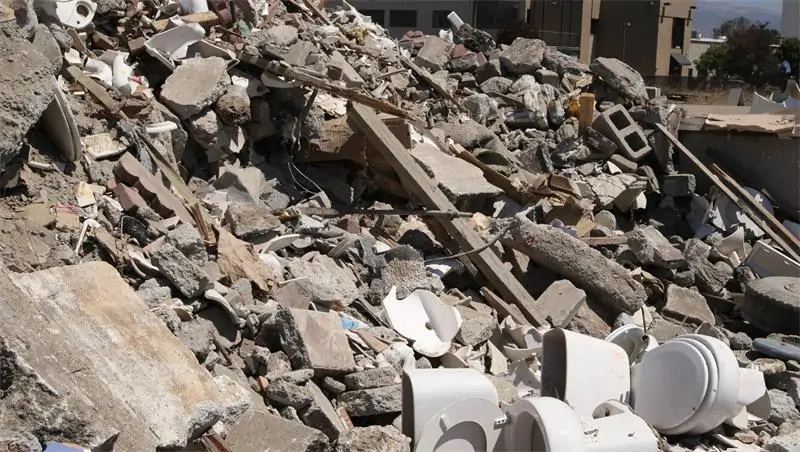
AI can help identify wood, concrete, and metal components in construction and demolition waste. Large objects, attached contaminants, and overlapping debris may require screening or size reduction before sorting.
RDF and Resource Recovery Applications
AI sorting can help recover combustible materials or remove unwanted items before refuse-derived fuel (RDF) production. It can work alongside screening, magnetic separation, and air separation, depending on feed composition and fuel specifications.
The appropriate AI Waste Sorting Equipment depends on the target materials, required throughput, and existing line layout. Read [High Precision AI Waste Sorting Machine Core Advantages] to understand the main factors affecting sorting performance.
How to Select an AI Waste Sorting System for Your Plant?
Effective AI Waste Sorting System Selection starts with the waste stream, sorting objectives, and required throughput. The right configuration depends on whether the plant needs to recover specific materials, remove contaminants, or improve product purity. Before choosing equipment, assess waste composition, moisture, particle size, and material overlap, as these conditions affect both recognition and physical separation.When comparing manual and automated sorting, read [Manual Sorting vs AI Automatic Waste Sorting System] to understand their differences in sorting efficiency, labor requirements, and operating conditions.
Define Sorting Objectives and Match the Equipment Configuration
Start by identifying the target materials and the required output quality. Visible-light cameras may be sufficient for distinguishing objects by their appearance, while separating visually similar plastic types may require near-infrared (NIR) or another suitable sensing technology. The sorting mechanism—such as robotic picking or air ejection—should match the target material’s size, shape, weight, and position on the conveyor.
Throughput must also be evaluated under actual feed conditions. Conveyor speed, material spacing, overlapping items, and actuator response all affect processing capacity. A model’s image-processing speed alone does not indicate how much waste the complete system can sort. Testing representative feed material helps confirm whether the proposed configuration can meet the plant’s capacity and separation requirements.
Verify Performance, Integration, and Maintenance Requirements
Before purchasing AI Waste Sorting Equipment, ask the supplier to evaluate the system using representative waste from your plant. Review recognition accuracy alongside sorting success rate, product purity, recovery rate, and throughput. These metrics measure different results, so the supplier should explain the test conditions, calculation methods, and sampling procedures. High recognition accuracy alone does not guarantee effective material recovery.
The equipment must also fit the existing process flow, conveyor layout, electrical controls, and available installation space. For retrofit projects, check interface compatibility and potential installation downtime. Confirm maintenance access, spare parts availability, operator training, and technical support before making a decision. When comparing an AI Waste Sorting System Manufacturer, look for relevant application experience, clear performance test results, and a configuration designed around your feed material—not just claims about the AI model or algorithm.
Prepare these details before requesting a quotation:
- Waste type and material composition
- Required throughput and feed characteristics
- Target materials and required output quality
- Existing process flow and installation space
- Preferred sorting method and maintenance requirements
The final selection should be based on actual feed conditions, separation targets, and site requirements. A supplier’s proposed configuration and test results provide a more useful basis for comparison than model names or general performance claims alone.
Installation, Commissioning and Technical Support
System Design and Integration
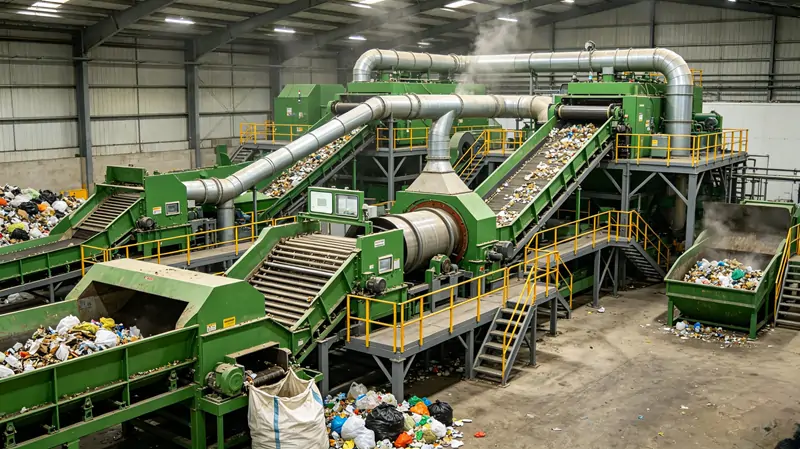
Proper AI Waste Sorting System Installation begins with assessing the waste composition, required throughput, target materials, and site layout. Xinzhongyi ECO uses these details to determine the equipment configuration and coordinate conveyor connections, electrical controls, and interfaces with upstream and downstream equipment.
Commissioning and Performance Verification
After installation, the system is tested with the agreed feed material under the specified operating conditions. Testing covers material recognition, sorting actions, control timing, and the quality of the separated output. If results do not meet the agreed targets, relevant settings can be adjusted and tested again.
Maintenance and Technical Support
Technical support may include operator training, routine maintenance guidance, troubleshooting, and spare parts planning. Remote or on-site assistance can be arranged within the agreed project scope. For effective Waste Sorting System Integration, maintenance access and spare parts requirements should be considered during system planning, rather than left until equipment problems arise.
บทสรุป
The AI Waste Sorting System Working Principle combines AI-based material recognition, sensor input, target positioning, control signals, and mechanical separation. Actual sorting performance depends on the waste characteristics, material presentation, equipment configuration, and separation mechanism—not recognition accuracy alone.
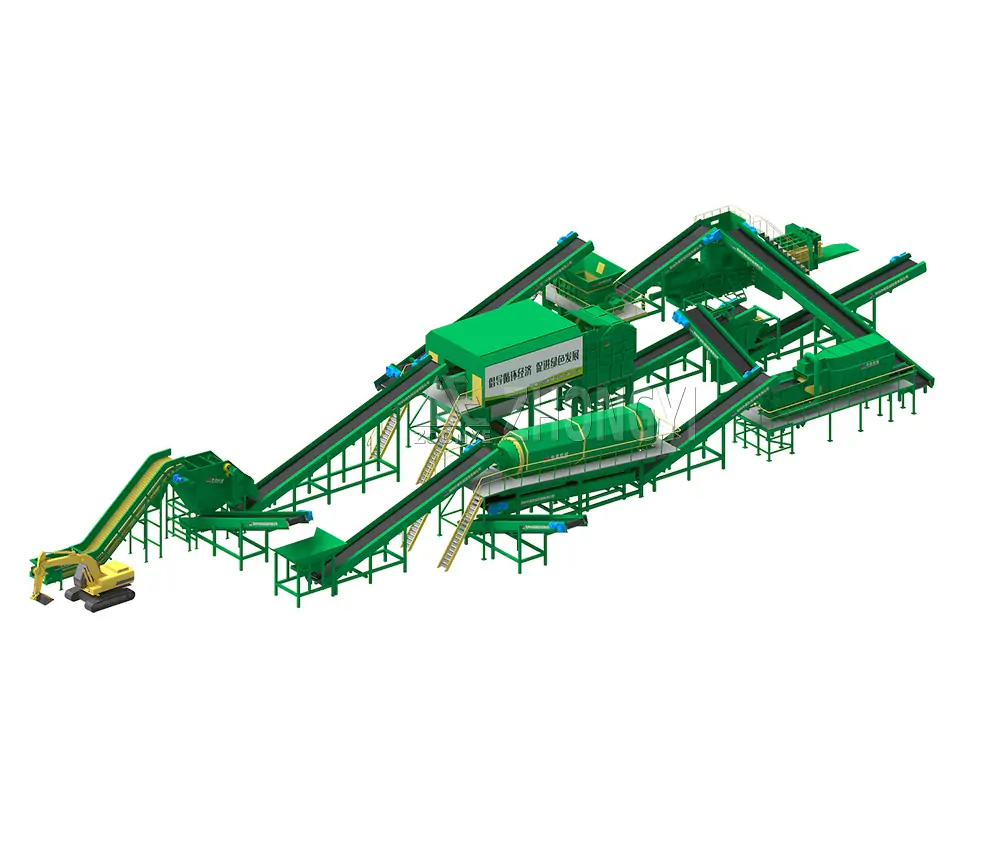
Xinzhongyi ECO provides AI Waste Sorting Equipment and sorting line integration based on feed composition, required throughput, and target materials. Contact Xinzhongyi ECO to discuss your waste composition, sorting targets, and AI waste sorting system requirements.


Andy Yu
Technical Engineer | Zhongyi ECO
16+
Years Exp.
300+
โซลูชัน
50+
Countries
16 years’ experience in environmental and solid waste management, specializing in C&D recycling and waste sorting solutions. At Zhongyi Mining Machinery, focused on improving global clients’ efficiency through technical expertise and tailored configurations.
คำถามที่พบบ่อย
ระบบคัดแยกขยะ AI ใช้กล้องหรือเซ็นเซอร์ที่กำหนดค่าไว้อื่นๆ เพื่อรวบรวมข้อมูลเกี่ยวกับวัสดุขยะ โมเดล AI จะระบุรายการเป้าหมาย และระบบควบคุมจะประสานตำแหน่งและจังหวะเวลาการคัดแยกของรายการเหล่านั้น จากนั้นแขนกลหยิบ อุปกรณ์เป่าลม หรือกลไกการแยกอื่นๆ จะนำวัสดุที่เลือกออก ผลลัพธ์สุดท้ายขึ้นอยู่กับการจัดวางวัสดุ ประสิทธิภาพการจดจำ จังหวะเวลาการควบคุม และขีดความสามารถของกลไกการคัดแยกที่ติดตั้งไว้.
AI ระบบคัดแยกขยะสามารถกำหนดค่าได้สำหรับขยะมูลฝอยชุมชน (MSW) บรรจุภัณฑ์พลาสติก ขยะก่อสร้างและรื้อถอน และวัสดุคัดสรรที่ใช้ในการผลิตเชื้อเพลิงจากขยะ (RDF) อย่างไรก็ตาม ไม่ใช่ทุกการกำหนดค่าที่เหมาะกับทุกสายธารขยะ ขนาดวัสดุ ความชื้น การปนเปื้อน และการทับซ้อนส่งผลต่อประสิทธิภาพการคัดแยก บางการใช้งานจำเป็นต้องมีการเปิดถุง การคัดกรอง หรือการปรับสภาพเบื้องต้นอื่นๆ ก่อนที่วัสดุจะเข้าสู่ขั้นตอนการคัดแยก AI.
การคัดแยกด้วยระบบวิชัน AI โดยทั่วไปจะระบุวัสดุโดยใช้ลักษณะที่มองเห็นได้ เช่น สี รูปร่าง และพื้นผิว การคัดแยกด้วยระบบอินฟราเรดใกล้ (NIR) ใช้การตอบสนองทางสเปกตรัมเพื่อช่วยแยกแยะวัสดุบางชนิดที่มีลักษณะคล้ายกัน รวมถึงพอลิเมอร์พลาสติกบางประเภท เทคโนโลยีเหล่านี้มีวัตถุประสงค์ที่แตกต่างกันและอาจใช้ร่วมกันเมื่อจำเป็น การเลือกใช้ขึ้นอยู่กับวัสดุเป้าหมาย ระดับการปนเปื้อน ข้อจำกัดของเซ็นเซอร์ และผลลัพธ์การแยกที่ต้องการ.
No. Recognition accuracy measures how well the model identifies target materials, but it does not show whether those materials are successfully separated. Overlapping items, inaccurate positioning, conveyor speed, and actuator response can all affect the result. Buyers should also assess sorting success rate, product purity, recovery rate, and throughput using clearly defined test methods and representative feed material.
Start with the plant’s required throughput in tonnes per hour and assess the actual feed conditions. Waste composition, bulk density, particle size, moisture, and material overlap can all affect processing capacity. The sorting line must also provide enough time and space for recognition and physical separation. Ask the supplier to confirm the proposed capacity against representative feed material rather than relying on image-processing speed alone.
Define the target materials, required output quality, and processing capacity before selecting equipment. Then determine whether visible-light cameras, NIR sensors, or other sensing technologies are suitable, and match the sorting mechanism to the material characteristics. Existing conveyors, available space, electrical interfaces, and maintenance access also matter. Testing representative feed material can help verify the configuration before purchase.
Yes, provided the existing process and site layout are compatible with the proposed equipment. Integration planning should cover conveyor connections, material flow, electrical controls, discharge points, and available installation space. Some lines may need modifications to improve material presentation or accommodate the sorting mechanism. Confirming these requirements before installation helps reduce unexpected changes, commissioning difficulties, and production downtime.
Routine maintenance may include cleaning cameras and sensor surfaces, checking conveyors and actuators, inspecting air-ejection components where fitted, and verifying control signals. Maintenance frequency depends on waste conditions and operating hours. Buyers should also confirm spare parts availability, operator training, troubleshooting procedures, and the scope of remote or on-site support. These requirements should be clarified with the supplier before purchase.