












Aperçu du projet
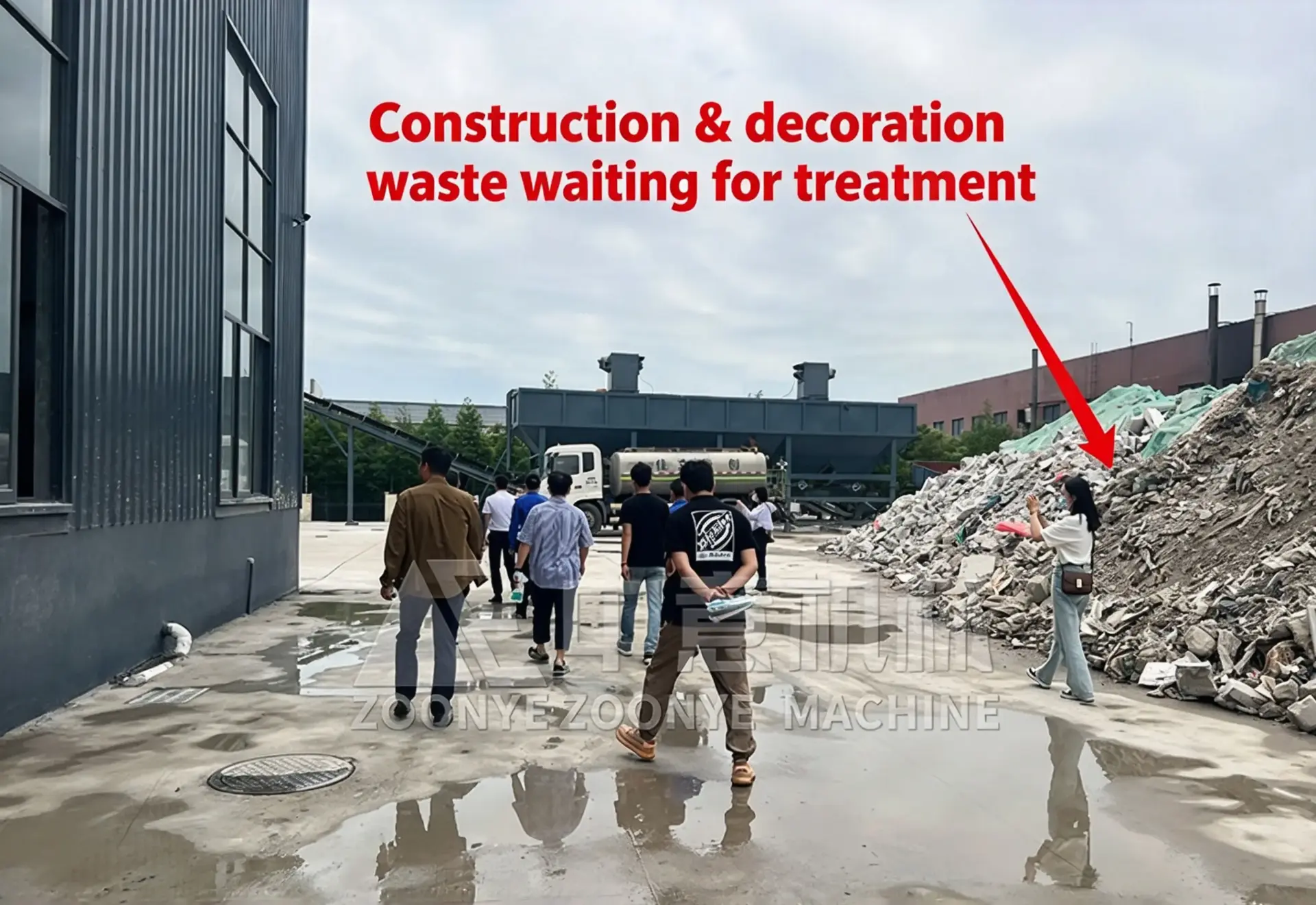
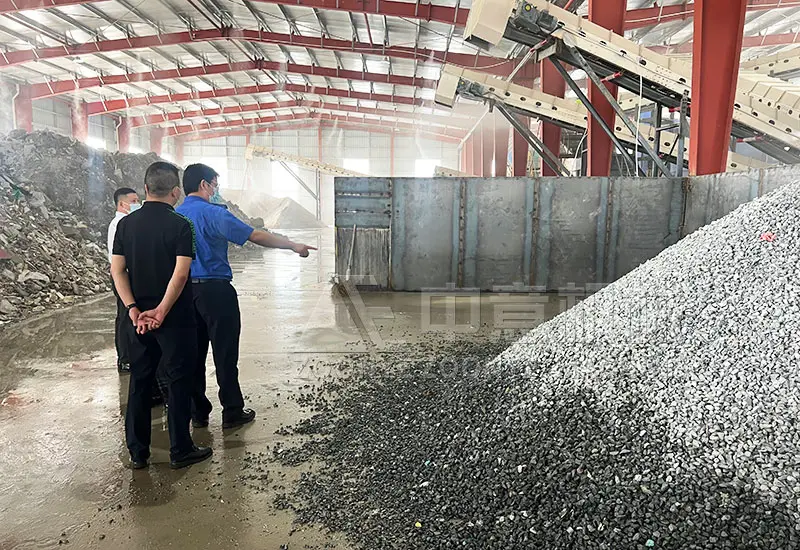
Located in Longwan, Wenzhou, Zhejiang Province, this construction and renovation waste recycling project was designed to process mixed waste from building demolition, renovation, and partially aged landfill materials. The incoming materials included brick and concrete, mortar-rich soil, gypsum, wood, plastic film, packaging materials, and ferrous metal. Their varying sizes, densities, and physical properties required multiple stages of crushing, screening, and separation.
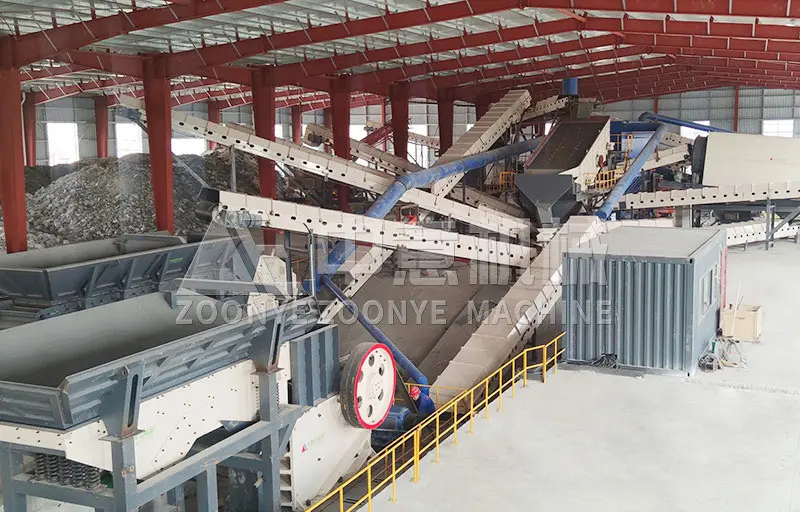
Xinzhongyi ECO configured a recycling line with a designed processing capacity of 150–200 TPH and an annual handling capacity of approximately 400,000 m³. The system combines three-stage crushing, three-stage screening, and three-stage air separation to recover mineral aggregates, fine soil and sand, ferrous metals, and lightweight combustible materials. The production line is installed in an enclosed steel workshop, with conveying and dust-control equipment integrated into the process.
150–200 TPH
Capacité de traitement
Wenzhou, Zhejiang, China
Localisation du projet
400,000 m³/year
Annual Handling Capacity
Exigences du client et défis du projet
Exigences du client
The customer needed a continuous processing line capable of handling mixed construction and renovation waste with different material sizes and compositions. The main objective was to separate reusable mineral materials from soil, metals, and lightweight combustible fractions, producing several material streams for different downstream applications.
The project also required a coordinated crushing and screening process, effective removal of lightweight impurities, and dust-control measures suitable for an enclosed steel workshop. The equipment layout had to support continuous material transfer, equipment inspection, and routine maintenance.
Défis du projet
- Complex Incoming Materials: The feed contained concrete, bricks, mortar-rich soil, gypsum, wood, plastic film, and packaging materials. Differences in size, density, and shape made single-stage separation insufficient.
- Flexible and Entangled Impurities: Plastic film, packaging, and other lightweight materials could become entangled with mineral materials, making downstream separation more difficult.
- Multiple Product Requirements: The customer needed several recovered fractions, including graded recycled aggregates, fine soil and sand, ferrous metal, and lightweight combustible materials.
- Dust and Environmental Control: Crushing, screening, and material transfer could generate dust, requiring coordinated collection and suppression throughout the workshop.
- Continuous Process Coordination: Multiple crushing, screening, and air-separation stages needed to work together to maintain material flow and reduce the carryover of unwanted fractions.
Xinzhongyi ECO Construction Waste Recycling Solution
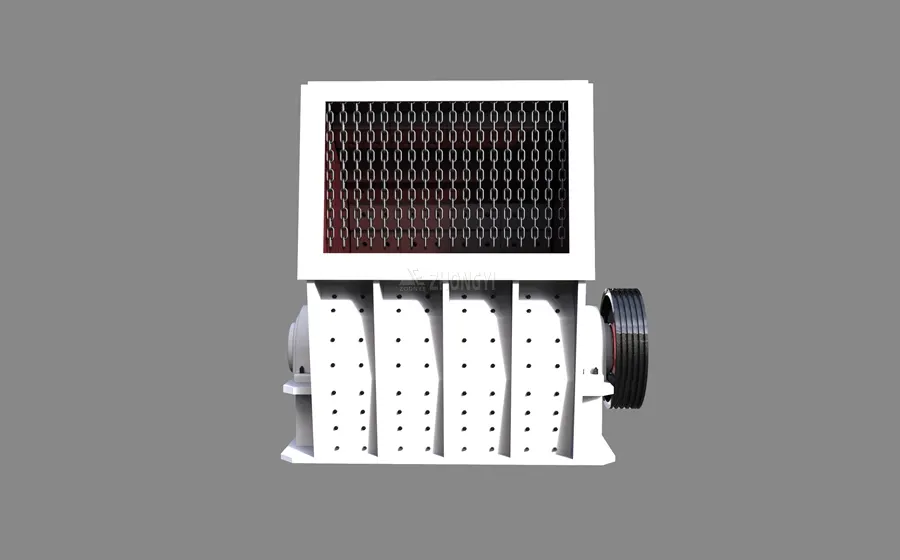
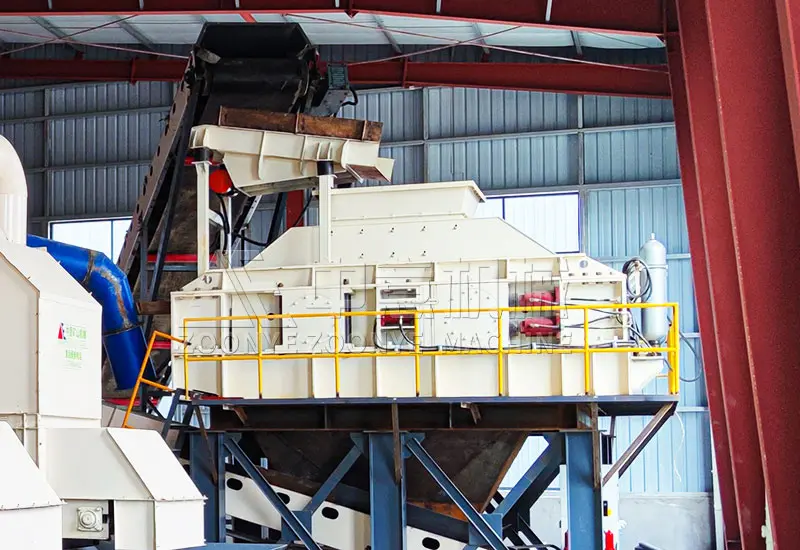
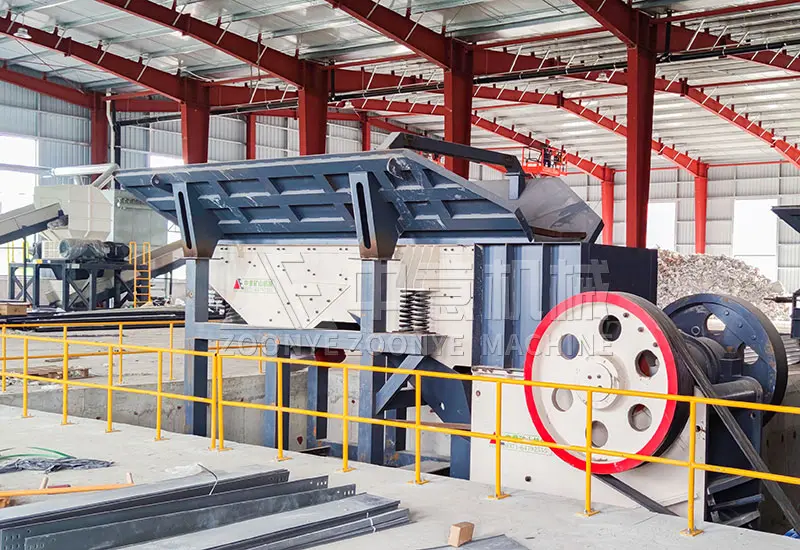
For the Wenzhou project, Xinzhongyi ECO configured a multi-stage recycling line based on the incoming waste composition, processing capacity, and recovered-material requirements. The system combines three-stage crushing with a jaw crusher, impact crusher, and double roller crusher to reduce mixed construction waste for subsequent separation.
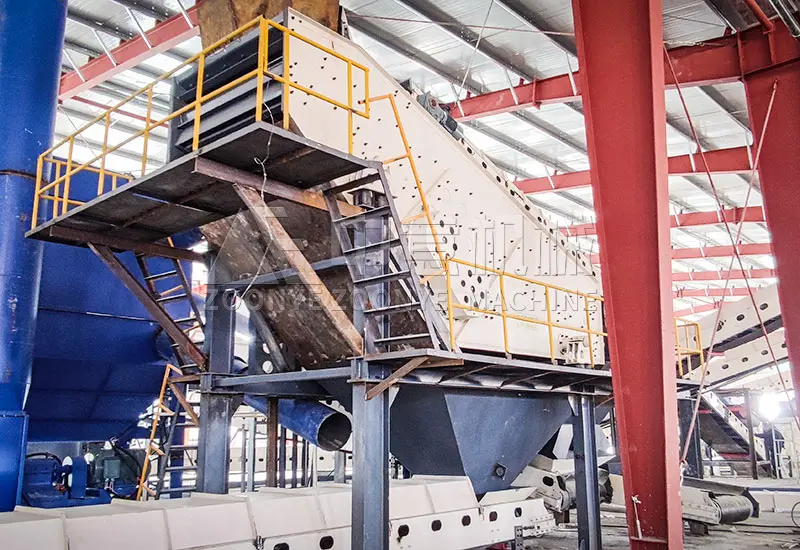
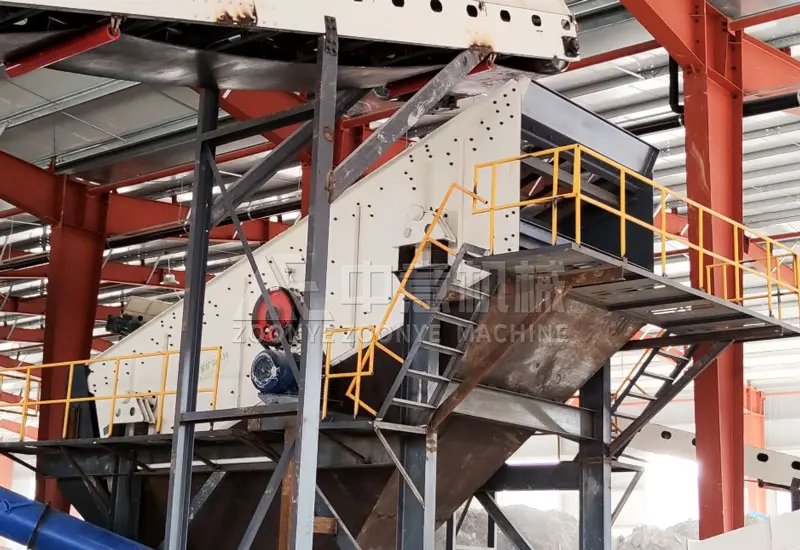
The crushed materials pass through a bar screen, rotary trommel screen, and circular vibrating screen for size classification. Multiple overband magnetic separators recover ferrous metals, while three comprehensive air separators separate lightweight materials such as plastic film, wood, and packaging from the mineral fractions.
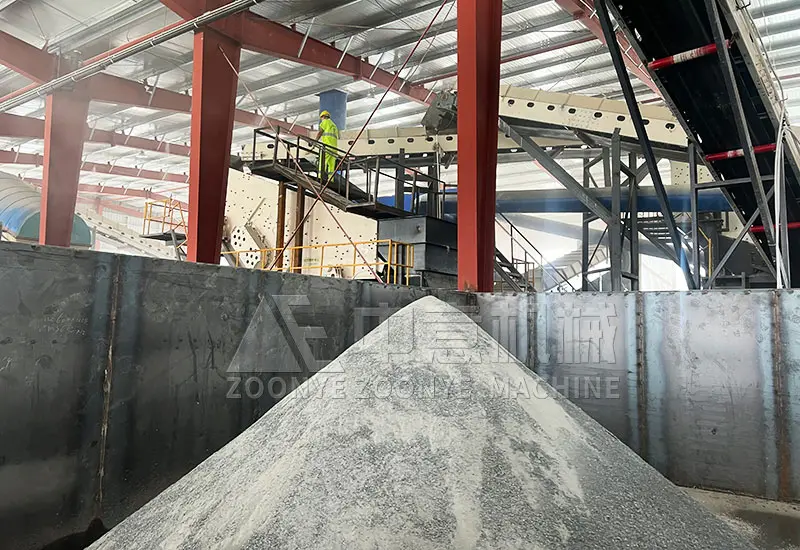
The recovered materials are sorted into graded recycled aggregates for road base and stabilized layers, fine soil and sand for backfilling, ferrous metals for recycling, and lightweight combustibles for potential use as alternative fuel. Covered conveyors, a pulse baghouse dust collector, and atomizing spray equipment are integrated to control dust during material processing and transfer.
Configuration principale des équipements
- Alimentateur vibrant : Receives and distributes incoming construction and renovation waste to the feeding section.
- Light-Duty Apron Feeder: Provides controlled material transfer and helps maintain a steady feed to the crushing equipment.
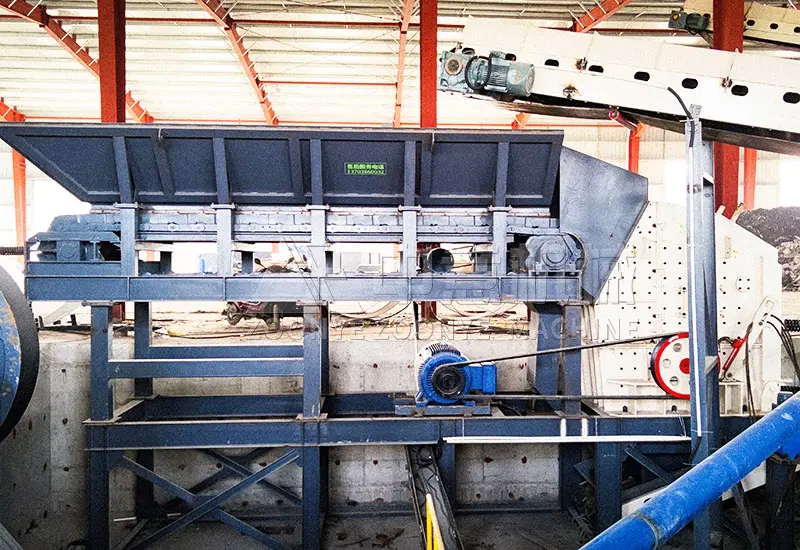
- Concasseur à mâchoires: Performs primary size reduction of large concrete and brick materials.
- Concasseur à percussion: Further reduces crushed materials to meet downstream screening requirements.
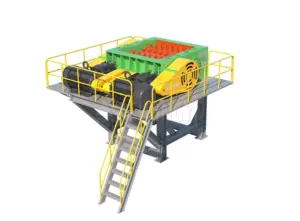
- Double Roller Crusher: Provides a further crushing stage to control material size before classification.
- Bar Screen: Performs initial screening and separates materials according to size.
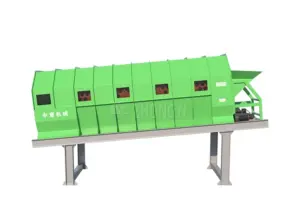
- Crible trommel rotatif: Classifies mixed materials through a rotating screening process.
- Circular Vibrating Screen: Provides further particle-size classification for the recovered mineral fractions.
- Overband Magnetic Separators: Remove ferrous metals from the material flow at multiple processing points.
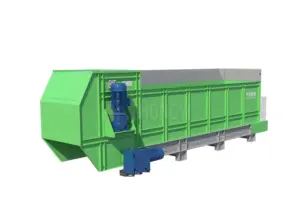
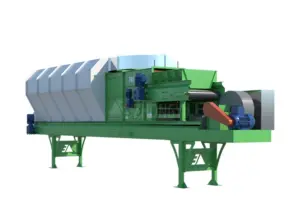
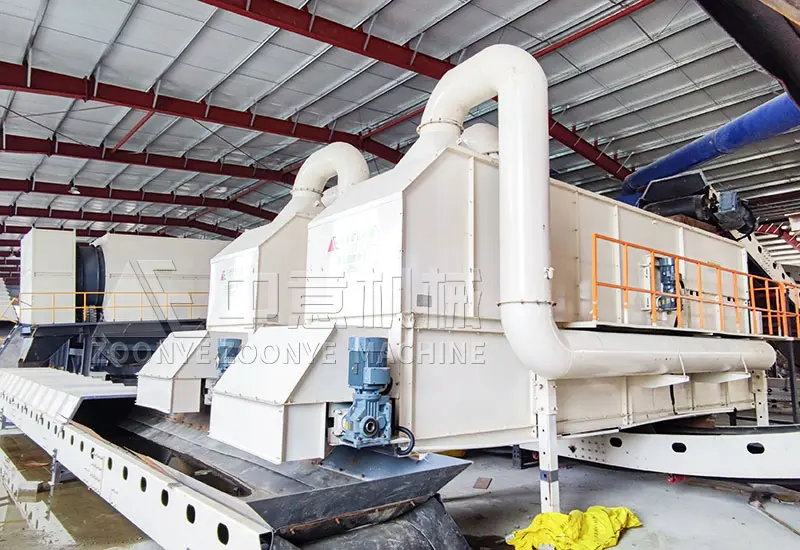
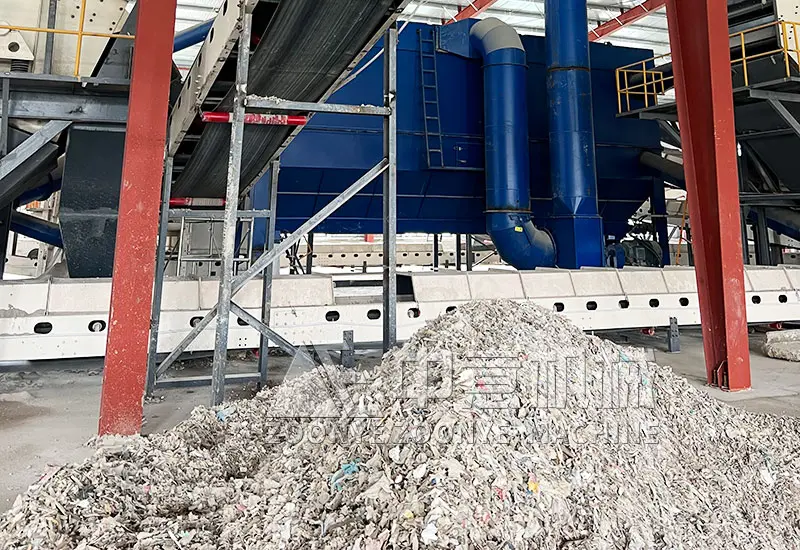
- Comprehensive Air Separators: Separate lightweight fractions, including plastic film, wood, and packaging materials, from heavier mineral materials.
- Covered Belt Conveyors: Transfer materials between processing stages while limiting dust dispersion.
- Pulse Baghouse Dust Collector and Atomizing Spray System: Collect and suppress dust generated during crushing, screening, and conveying.
Procédé de recyclage des déchets de construction et de rénovation
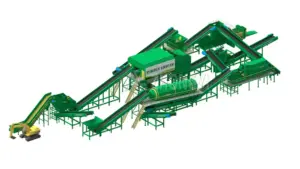
The incoming waste is first transferred by a vibrating feeder and light-duty apron feeder to the jaw crusher for primary crushing. It then passes through an impact crusher and double roller crusher for further size reduction. The crushed material is classified through three screening stages: bar screening, rotary trommel screening, and circular vibrating screening, separating fine soil and sand from larger mineral fractions.
The screened materials enter the separation section, where multiple overband magnetic separators recover ferrous metals such as steel and iron fragments. Three comprehensive air separators then remove lightweight materials, including plastic film, wood, and packaging. The final streams include graded recycled aggregates, fine soil and sand, ferrous metals, and lightweight combustible materials, which are directed to their respective recovery and utilization processes.
Galerie
Avantages du procédé et de l'exploitation
The production line uses a staged equipment arrangement to coordinate crushing, screening, magnetic separation, and air separation. Each processing stage handles a specific material-size or separation requirement, reducing the burden on individual machines and allowing different recovered fractions to be collected separately.
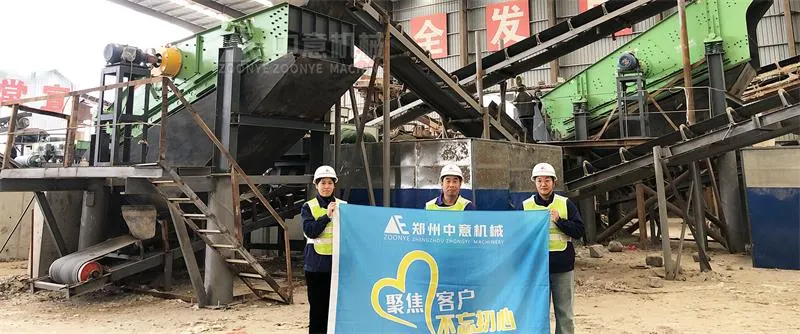
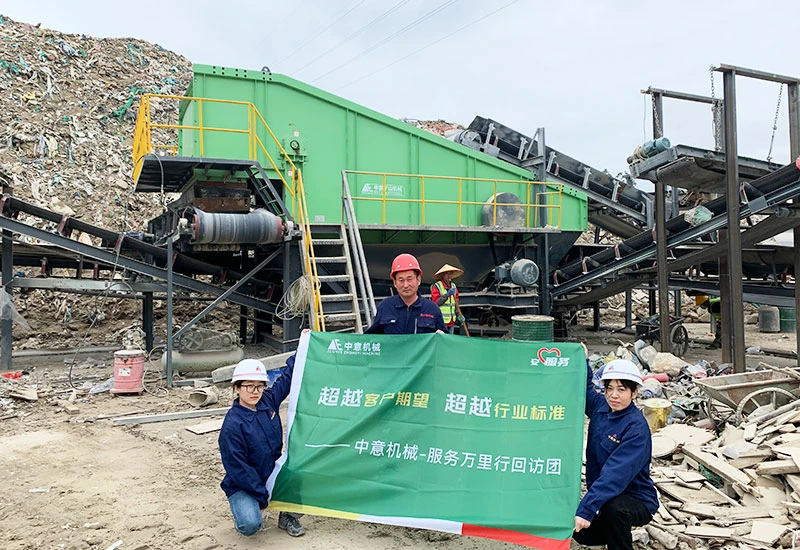
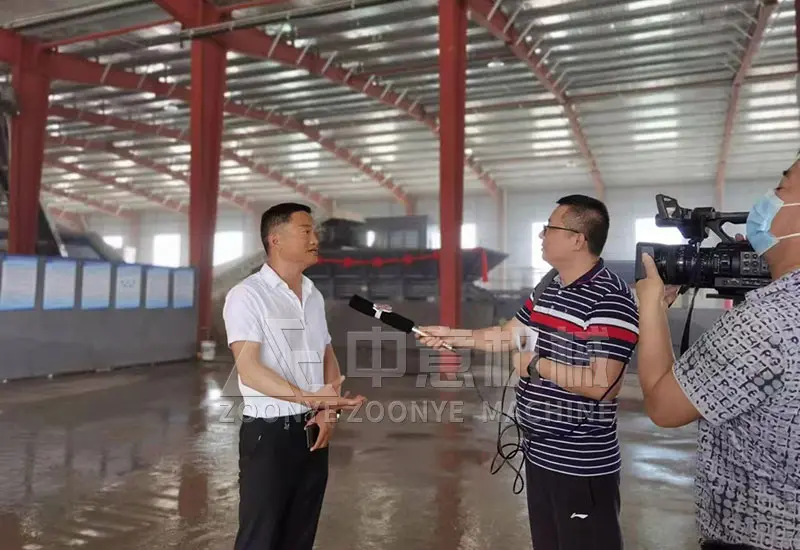
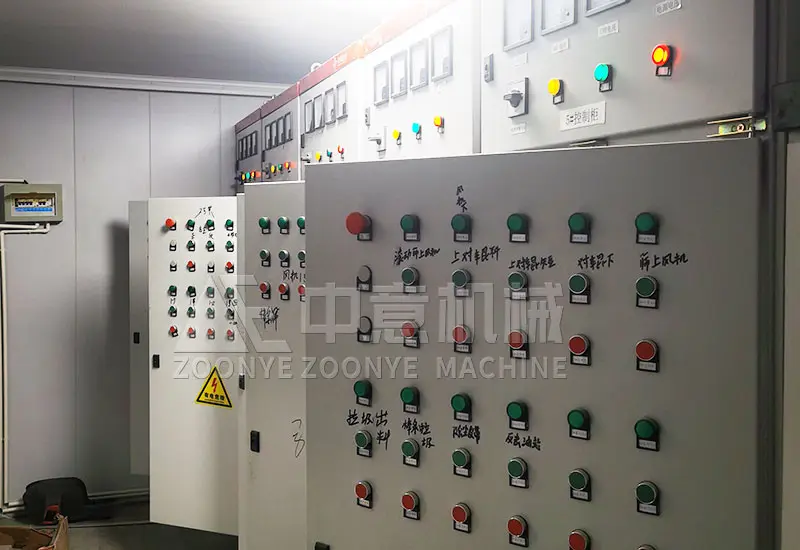
During installation, the equipment was positioned and connected according to the planned process layout inside the steel workshop. Xinzhongyi ECO engineers provided on-site technical guidance for equipment installation, alignment, and process connections. During commissioning, the team checked material feeding, crushing performance, screening conditions, magnetic separation, air separation, and conveying between stages.
The operating conditions were adjusted according to the actual material flow. Dust-collection and spray equipment were also checked during trial operation. This process helped coordinate the equipment stages before the line was handed over for production.
Résultats du projet
The Wenzhou construction and renovation waste recycling line was configured for a designed processing capacity of 150–200 TPH and an annual handling capacity of approximately 400,000 m³. Through three-stage crushing, screening, magnetic separation, and air separation, the system separates mixed waste into several material streams for different recovery routes.
Recovered mineral aggregates can be used in road base and stabilized-layer applications, while fine soil and sand are available for backfilling. Ferrous metals are collected for metal recycling, and lightweight combustible materials can be directed to power plants as alternative fuel when they meet the required specifications. The enclosed workshop, covered conveyors, pulse baghouse dust collector, and atomizing spray system are incorporated to address dust-control requirements during operation.
Retour du client
“The recycling line handles our mixed construction and renovation waste through several processing stages. The equipment configuration meets our material sorting requirements, and the on-site commissioning and operator training helped us get the production line running smoothly.”
Pourquoi choisir Xinzhongyi ECO pour le recyclage des déchets de construction et de rénovation ?
16+
Années d'expérience
100+
Projets mondiaux
Xinzhongyi ECO designs construction waste recycling lines around actual material composition, processing capacity, site layout, and recovered-product requirements. From process planning and equipment configuration to installation guidance, commissioning, operator training, and after-sales support, our engineering team works with customers to coordinate each processing stage and adapt the line to site operating conditions.
Planifiez votre ligne de recyclage des déchets de construction et de rénovation
Planning a construction and renovation waste recycling project? Share your incoming material composition, required processing capacity, site layout, and target recovered products with Xinzhongyi ECO. Our engineering team can assess the material characteristics and develop a suitable combination of crushing, screening, magnetic separation, air separation, conveying, and dust-control equipment.
Obtenir un devis gratuit