












Introducción
Recovering aluminum, copper, and other non-ferrous metals from mixed waste requires separating valuable metals from plastics, glass, and other residues. The eddy current separator working principle is based on electromagnetic induction. As mixed material passes over a rotating magnetic rotor, the changing magnetic field induces eddy currents in conductive metal particles. The resulting electromagnetic force changes their discharge trajectories, allowing them to separate from non-metallic materials.
In an actual waste sorting line, separation performance depends on more than the magnetic rotor alone. Particle size, feed distribution, rotor configuration, and splitter position all affect metal recovery and the amount of residue in the recovered fraction. Understanding how the separator is structured, how materials move through the machine, and which operating conditions influence the results helps buyers evaluate its suitability for different waste streams and determine what to consider when configuring a sorting line.


What Is an Eddy Current Separator?
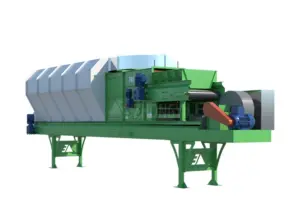
An eddy current separator (ECS), also known as a non-ferrous metal separator, is a recycling machine designed to recover conductive non-ferrous metals, particularly aluminum and copper, from mixed waste streams. It separates these metals from non-metallic materials such as plastics, glass, and rubber, allowing valuable metals to be recovered for further processing.
Unlike conventional magnetic separation, which is primarily used to remove ferrous metals such as iron and steel, an eddy current separator targets conductive non-ferrous metals that are not readily recovered by ordinary magnetic separation. The recovered metal fraction may still contain different metal types, so additional sorting may be required when individual metal grades are needed.
Principio de funcionamiento del separador de corrientes de Foucault
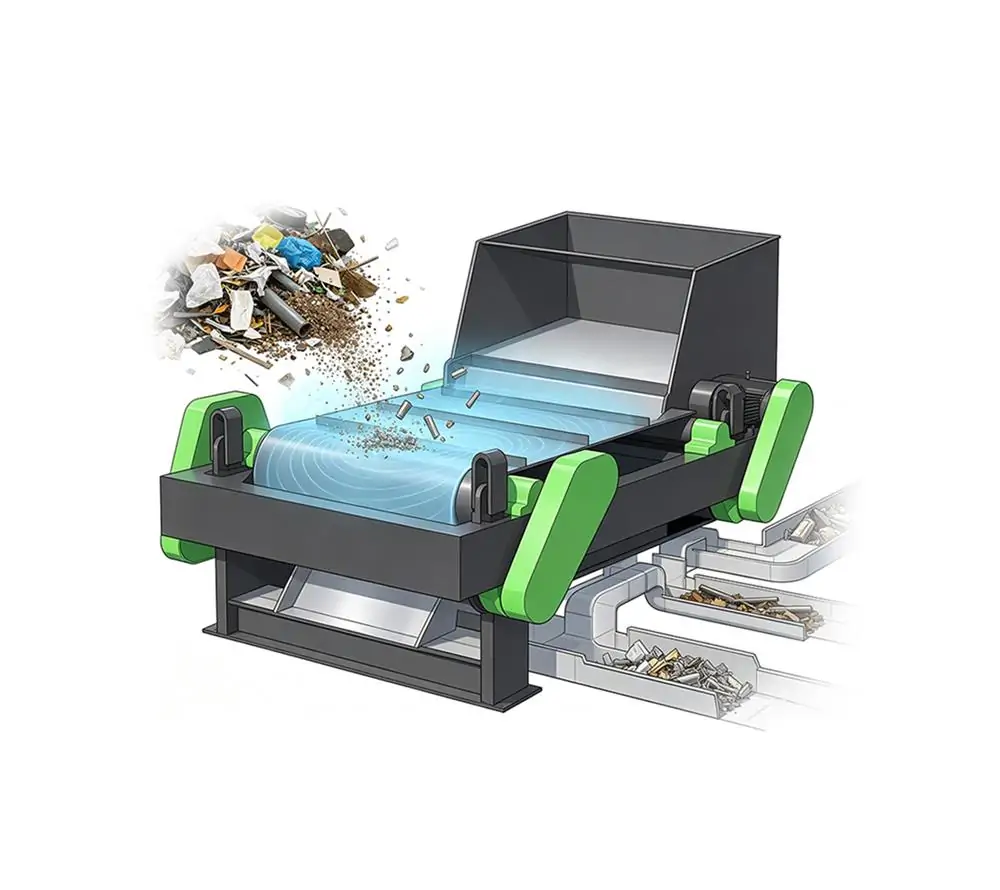
An eddy current separator separates conductive non-ferrous metals from other materials by changing their discharge trajectories. The separation process relies on a rotating magnetic rotor, which generates a changing magnetic field as material passes through the sorting zone.
How the Magnetic Rotor Generates Eddy Currents
As the rotor’s alternating magnetic poles rotate, conductive particles such as aluminum and copper pass through a changing magnetic field. This induces circulating electrical currents, known as eddy currents, inside the metal. The interaction between these currents and the magnetic field generates a force that deflects the particles from their normal discharge path.
Why Metals and Non-Metals Separate
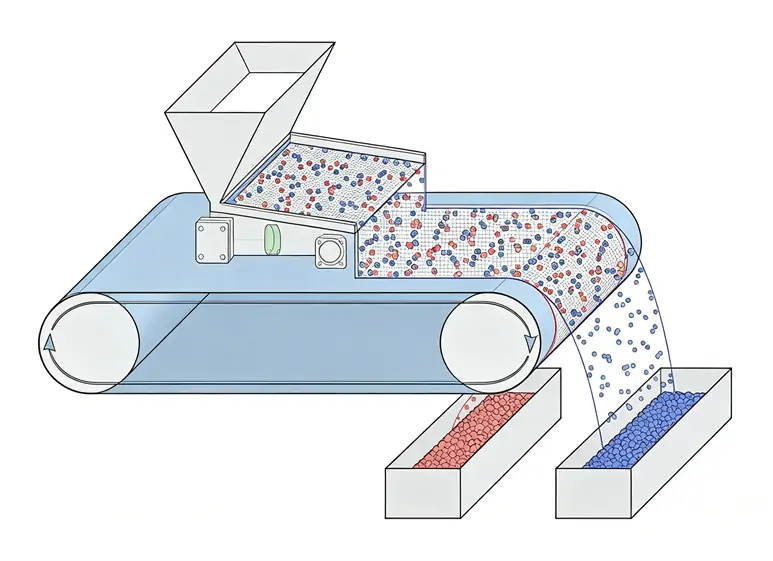
Plastic, glass, and rubber generally have much lower electrical conductivity than metals, so they experience far less electromagnetic deflection. As the materials leave the conveyor belt, they follow different trajectories. A splitter plate positioned at the discharge point directs the recovered metal and non-metallic residue into separate outlets.
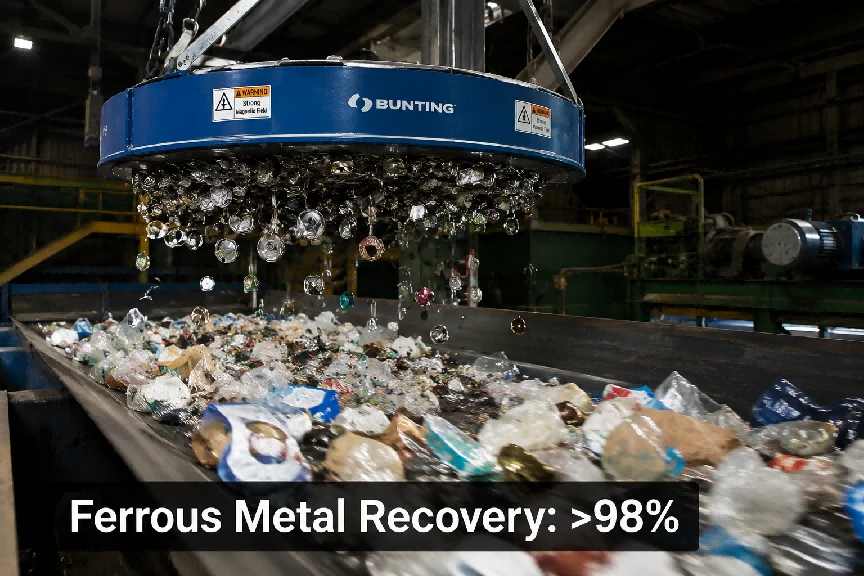
Separation performance also depends on how the material is fed into the machine. An even feed layer helps reduce particle overlap, while an upstream separador magnético is generally used to remove iron and steel before the material reaches the eddy current separator.
For technical background on the rotating magnetic rotor and induced repelling forces, see Eriez’s eddy current separator operating manual.
How Does an Eddy Current Separator Work Step by Step?
An eddy current separator recovers non-ferrous metals through three stages: feed preparation, electromagnetic deflection, and discharge separation.
What Factors Affect Eddy Current Separation Efficiency?
The same separation principle can produce different results across feed materials and operating conditions. Eddy current separation efficiency depends on metal properties, particle size and shape, rotor settings, and how consistently material enters the separation zone. These factors affect both non-ferrous metal recovery and product purity, so missed metals or contaminated output should not automatically be attributed to the magnetic rotor alone.
Electrical Conductivity, Density, and Metal Type
Electrical conductivity affects the eddy currents induced in a metal, while density influences how readily electromagnetic force changes its trajectory. Under comparable conditions, aluminum is generally easier to eject than copper because of its combination of conductivity and lower density.
The conductivity-to-density ratio, σ/ρ, helps compare material separation tendencies, but it cannot predict every operating result. Particle size, shape, and rotor configuration also matter. An eddy current separator may recover a mixed non-ferrous metal fraction without separating aluminum, copper, and brass into individual grades. Additional sorting may be required when metal-specific purity is the target.
Particle Size, Shape, and Liberation
Particle size and shape affect how metal pieces respond to the magnetic field and how far they travel after leaving the belt. Very small fragments may be harder to recover cleanly, while thin foil, wire, and irregular pieces can follow different trajectories from compact particles. The suitable size range depends on the separator design and feed material; smaller particles do not always produce poorer results.
Liberation matters as well. Metal attached to plastic, rubber, or other waste may enter the wrong discharge stream. Screening and suitable size reduction can improve separation conditions, but excessive shredding may create more fines that are difficult to recover.
Rotor Speed, Pole Configuration, and Belt Speed
Rotor speed and magnetic pole configuration affect the changing magnetic field, while belt speed influences how material moves through the separation zone and leaves the conveyor. These settings interact, so increasing rotor speed alone does not guarantee better recovery.
Adjust rotor and belt speeds based on tests with representative feed material. Evaluate metal recovery, recovered-product purity, and throughput together. An adjustment that improves one result but significantly reduces another may not suit the plant’s operating requirements.
Feed Rate and Material Distribution
An excessive feed rate or thick, uneven material layer increases particle overlap and collisions. Small metal pieces may be obscured by other materials or follow altered discharge paths, increasing metal loss or contamination in the recovered fraction. Consistent feeding and even distribution across the belt help produce more predictable separation.
Wet, sticky materials can clump together or adhere to the conveyor, making uniform feeding more difficult. If results fluctuate, check feed consistency, moisture, and layer thickness first. Then adjust rotor speed, belt speed, and splitter position systematically, using recovery and purity measurements to confirm whether the changes improve performance.
For background on conductivity, density, particle shape and feed conditions, see Bunting’s explanation of eddy current separation variables.
What Materials Can an Eddy Current Separator Separate?
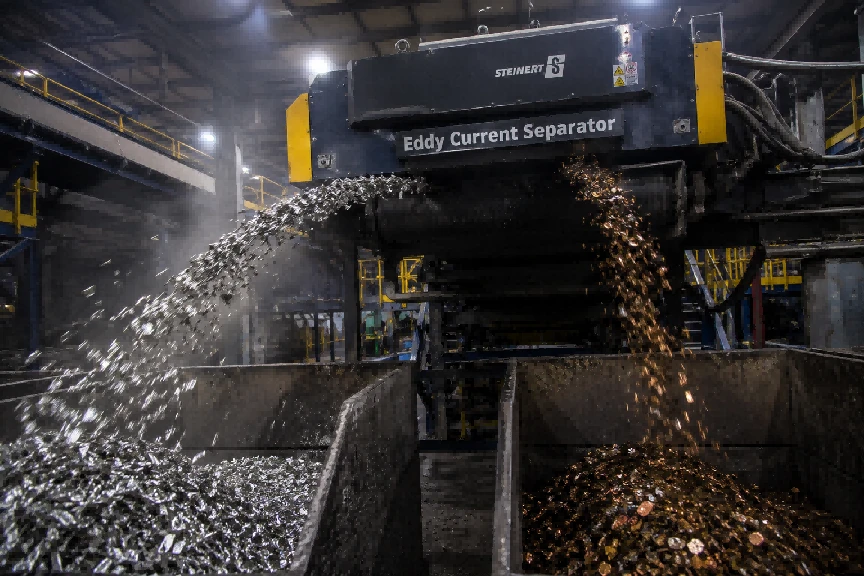
An eddy current separator recovers conductive non-ferrous metals from prepared waste streams. Common applications include aluminum scrap, electronic waste, automotive shredder residue, glass and plastic recycling, and incinerator bottom ash. Separation results depend on particle size, metal liberation, feed distribution, and the separator configuration. Ferrous metals are generally removed by magnetic separation before the material enters the eddy current separator.When a waste stream requires further material identification beyond metal recovery, AI Waste Sorting System Recognition & Sorting Principle explains how AI-based recognition supports downstream sorting.
| Material de alimentación | Target Metals or Separation Purpose | Key Considerations |
|---|---|---|
| Aluminum Scrap and Packaging | Recover aluminum cans, profiles, foil, and metal fragments | Particle size, shape, and even feeding affect recovery. |
| Mixed Non-Ferrous Scrap | Recover aluminum, copper, brass, and zinc | The separator recovers mixed metal fractions; additional sorting may be needed to separate individual metals. |
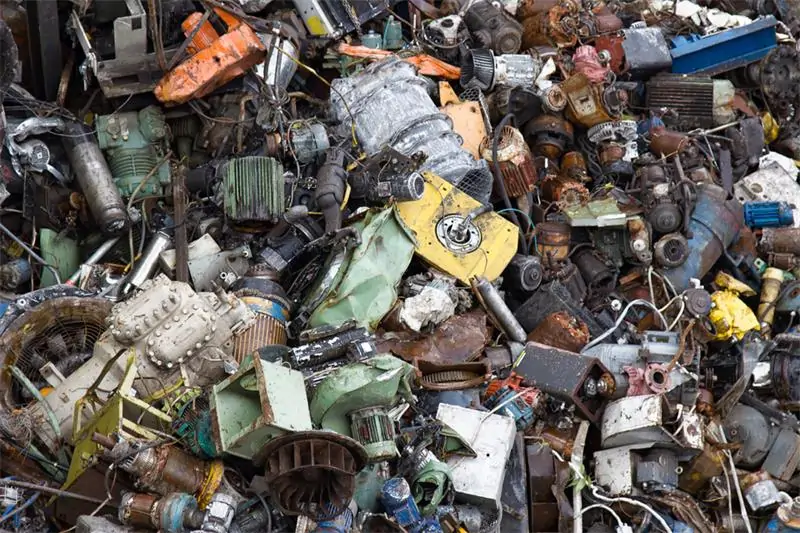
| Automotive and Electronic Waste | Recover liberated non-ferrous metal pieces from shredded vehicles, appliances, and electronic scrap | Shredding, screening, and ferrous metal removal may be required before separation. |
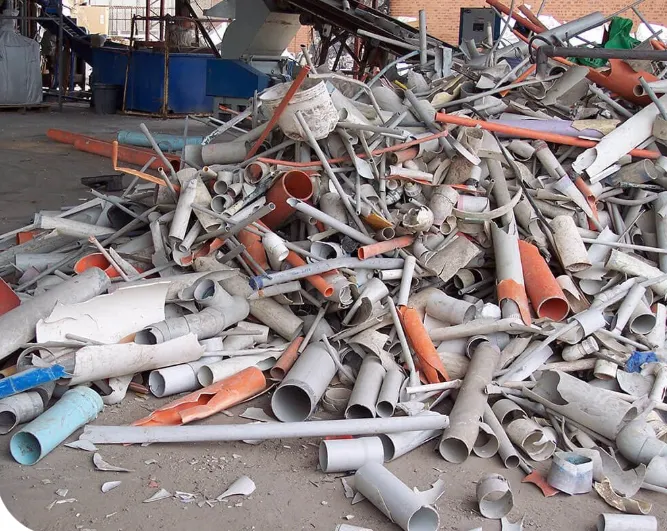
| Glass and Plastic Recycling | Remove non-ferrous metal contaminants from glass cullet, plastic flakes, and mixed recycling materials | The separator removes metal contaminants; it does not independently sort different non-metal materials. |
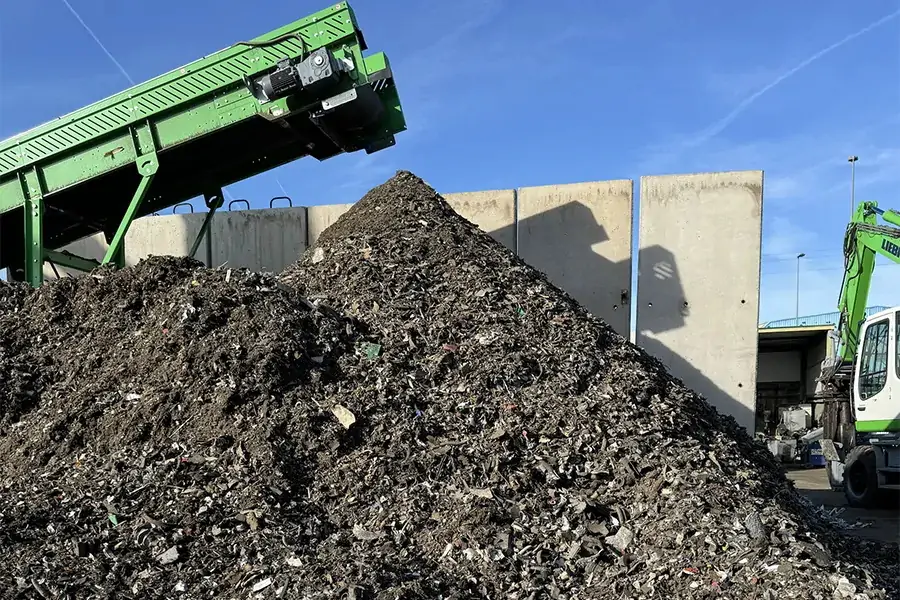
| Incinerator Bottom Ash and MSW Residues | Recover aluminum and other liberated non-ferrous metals from treated waste residues | Particle size distribution, moisture, feed consistency, and fine-particle configuration affect results. |
The suitable feed size and achievable non-ferrous metal recovery vary by machine and material. For complex waste streams or fine metal particles, representative material testing helps confirm equipment suitability and the required separation configuration.
How to Evaluate Eddy Current Separator Performance in Practice
A reliable way to assess an eddy current separator is to run a trial with representative feed material at the intended processing rate. A high recovery figure alone does not show whether the machine is suitable for the job. The test should establish how much target metal is recovered, how clean the metal fraction is, and whether the equipment can maintain these results during operation.For plants that still rely on manual picking after metal separation, Manual Sorting vs AI Automatic Waste Sorting System compares manual and automated sorting in practical applications.
Metal Recovery Rate
The metal recovery rate measures how much of the target metal entering with the feed ends up in the recovered metal stream. It must be calculated from the metal content in the feed and the recovered product, not simply from the total weight of the output. Test records should identify the target metals, feed composition, and particle-size range.
Metal recovery (%) = target-metal mass in the recovered stream ÷ target-metal mass in the feed × 100.
Product Purity
Product purity measures the proportion of target metal in the recovered product. Define the required product before testing: a mixed non-ferrous metal concentrate has different requirements from an aluminum-only product. Also check for non-metal contamination and unwanted metals. Moving the splitter plate may improve purity while sending more recoverable metal to the residue, so both results need to be assessed together.
Product purity (%) = target-metal mass in the recovered product ÷ total recovered-product mass × 100.
Throughput and Operating Stability
Check whether the separator can maintain the required feed rate without major fluctuations in separation quality. Watch for uneven feeding, particle buildup, inconsistent discharge, and changes in the recovered material. A high throughput is of little value if more metal is lost to the residue or the product contains excessive contaminants.
Before purchasing, test your own material and agree on the acceptance criteria with the supplier. Record the feed composition, particle-size distribution, moisture, feed rate, rotor and belt speeds, splitter position, and test duration. Weigh and sample the feed, recovered metal, and residue to establish a clear mass balance. Where possible, repeat the sampling during the run to check that the results remain consistent.For plants considering further automation beyond metal recovery, ¿Vale la pena invertir en la máquina clasificadora de residuos AI en 2026? explores the investment factors to assess before adding an AI sorting stage.
Conclusión
The eddy current separator working principle is based on electromagnetic induction: a rotating magnetic rotor generates a changing magnetic field, inducing eddy currents in conductive non-ferrous metals. The resulting electromagnetic force changes their discharge paths, allowing a splitter plate to separate the metal fraction from the remaining material. Actual results depend on the feed characteristics and equipment settings, so metal recovery and product purity should be evaluated together.
Choosing the right separator starts with your material and processing goals. Contáctenos with your feed composition, particle-size range, required capacity, and separation targets. We can help assess feed preparation requirements and recommend a suitable equipment configuration for MSW, scrap metal, and mixed recycling applications.
Preguntas frecuentes
Un separador de corrientes de Foucault utiliza un rotor magnético giratorio con polos alternos para crear un campo magnético cambiante. Cuando las partículas conductoras no ferrosas pasan a través del campo, se forman corrientes de Foucault en su interior. La interacción entre estas corrientes y el campo magnético genera una fuerza que modifica las trayectorias de descarga de las partículas. A continuación, una placa divisoria dirige las fracciones metálica y no metálica hacia salidas separadas.
Un separador magnético convencional elimina principalmente metales ferrosos como el hierro y el acero. Un separador de corrientes de Foucault recupera metales no ferrosos conductores, incluidos el aluminio y el cobre, del material restante. Las dos máquinas suelen utilizarse en secuencia, con la separación magnética primero. Un separador de corrientes de Foucault no sustituye a la eliminación de metales ferrosos, y ninguna de las dos máquinas por sí sola clasifica todos los metales en grados individuales.
No existe un rango universal de tamaño de partícula para todos los separadores de corriente de Foucault. El rango adecuado depende del diseño del rotor, la forma de las partículas, la composición del material y las condiciones de alimentación. Los fragmentos metálicos finos pueden ser más difíciles de recuperar porque sus trayectorias de descarga pueden ser menos definidas. Solicite al proveedor que confirme el rango operativo para su alimentación y realice pruebas con material representativo, especialmente cuando su alimentación contenga una alta proporción de partículas finas.
Un separador de corrientes de Foucault estándar separa principalmente metales no ferrosos conductores de materiales no metálicos; no necesariamente separa el aluminio y el cobre en grados individuales limpios en una sola pasada. Sus trayectorias de descarga pueden superponerse porque el tamaño de partícula, la forma y la configuración de la máquina afectan sus trayectorias. Si se requieren grados de metal separados, evalúe mediante pruebas de materiales si se necesita una clasificación por sensores aguas abajo o una etapa especializada de separación metal-metal.
Una baja recuperación puede deberse a una alimentación irregular, un exceso de solapamiento de partículas, tamaños de partícula inadecuados o piezas metálicas que permanecen adheridas a otros materiales. Una velocidad del rotor, velocidad de la cinta o posición del divisor incorrectas también pueden contribuir a la pérdida de metal. Verifique primero la preparación y distribución de la alimentación, luego ajuste los parámetros de operación de forma sistemática. Examine el residuo en busca de metal no recuperado y mida la pureza del producto junto con la recuperación para identificar la causa real.
Algunos materiales húmedos se pueden procesar, pero la idoneidad depende del contenido de humedad y del comportamiento de la alimentación. Los finos húmedos o los residuos pegajosos pueden aglomerarse, adherirse a la cinta transportadora o alterar la alimentación uniforme, lo que hace que la separación sea menos constante. Para residuos mixtos húmedos o cenizas de fondo de incinerador, realice una prueba con una muestra representativa antes de seleccionar el equipo. Puede ser necesario un cribado o un acondicionamiento del material, según los resultados.
La preparación normalmente incluye la eliminación de metales ferrosos, el cribado de la alimentación en rangos de tamaño adecuados y la garantía de una capa de material uniforme sobre el transportador. Puede ser necesario el triturado cuando los metales permanecen adheridos a otros materiales, pero una reducción excesiva de tamaño puede generar partículas finas que son más difíciles de recuperar. La preparación requerida depende de los residuos entrantes, los metales objetivo y la configuración del separador.
Arrange a trial using representative material at the intended processing rate. Record the feed composition and particle-size distribution, then weigh and sample the feed, recovered metal, and residue. Analyze their metal content to calculate recovery and product purity. Agree on sampling methods, test duration, and acceptance criteria with the supplier beforehand. A headline recovery percentage without feed conditions and a clear measurement method is not enough to compare machines.